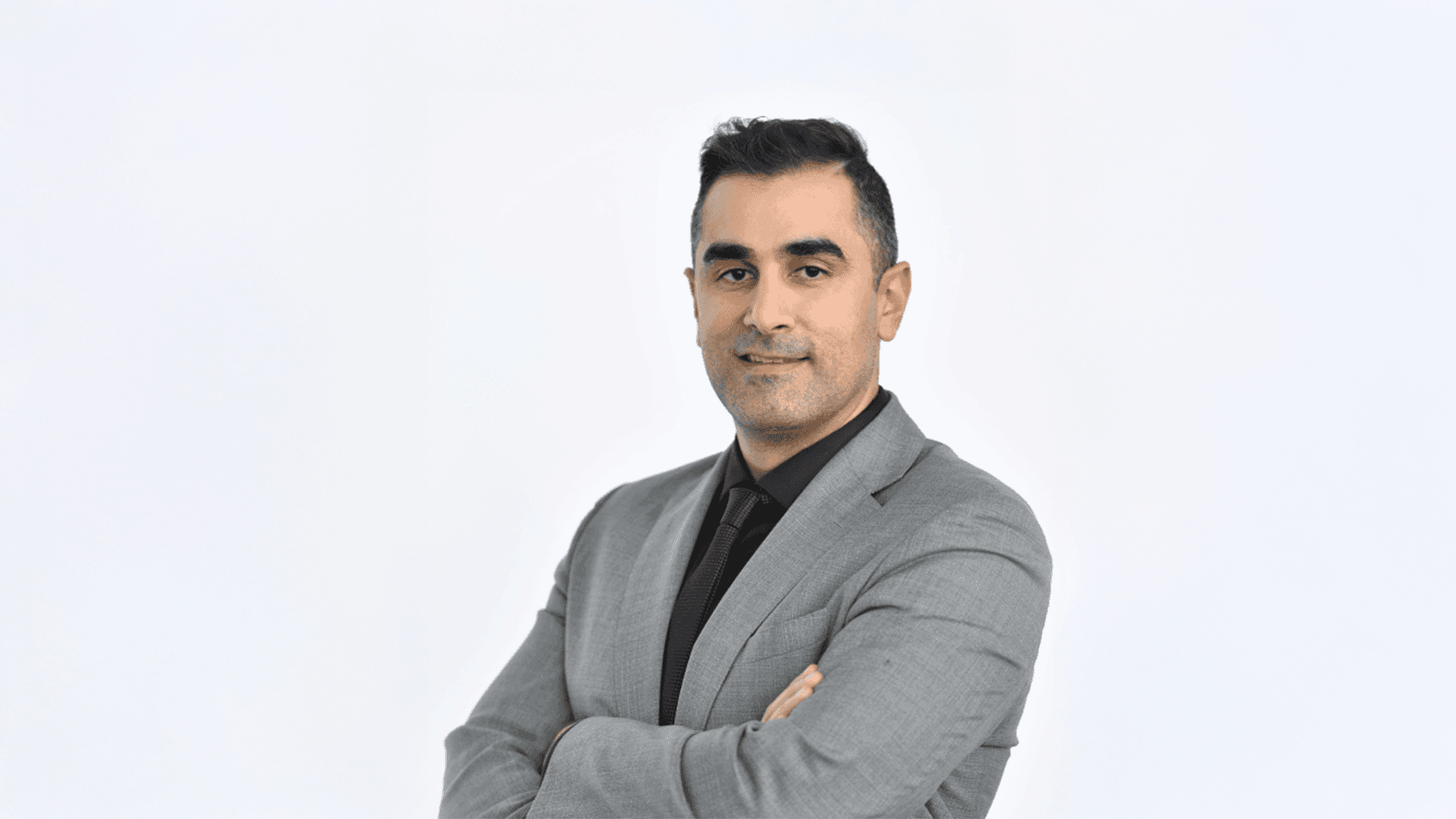

How the Founder of Immigration Lawyers Toolbox© Built a Practice and Platform on His Own Terms
John Khosravi needed a job. That's it. No grand vision of changing lives through immigration law, no childhood dream of arguing in immigration court. Just a recent law school graduate who happened to be fluent in Persian and knew someone who knew someone.
"I never thought about becoming an immigration attorney," he admits. A family friend, a former immigration paralegal in the 1980s, mentioned her old boss needed a translator for some documents. John showed up, did the work, and within weeks noticed something: this solo practitioner was drowning in EB-1A extraordinary ability cases, EB-5 investor petitions, and marriage cases, all hitting at once.
"I'm like, you know, I have a lot of time too. I can help you with these cases," he recalls telling his soon-to-be employer. That offer changed everything.
From Translation Work to Solo Practice: John Khosravi's Early Years
For a year and a half, John gained firsthand knowledge of immigration law's intricacies. But as he gained experience, a realization crystallized: his vision for practicing immigration law diverged dramatically from his employer's approach. He intended to create a firm with online outreach, a limited number of practice areas, and immediate responsiveness to clients.
At the two-year mark, Khosravi made his move. He left to start his own solo practice, deliberately narrowing his focus to specific case types that aligned with his lifestyle goals and interests: marriage cases, small investor cases like E-2 and L-1 visas, and self-petitioning Extraordinary Ability talent cases. That was it.
"No removal, humanitarian, or crimmigration," he explains. The focus was on cases that could typically be resolved within a year, usually brought about happy outcomes, and were not bound by employer-employee relationships. This would also leave a lot of time for John to focus on marketing his practice through his favorite method: educating the public.
His former boss had practiced for 30 to 40 years and maintained a deep book of business. But he resisted modernization. "I would ask him to make a website, let's do this, let's market that. And he's like, No, it's going to waste our time." He was probably right for the practice he developed. But John needed to build his own book of business.
Khosravi saw an opportunity in that resistance. He launched his own website, started creating educational videos, and watched his firm grow organically. For about 10 years, he maintained this model as a full solo practitioner, handling everything himself while keeping his lifestyle manageable.
The Birth of Immigration Lawyers Toolbox©: When Your Podcast Audience Tells You to Pivot
The Immigration Lawyers Toolbox© didn't start as an education platform. It began as marketing.
John launched his podcast as a mechanism to attract high-net-worth EB-5 investor clients. "If these people are going to send millions of dollars over, they've got to know that I'm not some fly-by-night new guy," he reasoned. "I'm here every month."
However, after recording episodes for two or three years, he noticed something unexpected: his audience wasn't potential clients. It was other immigration attorneys.
"I realized it's too detailed and too boring for regular people to listen to," he says. "So I just pivoted and made it for immigration lawyers."
That pivot proved prescient. Other attorneys began reaching out for training and mentorship. Then came the first Trump administration, and Khosravi's practice nearly doubled overnight, while also becoming overwhelming.
"My business acumen is not that high in this stuff, scaling," he admits candidly. "I'm like, listen, I'll just pivot and start doing courses and training other lawyers to do this stuff. And that way I have an even larger influence on the number of people that get help.” The Immigration Lawyers Toolbox© evolved from a podcast to courses to in-person seminars. Then one day, Khosravi woke up wanting to do a trade magazine. Now it includes a regular publication for practitioners, a newsletter, a private community page for discussions, white-label content marketing resources, and more.
"It's whatever we can to make people better immigration attorneys," he says simply.
The People Management Problem: John Khosravi on Hiring, Scaling, and Why AI Might Be the Answer
Ask John about the biggest challenge in running a law firm, and he doesn't talk about case complexity or regulatory changes. He talks about people.
"I just don't like people management because I just want to say, okay, here's the stuff, go do it," he explains with refreshing honesty. "I don't want to be a dad or mom and say, Okay, why did you do this? I don't want you to do that."
This aversion to management has created a ceiling for his firm's growth, and he knows it. "That's pretty much a ceiling for my firm's growth because of that. That's why I'm pivoting more towards the Toolbox, which scales much more."
He's candid about the difficulty of finding self-starters who thrive in an autonomous environment. The solution is increasingly involving artificial intelligence. "I'd rather frankly hire AI at this point, because hiring and firing is so annoying," Khosravi says. He notes that AI might help attorneys scale in ways traditional hiring never could. "AI will answer certain things or handle certain things; it adds up over the year."
John Khosravi's Perspective on AI in Immigration Law: Promise and Limitations
Despite his enthusiasm for AI's potential, Khosravi maintains a nuanced view of its current capabilities in immigration law.
He sees clear applications for quality control, such as double-checking dates of birth, entry dates, and admission dates, and reviewing forms for missing checkboxes to catch typos before they become embarrassing mistakes in front of clients.
"If they could upload a birth certificate and a passport and they could figure out that stuff so that our forms don't have typos, that'd be great," he says.
But when it comes to legal research, his experience has been mixed. "When I use ChatGPT for legal research, it's for confirming things I know because it makes so many errors consistently," he explains. "It's not good for non-lawyers to use it because they don't know what they don't know. But I'll catch them."
The danger, as Khosravi sees it, is that self-represented individuals will rely on ChatGPT without understanding its limitations. "There are too many things in immigration law that you need to know, where if you get one of them wrong and just don't know, then it becomes a big problem."
This reality creates a paradox: AI mistakes might actually generate more work for immigration attorneys. "There'll be people who use ChatGPT, and they make major errors and immigration lawyers have to come in to fix that, and they're going to be charged much more than they would have if they came in the first place," he predicts.
The H-1B Fee Increase: How John Khosravi Sees Opportunity in Regulatory Change
When discussing the recent H-1B fee increases, Khosravi's analysis reflects his broader skepticism about government regulation.
"The employers who are going to do H-1B are going to be much wealthier," he notes. "Employers have the money to spend on it, so the attorney's fee looks smaller relative to these extra costs."
He sees a potential silver lining: with fewer applicants in the lottery due to higher costs, employers who genuinely need H-1B workers and can afford the fees will have better odds of selection.
But his critique of the policy's effectiveness is sharp. "Government regulation is not going to have the intended consequences," he argues. "It's going to fortify the ones that are abusing it the most, and they're going to still abuse it."
In his view, the real victims are small businesses in rural areas that genuinely need specialized workers but lack the resources of large San Francisco tech companies. "It's a small rural place that needs it, that doesn't have as much money. They won't be able to afford it. But the same San Francisco person who has a bunch of people who live next door, they can hire, they're still going to get it."
His solution? The government already has the data to identify actual H-1B abuse. "The government has all the I-129s. They know who it is; all the data is there. It's very easy for them to enforce it. They take a $500 fraud fee to do on-site investigations."
Advice for Aspiring Solo Practitioners: What John Khosravi Wishes He'd Known
When other immigration attorneys ask John about starting their own firms, he emphasizes two critical components: legal knowledge and business acumen.
"You've got to really know the law," he says. "But even more important is the business side. You have to be able to attract clients. You've got to figure out what marketing mechanism you have and how you're going to create it to get attention for people to come to you."
His own path involved optimizing for Google rankings and creating short videos. "I'm not really big, but it's enough for me to eat, and my plate is full," he acknowledges. Others have built multimillion-dollar firms through TikTok, YouTube shorts, or consistent long-form video content.
The key is finding what works for you and doing it consistently. "Figure out which connects with you, it's easy for you to do repetitively, and what connects with the clients, and do that," he advises. "There are just so many ways to do that nowadays."
But consistency in marketing isn't enough. New practitioners also need systems for consultations, client communication, case management, and internal workflows. Without those systems, even successful marketing becomes overwhelming.
"I didn't have systems, so I got overwhelmed doing cases," he reflects on his early solo years. "I was doing everything myself. Phone calls, the consults, cases, follow-ups, and that overwhelmed me."
John Khosravi's Controversial Take: Is America Still the Best Destination?
Perhaps Khosravi's most striking perspective concerns advice he'd give to prospective immigrants, a view that runs counter to his professional interest.
"Frankly, as an immigration lawyer, it's counter to my business, but I would double-think coming here to America the way things are happening," he says.
He acknowledges the fundamental problem: where else would people go? "Europe is a mess. You can't go to China and India. They're not open economies. Russia? Even Brazil? So I understand the pull of America is still there."
His conclusion, reached after researching alternatives back in 2009 during the financial crisis: "Despite the fact that America has all these problems, it's still worse everywhere else. So it's the best of the worst."
For immigrants already committed to coming, his advice is pragmatic: be patient, be thorough with documentation, don't trust lawyers who guarantee outcomes they can't control, and be prepared for increasing costs.
"The fees go up a lot," he warns, explaining that the current administration's antagonistic approach to immigration has made routine matters exponentially more time-consuming. "Before, I would do extra stuff for free because I could fix the situation probably in a 20-minute phone call. But now I have to charge clients on every one of these government mistakes."
The Future of Immigration Practice: Location Independence and Digital Presence
When asked about the best countries for opportunity outside the United States, his answer reflects his vision for his own practice.
"It's not really about the physical location," he explains. "It's about having an online presence enough where you can get clients and then maybe be able to move to a low-cost zone in the world and keep it virtual."
He's designed his firm specifically around this principle. "My kids are small, but our goal is to travel the world with my kids. So I've designed my firm so that my location doesn't matter. I just need a laptop."
The only cases he accepts now are ones that don't require his physical presence. "The physical geography doesn't matter. It's all about the digital presence that you have."
This approach extends beyond personal lifestyle preferences. As immigration attorneys increasingly handle cases remotely, with telecom court systems and online filing, location independence becomes more viable.
Final Reflections from John Khosravi: On Building a Practice That Fits Your Life
Throughout the conversation, one theme consistently emerges: John has deliberately built his practice around his life priorities rather than traditional growth metrics.
He maintains a solo practice (now with an associate) that generates sufficient income without overwhelming him. He focuses on case types that typically resolve happily and relatively quickly. He has pivoted toward education through the Immigration Lawyers Toolbox©, which scales more easily than adding attorneys and paralegals.
"The firm is like a pace for my life," he explains. "It opens it up where I have time to have these semi-professional, semi-hobby kind of things to help the immigration lawyer community and spend a lot of time with my family and kids too."
This approach has trade-offs. He acknowledges being stuck as a bottleneck because of his reluctance to manage people. He recognizes that others might build larger, more profitable firms. However, he has come to terms with those limitations.
"Some people like hiring and firing, and they're into it," he says. "They make firms with 50, 100 people and stuff like that, and they're cool with it. And maybe if I had a better business mentor, maybe I would have learned to do it, but I'm not sure if that's the hill I want to die on or skill I want to master right now."
For immigration attorneys navigating their own paths, his journey offers an alternative model: build the practice that serves your life, not the life that serves some idealized version of what a successful practice should look like.
About John Khosravi: John Khosravi is an immigration attorney based in Los Angeles, California, and the founder of Immigration Lawyers Toolbox©, a comprehensive education and resource platform for immigration attorneys. His practice focuses on marriage-based cases, E-2 and L-1 investor visas, and EB-1 extraordinary ability cases. He hosts the Immigration Lawyers Toolbox© podcast and trade magazine for immigration practitioners. He was also a former Adjunct Professor of immigration law at Pepperdine and Loyola Law Schools in Southern California.



Bob Webber
SEP 16, 2025
Charles Kuck
SEP 15, 2025

Christa Byker
SEP 11, 2025