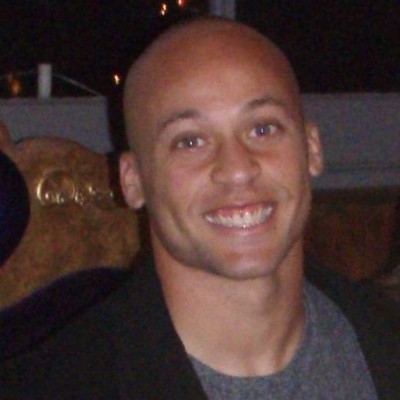

It was 2012, an election year, and Chris Carr was a defensive back with the San Diego Chargers. Politics had crept into a place it rarely goes. "People really talk politics in NFL locker rooms," he says, a little amused at the memory. One day a teammate turned to him and asked what he thought U.S. immigration policy should be.
He had no answer. "I had never really thought about immigration in this country," Carr says. "I said, I don't know, because I don't want to opine on something I hadn't given sufficient thought to."
Most people would have shrugged and moved on. Carr went home and started reading. Two years later he retired from the league with a plan that would have surprised his younger self, and today he is a partner at Murray Osorio PLLC, a full-service immigration firm with offices across the United States. This is the story of how he got there, what he learned about earning a seat at the table, and where he thinks immigration law is headed.
From Boise State to the NFL, with Law School Always in the Plan
Long before the locker room, there was a constitutional law class at Boise State University. Carr took it as an undergraduate while playing football for the Broncos, and something clicked. "That was the first time in my life where I felt like I had found something that I enjoyed more than sports," he says. "At that point, sports were the end all, be all for me."
So the plan was set: play as long as possible, then go to law school. Carr is candid that the football part was never guaranteed. At the time, Boise State was not a program that regularly sent players to the NFL. Late in his junior year he thought he might have a chance, but he kept preparing for the attorney route anyway.
Then the unlikely happened. He went undrafted, made the Oakland Raiders roster as a free agent, and built a career that carried him through several teams and nearly a decade in the league. Law school waited, but it never left the plan.
Why Chris Carr Chose Immigration Law
After that question in the Chargers locker room, Carr spent two years reading about immigration on his own time. What started as curiosity became something closer to conviction. "I just thought the notion of helping someone from another country find their way, whatever that is, would be a very cool experience as an attorney," he says.
By the time he retired in 2014, he had two interests he wanted to combine. "I knew I was going to go to law school, and at that point I was into immigration," he says. "So I was like, okay, let's see if I can merge these two."
He does not pretend it was a grand design. "If someone had said in 2005 or 2008, are you going to be an immigration attorney one day, I'm like, why would I be an immigration attorney?" he says. "It just kind of happened that way. Very unpredictable. But it's been tremendous."
Joining Murray Osorio PLLC: "This Is Going to Be My Last Job"
Carr came to Murray Osorio PLLC from a smaller immigration firm where he loved his colleagues but where staffing changes eventually made it untenable to stay. His former bosses knew some of the attorneys at Murray Osorio PLLC, and the firm's reputation preceded it. What he was looking for was specific: people who were in it for the right reasons, competent, and willing to work hard.
He found that in the interview and confirmed it fast. "After a couple of months working here, I told one of the partners that this is going to be my last job," he says. "I just really felt that we had something special."
The feeling reminded him of his college years. "It was like Boise State when I was there. We were on the cusp of achieving something great, and you could feel it. We all believed we were going to be a perennial top 25 caliber team, even though previously we had never been there," he says. "It wasn't about ego. It was about working hard, and it was about the belief, and we had the talent. And sure enough, it happened."
He sees the same intangibles at the firm. "This isn't a firm that's about egos. This is a firm that's about being competent, about helping our clients," he says. "It's not about getting pats on the back or stealing credit or anything that petty that would distract a firm from actually achieving greatness."
Carr joined as a senior attorney and was promoted to partner within the past six months. He is quick to note it was not a reward for longevity. "It wasn't like I'd been at this firm for 20 years or 10 years before I was promoted to partner," he says. "There's a lot of hard work to get to this point."
The mindset he brought was borrowed from football. "Joining a new team in the NFL, you really need to drive that point home that you belong," he says. "That was really what I tried to do when I joined this firm. And I constantly want to show that not only do I belong, I am the type of person who should be partner, and who doesn't just stop and turn lazy once you get a promotion."
Inside a Full-Service Immigration Firm
Murray Osorio PLLC is unusual in its breadth. "A lot of people specialize in immigration, whether that's business or removal defense," Carr says. "With us, we do everything." That includes humanitarian visas, family-based immigration, entertainment and sports visas, litigation, removal defense, and federal court litigation across multiple circuits.
Carr sits on the firm's business, entertainment, and sports team, a group of roughly five attorneys and five paralegals. On any given week the matters range widely: an equestrian eventing athlete pursuing a P-1 visa, O-1B and P-1B petitions for performing arts organizations such as the Washington Ballet, and the full run of employment-based work including EB-1, O-1, H-1B, and L-1 cases.
He sees sports and entertainment not as a niche but as a form of employment-based immigration. "Sports is a form of employment. It's just sports employment," he says. "So it's all under the same umbrella."
Chris Carr's Advice for Attorneys on the Partner Track
Asked what he did right on the road to partner, Carr offers four things. None of them involve billable hours or self-promotion.
1. Give people the benefit of the doubt
"Having grace for people and giving people the benefit of the doubt, whether that's in disagreements, avoids unnecessary conflict," he says. He points out that a colleague's blunt message is usually not disrespectful. "In fact they're just telling you something matter of factly because they care about the firm and they care about their clients."
2. Be a team player, not a personal brand
"Sometimes someone's really in it like, this is about me, this is about my ego, I'm going to be a partner. I think that can distract from the work," he says. His test is simple: "If you were going to write on paper what mentality a worker should have, everyone would say it's about the team, it's about the work, it's not about your own personal glory. If you really truly believe that, it trickles down from there."
3. Decide you are going to earn it
Carr is direct about what that means. "You're really going to put that work in. You're going to give it your all, knowing it's going to be a lot of hours, and there can be times you're working till midnight because it's just that important."
4. Choose a practice area that brings you joy
This is the one he calls "very difficult for a lot of attorneys, for understandable reasons." His advice to law students is to find what they actually like. "It's much easier to be good at your job if you're enthusiastic about the project," he says. "If you hate the practice and you're just doing it because you're getting a certain salary, it's going to be harder to achieve what you want to achieve. Even if you do become a partner, it's going to be bittersweet."
He sums it up this way: "It takes competence, it takes hard work, but the people who usually rise to the top have some type of natural enthusiasm about what they do."
The Formula Behind Murray Osorio PLLC's Growth: "You're Either Getting Better or Getting Worse"
The firm has grown significantly every year for the past three years. Carr credits two things, and the first is a refusal to believe the work is finished.
"In the sports world, coaches used to bring the expression, you're not staying the same. You're either getting better or you're getting worse," he says. "That may or may not be true, but it's a good mentality to have. If you're thinking, everything we've done has been great, then in 2027 or 2028 that same formula might not be the winning formula, because economies change, the legal profession changes, technology changes."
That means looking at the firm objectively, including its weaknesses, and being honest with each other about them. "It's not like we've been perfect," he says. "But being curious and trying to get better has enabled us to serve our clients more efficiently and to grow."
The second ingredient is people. "You need to have good, competent, hardworking people who are not petty, who are about the project and the team rather than the individual glory," he says. "If you have those two components, I think you're going to have success."
Preparing for a New Administration: Building a Detained Team Before the Surge
Carr's clearest example of that forward-looking mindset is how the firm prepared for the second Trump administration. Before 2025 arrived, the partners held repeated strategy discussions about what was coming. One prediction stood out: a sharp increase in detained immigration work.
"Previously, most immigration firms weren't leveraged to have a detained practice," Carr says. "We had an idea that it was going to be a huge uptick. So what should we do? We developed a detained team."
That was not a small decision. It meant allocating resources and building knowledge of ICE facilities across the country, including in jurisdictions where the firm has no office. "Obviously we couldn't predict everything," he says. "But that was one way we could hit the floor running, where a lot of other immigration firms were caught off guard and are playing catch up. They weren't ready and not really imaginative about that change in policy."
The other piece is communication. Executive orders pausing adjudications for certain nationalities, changes to adjustment of status processing, and other policy shifts move quickly, so the firm keeps open channels between its teams and holds regular meetings to make sure everyone has current information.
Carr adds a caveat that will resonate with anyone who has sat through a pointless meeting. "A lot of firms have meetings that are kind of wasteful, having a meeting about when we can have another meeting," he says. "Here, I don't really feel like any of the meetings we have are wasteful."
AI in Immigration Law: A Tool, Not a Substitute for Understanding
On artificial intelligence, Carr is neither a skeptic nor a cheerleader. His view is practical. AI is already useful for organizing documents and speeding up legal research, and he believes it will keep improving. "If we have these tools at our disposal, I think it would be foolish for a law firm not to try to use them to your advantage," he says.
But he draws a hard line on what the tools cannot replace. "Having a deep understanding of immigration law is going to enable you to ask the platforms the right questions, questions that are going to get you better answers," he says. "If you didn't have that knowledge, you wouldn't even think of certain questions to ask."
That same knowledge is the safeguard against error. "Everyone's heard in the legal field that sometimes AI hallucinates case cites or regulations. If you have that understanding, you're going to spot it better than other people."
For Carr, this comes back to professional duty. "It can be a tool, but you should verify," he says. "You have a duty to your clients, you have a duty to the government. When you present information, you want to make sure that what you're filing is truthful. Not taking shortcuts when it comes to the truth."
He sees applications on both sides of the practice: the legal work itself, and the business of running a firm, from reporting on case types and approval rates to financial analysis. The rule is the same in every case. "Be smart, and know the limitations of it as well."
What Comes Next for Chris Carr and Murray Osorio PLLC
Carr does not talk about the future in terms of titles. He talks about culture. "Hopefully we just continue to grow and we keep that culture here, because that culture has been the key to our success," he says.
It is a fitting note from someone whose whole career has been about teams: a college program that believed it could be great before anyone else did, an NFL roster he had to fight his way onto, and now a firm where, in his words, "there's not enough words to describe the superlatives that I have for this firm and the people who work in it."
The question in the locker room fourteen years ago was about policy. The answer Carr eventually found was about people. Helping someone from another country find their way, whatever that is, turned out to be the work he was looking for all along.
Key Takeaways from Chris Carr's Interview
An unexpected path: A teammate's question in an NFL locker room in 2012 sparked two years of reading that led Chris Carr to immigration law after his 2014 retirement.
Earning partner: Grace for colleagues, a team-first mentality, a willingness to put in the hours, and choosing a practice area you enjoy.
Firm growth: Murray Osorio PLLC has grown significantly each year for three years by refusing to assume it has everything figured out and by hiring people who care more about the work than personal credit.
Policy readiness: The firm built a dedicated detained team before the current administration took office, and keeps teams aligned through open communication and efficient meetings.
AI in practice: Use it for efficiency in document organization and research, but a deep understanding of immigration law is what lets attorneys ask the right questions and catch errors.
Frequently Asked Questions
Who is Chris Carr? Chris Carr is a partner at Murray Osorio PLLC, a full-service U.S. immigration law firm. He played football at Boise State University and spent nearly a decade in the NFL, including with the Oakland Raiders and San Diego Chargers, before attending law school and practicing immigration law.
What types of immigration cases does Chris Carr handle? Carr works on the firm's business, entertainment, and sports immigration team, handling matters such as P-1 visas for athletes, O-1B and P-1B petitions for performing artists, and employment-based cases including EB-1, O-1, H-1B, and L-1.
What is Chris Carr's view on AI in immigration law? He sees AI as a valuable tool for organizing documents, legal research, and firm operations, but insists that attorneys need a deep understanding of immigration law to ask the right questions, verify outputs, and meet their duties to clients and the government.






Bob Webber
SEP 16, 2025
Charles Kuck
SEP 15, 2025

Christa Byker
SEP 11, 2025