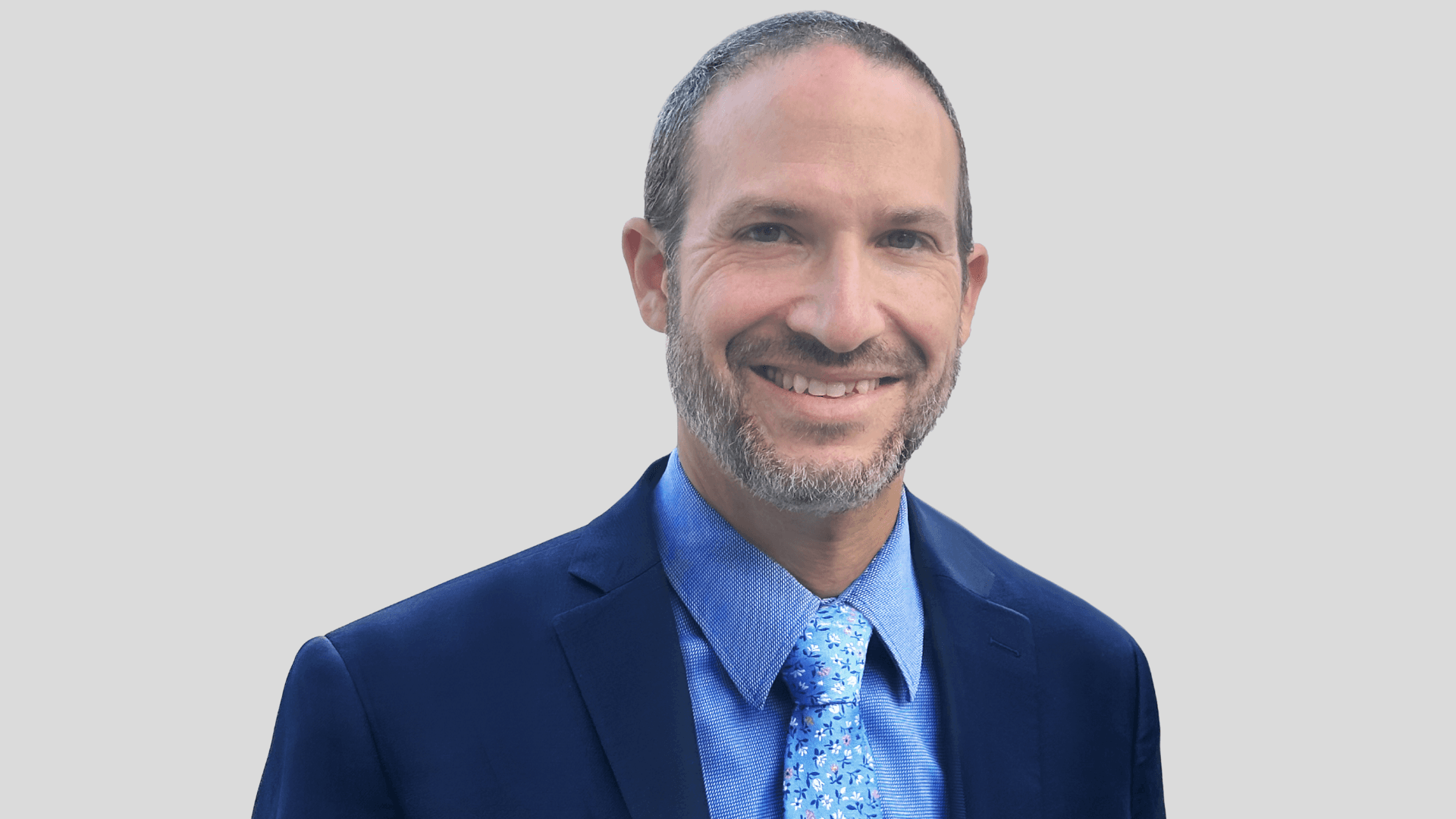

How the Founder of Klug Law Firm Discovered That the "Magic Happens" When Immigration Professionals Combine Excellence with Genuine Care
"I've come across three different types of immigration professionals," Noah Klug says, reflecting on nearly two decades in the field. "The first type are very skilled and very good at what they do, but they don't really get personally invested in the cases and the clients. Then there are professionals who are really lovely people, caring people, who try hard but just don't have the skills. And then the third type have both. That is, in my mind, where the magic happens."
That pursuit of magic has driven Klug throughout his career, from his early days as a summer intern with the US Attorneys Office for the Southern District of New York to launching his own firm, which has maintained a nearly 100% approval rate over the past eight years
From Small-Town Pennsylvania to the Department of Justice
Klug's path into immigration law began almost by accident. Originally from Lebanon, Pennsylvania, a small town near Hershey about two and a half hours from New York City, he moved to Manhattan at 18 for undergrad at NYU, then stayed for Fordham Law School. The city became his adopted home during those formative years.
After his first year of law school, he landed an internship with the U.S. Attorney's Office for the Eastern District of New York in Brooklyn. The assistant U.S. attorney he was assigned to happened to be Scott Dunn, Chief of the Immigration Unit. "He's now a judge in the city," Klug recalls. "Just an awesome person and awesome attorney. It was a great summer and great experience. He got me really passionate about immigration law."
That passion led Klug to the Attorney General's Summer Honors Program, the Department of Justice's competitive summer associateship. He worked with the Executive Office for Immigration Review, and when that went well, they offered him a job after graduation. He moved to Washington, D.C., commuting from Baltimore. "Not a commute that I recommend, by the way," he adds with a laugh.
A Global Perspective: Sydney, Melbourne, and Back Again
What followed was an international journey that would shape his approach to practicing law. Klug joined Fragomen in their Sydney, Australia office as their on-the-ground U.S. attorney for Asia Pacific. He spent just over a year there before transferring to Melbourne for three more years. After four years with Fragomen, he moved to an established Australian law firm called NevettFord, where he started their U.S. immigration practice.
Two years later, his family decided to move back to the United States. He joined BAL in Dallas for two years, then returned to Fragomen, working out of their New Jersey and Santa Clara offices. After nearly two more years, he was ready for something different.
Taking the Leap: Launching Klug Law Firm
About eight years ago, Klug founded his own firm. "I wanted to spread my wings and do things a little bit differently," he explains. "I've always looked at things a little differently than most and had different ideas about things. I was fortunate to have built up a pretty good book of clients. I just felt that I could service them a bit better through starting something new."
When asked what advice he would give to his younger self on the eve of launching the firm, Klug doesn't sugarcoat it: "Be prepared for the fact that it's going to be the hardest thing that you've ever done. Don't get discouraged when you go through various challenges. Just keep at it, keep persevering, and you'll get there."
The Three Pillars: A Philosophy for Excellence
At the heart of Klug Law Firm is a philosophy built on three pillars. The first: highest quality legal work. "We're not a visa factory," Klug says firmly. "We're not just pumping out cases. Each case really gets a lot of care and attention."
The second pillar is exceptional client service. The third is a caring approach.
"These three pillars together help us offer something that's really different," he continues. "A lot of firms might say these things, but we really do it. And I would argue that's what has allowed us to have a nearly 100% approval rate across the board over these past eight years. We have the skills, we have the abilities, and we care."
What makes this possible, Klug believes, is hiring people who embody that same philosophy. Many of his attorneys and team members have big firm experience but wanted something more relationship-focused, more tailored to individual clients.
The Art of Scaling Without Losing Soul
For firm shareholders looking to scale their law firms, Klug's advice is clear: take it slow. "Have a careful, deliberate approach," he says. "Develop the right kind of questions for pre-screening and interviews. Get experts to help you refine your hiring approach. Think carefully about what you need for the role: the type of skills, the type of personality."
The biggest key to growth, he has found, is finding the right people, particularly those functioning at a managerial or leadership level who connect with the firm's culture and values and whose skills complement the rest of the team.
Klug Law Firm's sweet spot is companies with employee counts in the hundreds to low thousands. "There are definitely a lot more companies of that nature out there that we could be helping and that would really be well-served by a firm like ours," he notes.
Advice for Businesses: Look Beyond the Big Names
When it comes to choosing an immigration law firm, Klug has a candid message for corporate clients. "This is going to sound biased," he acknowledges, "but I see companies take a superficial approach in terms of the business immigration firm they choose to go with. They think because a firm has a big name or is big in size, that means they're going to get the best service and quality legal work. It's just not like that."
He urges decision-makers to look more deeply. "They don't serve themselves well with that superficial approach."
Another common mistake he observes: companies immediately ruling out candidates who need sponsorship. "A lot of companies have in their application form, 'Do you require sponsorship?' And they immediately rule out anyone who says yes. I think that's a mistake." He points out that sponsoring a foreign national, particularly transferring an existing H-1B, is often straightforward. "It's not such a big deal. It's very doable."
Advice for Immigrants: Don't Trust the Internet
For immigrants navigating the system, Klug offers a pointed warning about relying on AI tools or internet searches for immigration law questions. "There's unfortunately a lot of incorrect information online about U.S. immigration law," he explains. "And ChatGPT, at least in part, is utilizing that information that's on the public internet. So you get bad results sometimes."
His recommendation? "Find a good attorney who knows what they're doing and knows what they're talking about. That's not easy either, but at least you have a shot at getting solid advice."
The Policy Change He Would Make
If Klug could adjust one piece of immigration policy, his answer comes quickly: increase the cap on employer-sponsored green cards. "The cap right now is 140,000. It's been like that for a long time, and it's been a real problem the past couple years in terms of visa retrogression. I'm not talking about just folks from India, China, Mexico, or the Philippines. I'm talking about everybody."
He would double or triple that number. "Companies need to not only sponsor work visas for the talent they need but then be able to offer these foreign nationals permanent residency when it makes sense. This is a core part of any country's business immigration system."
When No Other Options Exist: Creative Problem-Solving in Action
One success story that stands out to Klug involves creative thinking when standard pathways had closed. "We've had a number of clients where we explored all options," he explains. "That's something that makes us different as a firm. We come up with outside-the-box solutions, creative solutions. That's part of our pillars. If you care and are great at what you do, you'll go the extra mile."
In several cases, the last viable option turned out to be partnering with Open Avenues, a cap-exempt employer that can sponsor H-1B visas, allowing employees to then work concurrently for their original, cap-subject employer. "It worked really well for these situations where we just had no other options," Klug recalls. "A lot of people and companies still aren't aware of it."
Looking Ahead: Growth Without Compromise
As for the future, Klug is focused on scaling, but in a way that preserves what makes the firm unique. "We've been fortunate to have tremendous growth over the past couple years especially," he says. The firm is also exploring how to thoughtfully leverage artificial intelligence for tasks like drafting, though he emphasizes a balanced approach.
"I think it would not be wise to ignore AI," he says. "Any firm or business that just ignores it and doesn't utilize it where it makes sense is not being wise. But at the same time, you have to be careful, take a deliberate approach, and not allow it to adversely impact the quality of work and level of client service you're providing."
It all comes back to those three pillars, and to the conviction that brought Klug to start his own firm in the first place: that immigration law, done right, requires not just skill but heart.
"Like I said," he concludes, "that's where the magic happens."
About Noah Klug
Noah Klug is the founder of Klug Law Firm, a business immigration law practice based in New York City but servicing clients all throughout the United States, including the West Coast and Central United States, as well as globally. With nearly 20 years of experience spanning government service at the U.S. Department of Justice, international practice in Australia, and roles at leading immigration firms including Fragomen and BAL, Noah brings big-firm expertise with a boutique, client-centered approach. Klug Law Firm specializes in the full range of business immigration matters, including H-1Bs, L-1s, PERMs, EB-1Cs, TNs, O visas, E-3s, and E-2s.


Bob Webber
SEP 16, 2025
Charles Kuck
SEP 15, 2025

Christa Byker
SEP 11, 2025