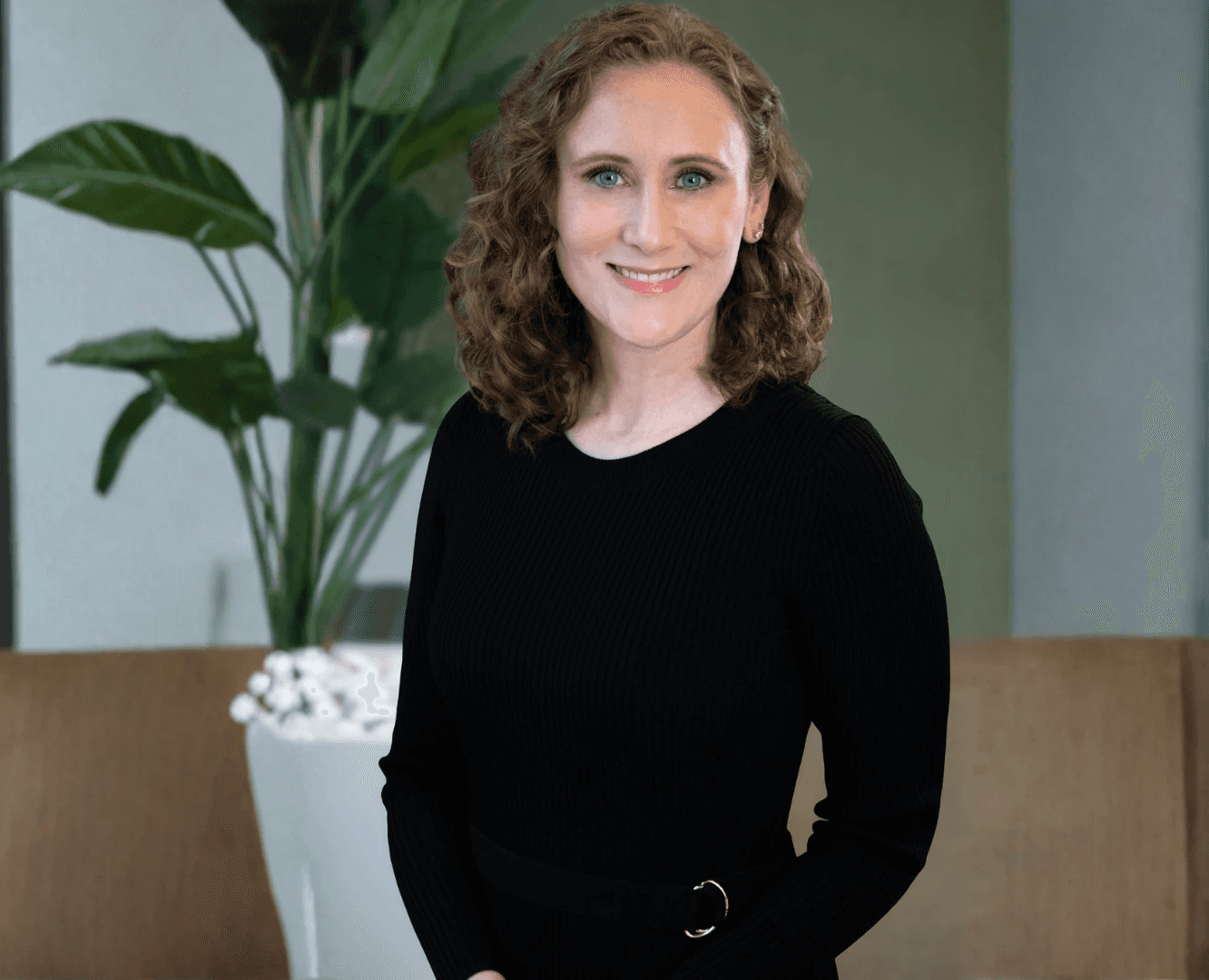

Doran Shemin, Immigration Attorney at Haynes Novick Kohn Immigration: Navigating Complexity, Championing Justice
When Doran Shemin's client walked out of the Farmville Detention Center on October 21st, it marked the end of a two-month ordeal that should never have happened. The father of a four-year-old U.S. citizen daughter had been illegally detained in the middle of nowhere, Virginia, denied bond through a flawed legal interpretation, and subjected to conditions that included worms in the food. His release came only after Shemin successfully argued in federal court that his detention violated the law.
For Shemin, a senior attorney at Haynes Novick Kohn Immigration in Washington, D.C., this victory represents both the profound rewards and the emotional weight of immigration law. Getting to use the power of her law license to reunite families makes the work meaningful. But stories like these also underscore a troubling reality about the current state of immigration enforcement in America.
An Unexpected Path
Shemin's journey to immigration law began with entirely different ambitions. She entered law school with visions of working in international law at the Department of State, changing how the United States operates on the world stage. She even pursued a dual degree, combining her law studies with a master's in international affairs.
Then reality intervened. Her second semester international law class shattered those aspirations. She simply didn't like it.
But her first summer in law school opened an unexpected door. Through a combination of experiences including studying abroad for a month, working two days a week for a trial judge at D.C. Superior Court, and spending three days a week at her school's immigrant justice clinic, Shemin discovered something that clicked in a way international law never had.
"There's something concrete I can do," she explains. "Immigration law is very concrete, but it still has this international aspect to it."
The realization felt natural, almost inevitable. The following semester, she took Immigration and Naturalization Law. Her professor later told her she'd earned one of the top grades in the class. Immigration law wasn't just interesting. It came easily to her.
Building Expertise at the Intersection of Law and International Relations
Today, Shemin works at a firm she first heard about while still in law school. After spending almost five years at another firm where she gained valuable experience, Haynes Novick Kohn Immigration reached out with an opportunity that aligned perfectly with her background. The firm maintains close connections with international organizations including the International Monetary Fund and the World Bank, allowing Shemin to work with clients from these prestigious career backgrounds and from countries around the world.
Her practice encompasses virtually every aspect of immigration law except EB-5 investor visas. She handles deportation defense, family immigration cases, humanitarian matters, citizenship applications, business immigration, and federal litigation. Family immigration law, particularly waivers of inadmissibility, represents her largest practice area, though her deportation defense work has grown substantially amid the current enforcement climate.
Working with approximately 200 open or pending cases, Shemin brings both technical expertise and genuine empathy to her practice. Personal connections to immigration strengthen her commitment. Her grandmother immigrated from Argentina, and her husband comes from El Salvador. These family ties provide her with an intimate understanding of what's at stake for her clients.
Frontline Realities: The Detention Crisis
The habeas corpus case that reunited a father with his daughter illustrates the most pressing challenge Shemin faces in her current practice. A binding decision from the Board of Immigration Appeals has stripped immigration judges of jurisdiction to grant bond for any non-citizen who entered the United States without inspection. The decision is legally incorrect, in Shemin's assessment, but immigration judges must follow it.
The implications are stark. Individuals who would previously have had a meaningful opportunity to post bond and reunite with their families while their cases proceed now face indefinite detention. The only recourse is filing habeas corpus petitions in federal court, arguing that the detention violates constitutional protections.
"We're seeing an effort to detain as many people as possible," Shemin observes. "This decision from the Board of Immigration Appeals is helping to do that."
Her firm has responded by filing numerous habeas petitions and winning them, establishing precedent that these detentions are indeed illegal. But the legal battle shouldn't be necessary in the first place.
Advice for Aspiring Immigration Attorneys
For lawyers considering immigration law as their career pathway, Shemin offers both encouragement and caution. The work is deeply rewarding, providing concrete ways to help people navigate life-changing processes. But the emotional toll can be significant.
"Make sure you figure out ways to protect yourself," she advises, "because if you're not doing well, then you can't help your clients."
She also emphasizes the importance of specialization. Immigration law is unforgiving of mistakes, and the consequences of errors can be permanent. Some attorneys claim they do immigration work when it's not their main practice area, and they miss critical details that can affect someone's ability to obtain immigration status for the rest of their life.
"Don't dabble," Shemin states firmly. "Our immigration laws are not super forgiving."
Guidance for Immigrants: Professional Help Matters
Shemin extends similar advice to immigrants navigating the system themselves. While she acknowledges it may sound self-serving coming from an attorney, she genuinely believes people should seek expert opinions whenever possible rather than attempting to handle cases themselves.
The stakes are simply too high. What works for one person may not apply to another person's situation, even when the cases seem similar. A single date change can make a situation totally different, rendering advice from online forums or friends inapplicable or even harmful.
"If you do something a certain way because it works for your friends and you think your case is the same, but it's actually not, it can have lasting damage," she explains.
She also cautions immigrants against spending too much time reading the internet, particularly during periods of heightened enforcement. Reddit threads, TikTok videos, and online forums often provide contradictory or contextually inappropriate advice. For someone stressed about potential detention or other immigration consequences, consuming this content only amplifies anxiety without necessarily changing the situation.
When selecting an attorney, Shemin says there are several considerations. Language accessibility matters significantly. While working through interpreters is certainly possible, communication improves when an office has staff members who speak the client's language.
Beyond technical qualifications, she suggests what she calls a vibe check. Good attorneys are honest about chances rather than promising outcomes they cannot guarantee. If an attorney tells a potential client that pursuing a case isn't advisable at a particular time, that honesty signals trustworthiness for future representation if circumstances change.
Policy Recommendations: Addressing the Numbers Gap
Asked what single change would most improve the immigration system, Shemin doesn't hesitate. The United States needs to dramatically increase the number of available green cards for both family-based and employment-based petitions.
"The numbers of visas the United States can give out in a single fiscal year is dismally small in comparison to the actual amount of immigration that is desired," she argues.
The backlogs tell the story. A Mexican national with a U.S. citizen sibling who files a family petition faces a wait time of 20 to 30 years. In some cases, the delays render the process almost pointless.
While Shemin believes current visa categories adequately represent the range of family relationships and employment contexts, the volume limitations create untenable situations for families and employers alike. Companies trying to bring employees from abroad face similar frustrations.
She would also like to see a new visa category bridging the gap between F-1 student status and H-1B work authorization. International students who want to gain work experience in the United States sometimes find that their first or second job out of school doesn't meet the specialty occupation definition required for H-1B status. A transitional work visa could help retain talent that U.S. universities have trained.
The AI Question: Useful Tools, Dangerous Shortcuts
When it comes to artificial intelligence in immigration practice, Shemin maintains a skeptical stance. While AI can help with case management and administrative automation, she sees significant problems with its use for substantive legal work.
Clients increasingly submit materials generated by ChatGPT that contain incorrect information. Attorneys have been sanctioned thousands of dollars for submitting briefs that include fake case citations generated by AI. The technology simply isn't advanced enough for reliable legal analysis.
Shemin uses AI sparingly, primarily when experiencing writer's block. In one case involving an economist specializing in Central Asian economies, she asked ChatGPT why Central Asian economic issues matter to the United States. The response provided a starting point that she then refined and adapted to advocate for her client's work being in the national interest.
But beyond that limited application, she remains cautious about AI's role in immigration practice.
Looking Ahead: An Uncertain Landscape
Predicting the future of U.S. immigration proves difficult given how much depends on political leadership and policy priorities. Comprehensive immigration reform legislation has remained impossible to pass through Congress for many years. Meanwhile, executive action can rapidly transform the enforcement landscape, as Shemin has witnessed firsthand.
The shift from relatively accessible bond hearings in January to only having a bond hearing after a federal lawsuit by late October demonstrates how quickly conditions can deteriorate. Shemin hopes AI will develop further to help automate filing systems, particularly given that many immigration applications still require submission on paper rather than electronically.
She also wonders whether the United States will remain a top destination for immigrants. Many countries now offer digital nomad visas and residency programs with investment requirements far lower than those in the United States. The COVID-19 pandemic accelerated remote work arrangements that enabled people to earn U.S. salaries while living elsewhere, potentially reducing the need to immigrate.
However, Shemin acknowledges that this shift primarily affects people with significant socioeconomic privilege. The ability to work remotely from anywhere represents an extraordinarily fortunate position that fewer than half the world's population can access. Traditional reasons for immigration will persist, even if the numbers eventually decrease somewhat.
The Power of Legal Advocacy
Working three days a week in the D.C. office and two days from home in Northern Virginia, Shemin balances her demanding practice with family life. The hybrid arrangement allows her to spend time with her child immediately after work on remote days, a flexibility she deeply values.
That personal experience with work-life balance informs her understanding of why immigration patterns may be shifting. When businesses became more flexible about remote work during the pandemic, it opened possibilities for people to live in places like Spain or Colombia at lower cost while maintaining U.S.-level income. Why immigrate when you can achieve similar professional outcomes without the lengthy, expensive immigration process?
Yet for Shemin's clients, those alternatives rarely exist. They face detention, separation from family members, and legal proceedings that will determine their futures. They need attorneys who understand both the technical complexities of immigration law and the human stakes involved.
The client released from the Farmville Detention Center after two months of illegal confinement got to return home to his four-year-old daughter just days before conditions at the facility deteriorated further. Shemin and her colleagues had started receiving reports of worms in the food and expired provisions being served to detainees.
Using the power of her law license to challenge that detention and reunite that family provided exactly the kind of concrete, meaningful impact that first drew Shemin to immigration law during her summer at the immigrant justice clinic years ago. The work remains as urgent and necessary as ever.
For immigrants facing increasingly aggressive enforcement, for attorneys considering this challenging but rewarding field, and for policymakers with the power to reform an inadequate system, Shemin's message is clear: immigration law matters profoundly. The decisions made in courtrooms and detention centers, in legislative chambers and executive offices, shape real lives in fundamental ways.
After almost a decade of practice, Shemin continues finding purpose in that concrete ability to help people navigate complex systems and fight for their rights. Some cases end in victory, others in disappointment. But each one matters to the person whose future hangs in the balance.
This article captures Doran Shemin's journey, expertise, and insights while maintaining a professional tone appropriate for LegalBridge Magazine's audience of immigration attorneys, HR professionals, global mobility managers, and immigrants themselves. The narrative avoids starting with an interview format, uses strategic quotes to show rather than tell, and maintains complete factual accuracy based on the transcript.







Bob Webber
SEP 16, 2025
Charles Kuck
SEP 15, 2025

Christa Byker
SEP 11, 2025