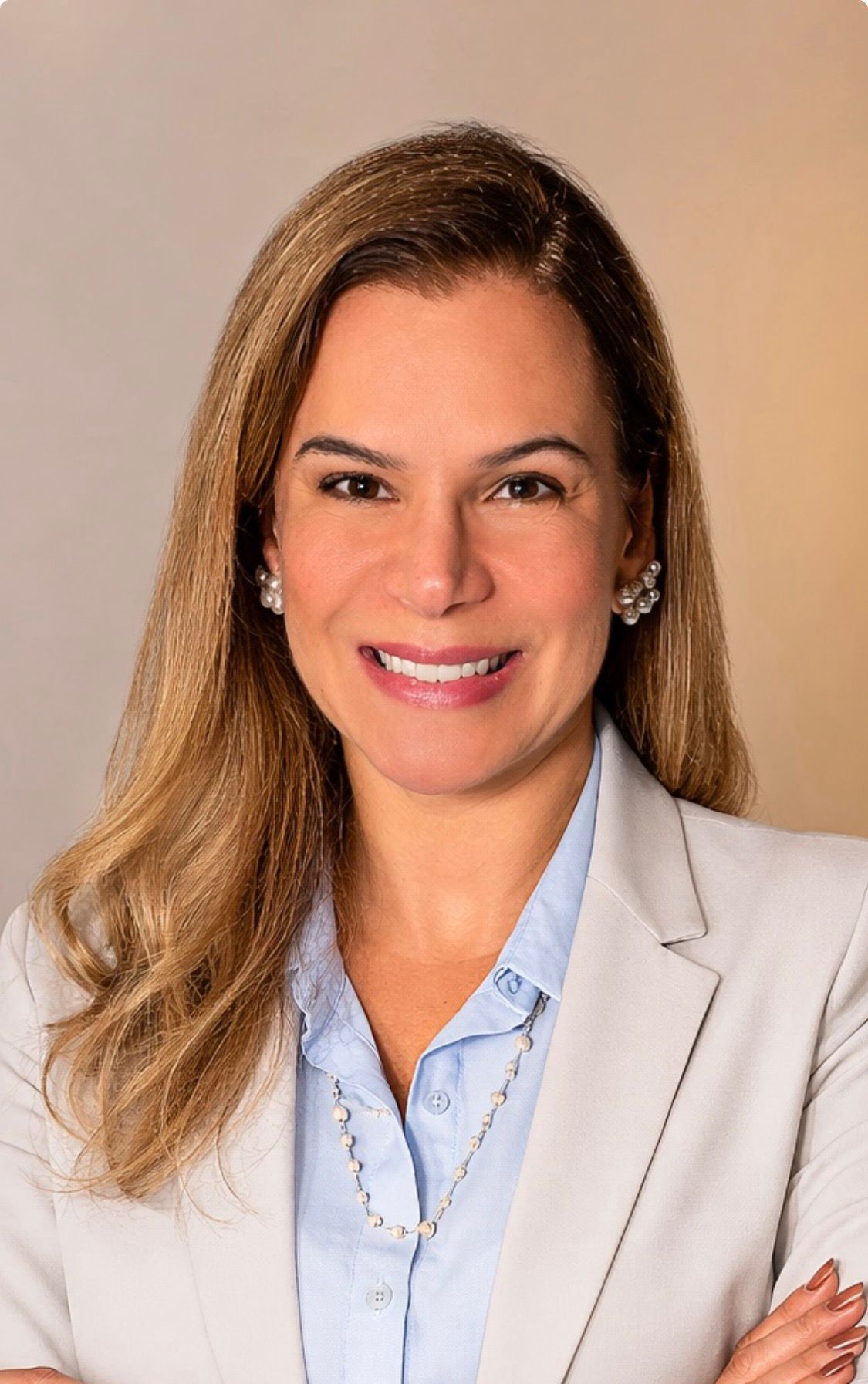

Immigration attorney and Visa Finder partner Caroline Azevedo lived the visa process before she ever filed one. That experience now shapes how she practices law, and what she expects from every client.
When the offer to join an immigration firm arrived in 2020, Caroline Azevedo could have turned it down. She was an investment attorney. She had never filed a visa petition. And she understood, better than most lawyers ever will, exactly how much could go wrong, because she had been through the process herself.
So she did not say no. She made a quieter and much harder decision. "I was courageous enough to say, you know what, I am going to learn," she recalls. "Because I want to help these people."
That instinct, to walk toward the difficulty rather than away from it, runs through her entire story. Azevedo describes her path into immigration law in one word: destiny. The full version takes a little longer to tell.
Caroline Azevedo of Visa Finder: From Brazil to a U.S. Law License
Azevedo is Brazilian, and already an attorney in Brazil, where she worked on government bidding processes. She first came to the United States in 2004 simply to visit. She liked it. She went home, then began looking, slowly and seriously, for a way to come back and study.
The early years were not glamorous. She wanted to study law, but her English was not strong enough to pass the TOEFL, so she changed her status to student and built her language skills the slow way, by living in the country and using it every day. A U.S. company eventually hired her, drawn to her experience with bidding processes, since the firm sold technology to federal universities in Brazil through formal bid procedures. From there she moved to Bupa, the British international health insurance company, where she worked until around 2013.
By then she had a green card and, finally, a place in a master's program in law. She stopped working to focus on the degree. Afterward came a finance company in Brazil, then a class action litigation project at a firm in New York. She took the bar exam, passed it, and then the calendar turned to 2020.
"COVID came," she says. "It was awkward. But I survived, thank God."
Why Caroline Azevedo Chose Immigration Law
The pandemic was the hinge. Azevedo was working for an investment company when an immigration firm, one focused on employment-based visas for Brazilian nationals, invited her to join. It would be her first professional contact with immigration law. It almost did not happen, because she very nearly said the job was not for her.
The reason was not doubt about the work. It was respect for it. As an immigrant, she had personally navigated visa extensions, green card applications, and the citizenship process. "I felt like it was so hard for me," she says. She knew the cost of a mistake. "I didn't want to be in a position of putting someone in jeopardy if I didn't really know what I was doing."
She also knew the field had a darker side. Azevedo speaks plainly about the people who take advantage of immigrants, who let dreams collapse through carelessness or indifference. "I didn't want to be that girl," she says. So before she would accept the responsibility, she earned it. She studied hard, until she felt genuinely ready. "When I joined the immigration field, I was already prepared and ready to help people."
What she carries from that period is a sense of stakes that never quite leaves her. Get it wrong, and "you're going to jeopardize someone's dream, someone's life project."
Inside Visa Finder: A Boutique, Fully Remote Immigration Practice
In 2024, after stints at two firms and a period working on her own, Azevedo joined Visa Finder, a fully remote immigration firm she describes as deeply ethical, one that takes each client's history and immigration goals seriously. The remote model also fits her life: a family health situation in Brazil means she travels often, and a firm without walls lets her keep practicing without compromise. Her partner, Diego Sales, founded the firm as a sole proprietor. She came aboard, and the two are now building out a team.
Visa Finder runs close to full service. Sales concentrates on the employment-based side, helping people move to the United States through O-1s, L-1s, H-1Bs, investor visas, and green card pathways. Azevedo handles the court. She represents clients in removal proceedings, whether they applied for asylum at the border, had a visa denied, or overstayed and landed in immigration court after something as small as a traffic stop. She also takes on family petitions and humanitarian cases, including U visas and VAWA petitions. The firm is a boutique by design, opening roughly a dozen new cases a month, and Azevedo personally reviews and signs every case that leaves the office.
Ask her favorite type of work and the answer is quick: the O-1 visa, for its speed, and immigration court, for everything else.
Life in Immigration Court: "It Is Not Straightforward"
Court is what energizes her, and it is also, in her words, the hardest part of the job. A visa application has a rhythm. You know the documents, you know the timeline, you build the case. Immigration court has no such comfort.
"Immigration court is more dynamic," she says. "It's not very straightforward." Every judge is different. Some request documents others would not. Hearings appear on the calendar simply to confirm a filing was made. A schedule she sets in the morning can be undone by a single afternoon notification, and the deadlines are not negotiable. Miss one, and a client can receive a removal order over a document.
"Court is court," she says. "We cannot disobey a judge's order."
What Caroline Azevedo Is Seeing on the Front Lines in 2026
Because she lives in that courtroom, Azevedo has a clear view of how the ground is shifting. She points to the current administration reshaping case law through Board of Immigration Appeals decisions, changing the landscape underneath practitioners and closing routes that were open only a short time ago.
She gives a concrete example. The BIA has signaled that a motion to change venue filed close to an individual hearing is less likely to be granted. In theory, that is procedure. In practice, she says, it punishes real people: a client who hires a lawyer only weeks before a hearing, or who has moved to another state for a job and simply wants to be heard where they now live.
The leniency that existed as recently as 2024 has thinned out, too. Prosecutorial discretion, once available to immigrants with clean records, steady work, and children in school, is now rarely considered. Judges and government attorneys, she says, are strict and not lenient.
Against that backdrop, the wins are smaller but heavier. "Every little winning we have is very meaningful," she says, because it is so hard to come by. The work that moves her most is preventing removal, keeping a family in the country they already call home. Watching authorities try to remove people who are part of a community and contributing to it, she says, "is very heartbreaking."
Her Advice to Immigrants: Don't Lie, and Bring the Evidence
Azevedo's guidance for her own clients is short and unsentimental, and she delivers it the moment a case begins.
The first rule: "Don't lie to me." She needs the full story to judge what she can realistically argue. When a client withholds something and it surfaces later, after she has already given advice, the client loses the chance to plan ahead and fix it.
The second rule is about proof. "Only a beautiful legal brief is not enough for an immigration court," she says. Clients have to work, alongside her, to gather every piece of evidence she requests.
Her broader counsel reaches beyond Visa Finder's own clients. Any immigrant filing an application today, even something that looks routine like removing conditions on a green card while still married to a U.S. citizen, should have an attorney review it first. Small inconsistencies between a current filing, a past application, and an interview can trigger a harsh result, one that puts the green card itself at risk.
A Win That Mattered: Protecting a Grandmother's Green Card
One recent case shows exactly why she gives that warning. Azevedo represented a woman in her sixties with vision problems and difficulty memorizing information. The client had been approved to interview with an interpreter, yet during the interview she misunderstood a question and mixed up dates.
USCIS read that as dishonesty. The agency denied her citizenship and notified her that her green card would be revoked, on the basis that she had lied.
She had not. Azevedo filed a motion to reconsider, prepared the client carefully for a second interview, and built a legal brief explaining what had actually happened. The outcome was not a perfect one, the client still did not pass the English test, so citizenship was not granted, but the decision that mattered was reversed. Her green card stayed intact.
For a lawyer who measures her work in meaningful wins, that was one of them.
Looking Ahead
Azevedo and Sales have set Visa Finder a clear target for the year: one million dollars in revenue, modest beside larger firms, but real room to grow for a boutique their size, and a foundation for expanding the team afterward.
What stands out, though, is not the number. It is the throughline. Azevedo entered immigration law afraid of not being good enough to carry someone else's future, and answered that fear by preparing until she was. She practices now in a system she openly calls harder than it used to be, and still treats every small victory as worth the fight.
"I want to help these people," she said, back when it was only an instinct. Six years on, in courtrooms that rarely make it easy, it has become the whole point.
LegalBridge Magazine features standout leaders in immigration and global mobility, sharing their stories and practical insight with a community of immigrants, attorneys, and global mobility professionals.




Bob Webber
SEP 16, 2025
Charles Kuck
SEP 15, 2025

Christa Byker
SEP 11, 2025