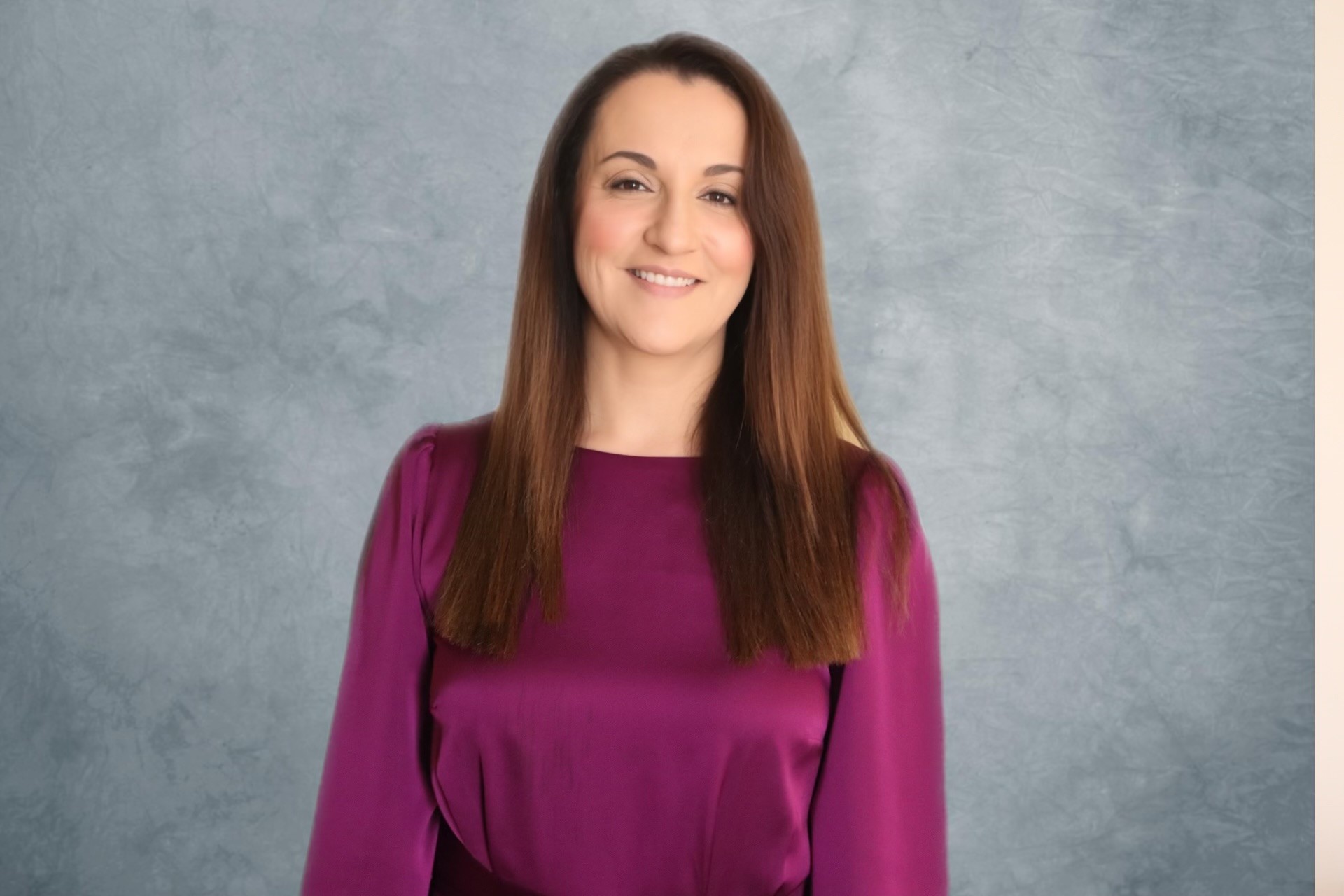

She was six, maybe seven years old, when her mother made the hardest decision a parent can make. From Pakistan, with no clear way to follow, she put all four of her children on a path to the United States to join a father who was already there. Spojmie Nasiri was the second youngest. It would be roughly six years before she saw her mother again.
Those years shaped everything. Growing up in Concord, in California's East Bay, in what she describes plainly as an abusive household with a father who was "pretty much non-existent," Spojmie and her siblings essentially raised themselves. Her older brother was barely a teenager. And in the middle of all of it, she remembers sitting in immigration offices, watching adults try to navigate a system that held her family's future in its hands.
"I don't know what was innate in me," she says, "but I knew that since I was a kid I wanted to be an attorney." She is certain those years of separation are the reason she chose immigration law specifically. The child waiting for her mother became the lawyer who reunites families.
Spojmie Nasiri's Path to Immigration Law Was Anything But Direct
Knowing the destination did not make the route obvious. In law school, Spojmie dabbled in family law, criminal law, even asbestos litigation. Nothing fit. She had wanted immigration from the start, but as a first-generation attorney with no mentors and no network, the early signals were discouraging. She still remembers the people who told her not to pursue it.
Law school itself was a feat of endurance. She had married in college, and during her three years of study she had her children, one after another. When she graduated, she could not find a job that worked for a young family. Her husband was completing his residency at UC Davis Medical Center, where the two had met as undergraduates. She was a licensed attorney with three children and, in her own words, no idea what she wanted to do.
So she volunteered. She joined the UC Davis Immigration Law Clinic, at the time the only clinic in the country representing detained immigrants. For two to three years she did pro bono work, traveling from Davis to the detention facility in Marysville and back, and from Davis to Richmond to San Francisco to stand beside clients in immigration court. She calls those her "most informative years of learning immigration law."
The decision to open her own firm came from her husband. "You have the legal knowledge," she recalls him saying. "Why don't you just open up your own practice?" It was not an easy yes. She did not want to put her children in daycare, and she had no family in the profession to lean on, no mentor down the hall. She built the Law Office of Spojmie Nasiri from scratch, learning how to run a practice while running it. For her first eight or nine years she focused on detained deportation defense, often for non-Spanish-speaking clients from the Philippines, India, and Bangladesh, people she could reach directly in English.
Today her practice centers on the most vulnerable immigrants of all: victims of crime, sexual assault, and human trafficking. She handles VAWA petitions, U visas and T visas, family-based adjustment of status, consular processing, and hardship waivers. One morning before our conversation, she had met with a woman who had been brought to the country, locked up, and managed to escape long enough to find Spojmie's number.
When Kabul Fell, Spojmie Nasiri Showed Up
In August 2021, as Kabul fell, Spojmie felt something she could not argue with. "You're Afghan, you speak the language," she remembers thinking. "What can you do?"
What she did was build infrastructure. Working through AILA and Catholic Bishops organizations, she helped push to bring legal services onto the eight military bases across the country where Afghan evacuees were being housed, from Virginia to Wisconsin to New Mexico to Arizona. She did not just show up to volunteer. She created the programs that made the legal services possible, then walked into enormous tents holding tens of thousands of Afghan evacuees on humanitarian parole and explained to them what their options were.
That work never stopped. By her own estimate, roughly 40 percent of her time today goes to pro bono service: Know Your Rights presentations delivered in person and over Zoom, in partnership with the American Bar Association, AILA, Human Rights First, and others. Spojmie speaks Pashto and Dari, and for a community that has spent years in limbo, having an advocate who speaks their language is not a small thing.
Lessons from Building the Law Office of Spojmie Nasiri
Ask Spojmie what she would tell an attorney earlier on the path, and the first answer is about the voice in your own head.
"We are always having the imposter syndrome, especially for women of color," she says. She felt she had to work twice as hard simply to prove she belonged in the room. When someone implied she was there because of her background rather than her ability, her answer was firm: "I'm here because I have the legal knowledge and the skills." Confidence, she says, is something you have to build deliberately, and so is reputation. "I hope that when people hear my name, they think of integrity and honesty, because that carries with you."
Her second lesson is about courage in asking for help. She had no familial ties in law, but she found a few mentors who made a difference, and she urges others not to hesitate. "The worst case scenario is you're just going to get a no," she says, "and you can just move on."
Her third is about why clients actually stay. Spojmie credits the survival of her firm almost entirely to referrals and trust, to clients who know "100 percent that I would never put them at risk or just take their money." Care about the people, she says, not the numbers. And because immigration law never stops changing, she insists no one can do it alone. Joining organizations like AILA and the ABA is not optional. "The legal knowledge has to be shared through the network."
Spojmie Nasiri on AI, Rising Denials, and a Harder Climate
Spojmie does not believe technology will replace immigration attorneys, and she has a clear-eyed reason. Clients increasingly arrive having researched their cases through AI tools, and in her experience they are frequently wrong. A form filled out without understanding the weight of a single yes or no answer can follow someone for years. She describes the danger precisely: answer one question incorrectly on a green card application, then contradict it later during naturalization, and the consequence can be a finding of misrepresentation or fraud. "It's not as easy as they think," she says, "when you don't understand the consequences."
The bigger pressure on her practice is not technology at all. It is the climate. With travel bans affecting more than 75 countries and a sharp rise in denials, many immigrants are holding off on filing for relief they are genuinely entitled to, afraid that a denial could place them in removal proceedings. Spojmie has watched her own caseload fall steeply. She runs two offices and a staff of five, and she is candid that her current goal is simply to stay afloat.
Her counsel to fearful clients is honest rather than reassuring. For those who are eligible for citizenship or have a viable path, she generally advises filing now, while explaining every risk, because she expects restrictions only to tighten. For those with complicated records, she will tell them plainly that they may be safer waiting. The throughline is the same one that has defined her entire career: tell people the truth, and let them decide with their eyes open.
A Promise That Took Nine Years to Keep
Spojmie's most memorable case is the one she keeps returning to, the one she was telling her now-adult son about the day before our conversation.
The client was a young woman from an African country, small and timid, who had been severely sexually abused in her home country, abused again by the spouse who brought her to the United States, and saddled with paperwork on which her signature had been forged. The case resonated with Spojmie in a way she could not shake. As a child in Afghanistan, she too had fetched water, and this young woman had been attacked, again and again, doing exactly that.
For years they fought. They litigated, they moved the case to follow the client when she relocated, they waited for an interview that never seemed to come. The first officer to hear it had been dismissive, closing the file in two minutes. "I could just see her heart falling," Spojmie says, "and I could see the anger in me."
When the case finally came before a compassionate officer, the petition was approved. But there was a catch. Because the case had dragged on so long, the same officer could not also conduct the client's citizenship interview, and Spojmie watched her client's face fall all over again. So she pushed. "I'm willing to wait 40 hours, whatever you want," she told the officer. "I just got to get this done today." The officer found a supervisor. Could they wait two hours? They could. Spojmie took her client, a woman who weighed barely 80 pounds, out for chai and baklava at a Yemeni coffee shop in San Francisco to pass the time.
They came back to a second officer who spent seven minutes on the file and approved the citizenship outright, then asked if they could rush to make the day's final 3 p.m. oath ceremony. They made it. Spojmie waited outside for 45 minutes because she needed to see it for herself. When her client emerged, holding her naturalization certificate, she simply cried.
The two still keep in touch. The client, who worked as a security guard and had almost nothing, sent Spojmie a 100-dollar gift card to that same coffee shop. Spojmie still uses it. And the young woman, after nine years, was finally free to fly home and see her parents again.
A Message for Women Entering Immigration Law
Spojmie is honest that the path was harder because she walked it as a mother. She found out she was pregnant in her first year of law school, had her daughter in January, and had to take a semester off. The cultural message she heard was that she was done, that she should just stay home. She went back the next semester anyway.
People sometimes ask her if she was crazy to attempt all of it at once. "No," she says, with a kind of cheerful honesty. "I don't know what I was doing." But she knows what carried her, and she offers it to the women coming up behind her as something close to a creed: perseverance, determination, and the willingness to keep going.
It is, in the end, the same quality that kept a nine-year case alive, and the same quality that grew in a child waiting six long years for her mother to arrive. For Spojmie Nasiri, determination was never just a trait. It became a way of practicing law.


Bob Webber
SEP 16, 2025
Charles Kuck
SEP 15, 2025
Christa Byker
SEP 11, 2025