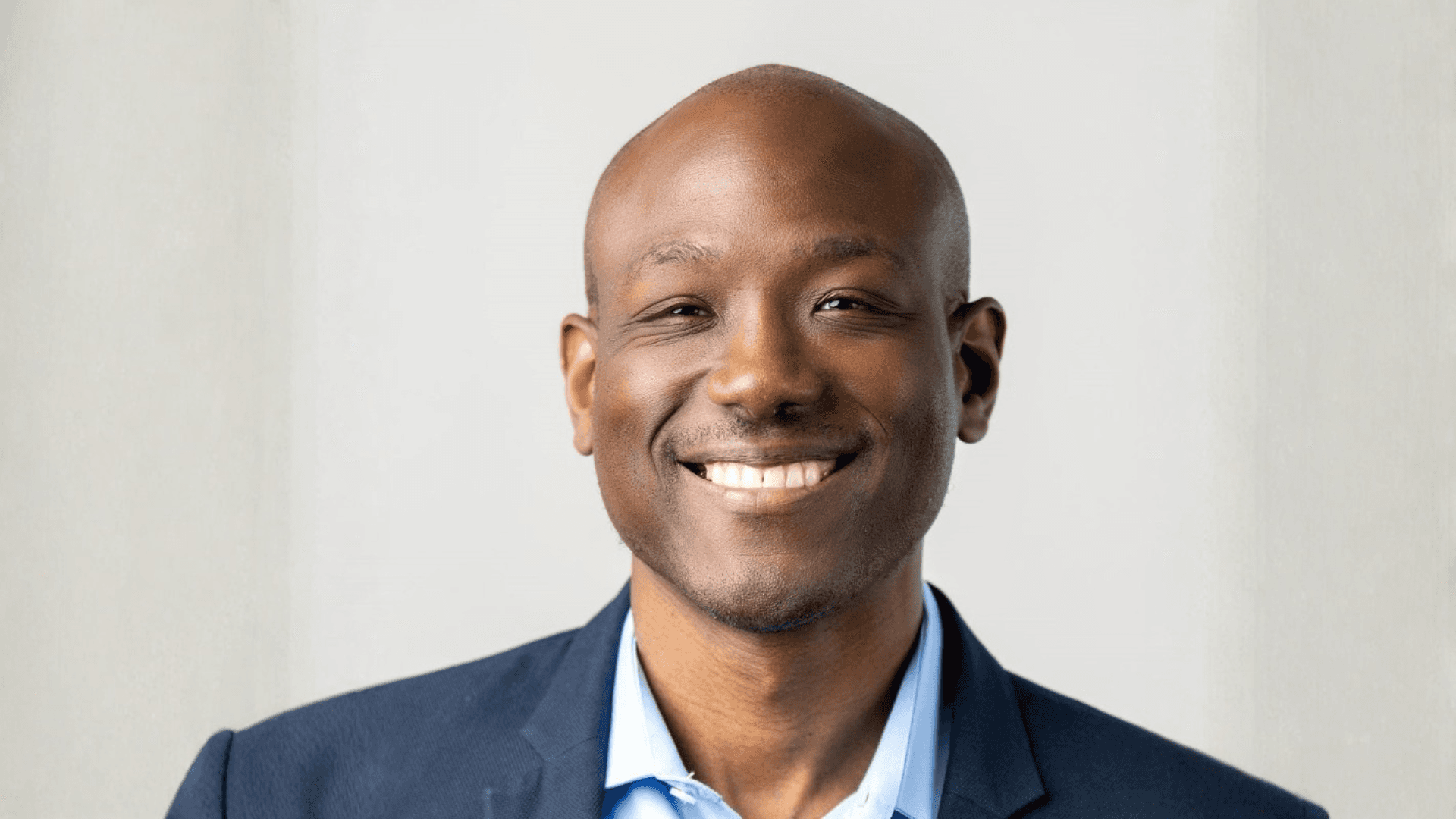

From Denying Visas to Granting Dreams: Christopher Richardson's Mission to Demystify Immigration
When Christopher Richardson denied an O-1 visa application in Nigeria, he felt something break inside him. The applicant, seated across from his window at the U.S. Embassy, had paid $10,000 for legal advice that was, in Richardson's professional assessment, terrible. The case was hopeless before it ever reached his desk.
"I'm like, man, I don't have to charge anybody $10,000," Richardson recalls. "We just need that knowledge gap closed."
That moment at the embassy window planted a seed that would eventually grow into Argo, a subsidiary of BDV, now the largest independent EB3 agency in the United States. But the path from U.S. Foreign Service officer to immigration entrepreneur would take Richardson through four countries, multiple near-resignations, and a fundamental reimagining of how immigration services should work.
Christopher Richardson's Unexpected Path to Immigration Law
Richardson never planned to become an immigration attorney. Fresh out of law school, he pursued his first passion: employment law. The diplomatic dreams he harbored as a young man took a backseat to the practical realities of building a legal career.
Then one day, the immigration partner at his firm stopped by his desk with an unusual request. Would he handle a renunciation of U.S. citizenship case?
"I said, sure," Richardson remembers. "And so I did that case for her, and then I started doing other cases for her. And I was like, oh, wow, this is actually pretty fun."
There was no dramatic origin story, no family immigration saga that pulled him into the field. Just curiosity, followed by competence, followed by genuine interest. "I wish there was some sexy story," he admits with a laugh, "but honestly, that's kind of how I got into immigration, and I really haven't looked back since."
Inside the U.S. Embassy: What Christopher Richardson Learned as a Visa Officer
After practicing immigration law, Richardson finally fulfilled his childhood dream of joining the State Department. As a consular officer, he processed visa applications in Nigeria, Nicaragua, Pakistan, and Spain. He saw immigration from the other side of the window.
What he discovered troubled him deeply.
"What I found startling was just how many people came to my visa window paying an ungodly amount of money to get bad advice," he says. The system he served operated behind what he calls "a wall of mystery," with applicants left guessing about requirements, processes, and decisions.
"When I was a visa officer, there was a lot of just mystery as to what we did, why we did it, the decisions we made," Richardson explains. "And we deliberately made it that way."
In each posting, he considered quitting. Lagos. Managua. Islamabad. Madrid. The urge to leave government service and help people directly grew stronger with every posting. "I actually came pretty close in Nicaragua, in Pakistan, and in Spain too, of just quitting the service and doing it."
How Christopher Richardson Co-Founded Argo Visa and Later Built BDV
When Richardson finally left the State Department and joined Nelson Mullins, the law firm, his focus crystallized: how do you close the knowledge gap between government and the people it serves?
The answer came through BDV. Richardson approached founders Ron and Britt Vergnolle with a vision unlike anything in the immigration space. Most visa consultants who were former officers operated independently, usually living abroad in countries where they had once served, offering in-person advice to applicants.
Richardson saw an opportunity to do something different.
"You really need a company that's tying a bunch officers together," he explained to the BDV founders. He envisioned what he calls "an away station" for former diplomats transitioning to civilian life, a place where recent officers could find community while providing fresh, current knowledge to clients.
"It's really hard to transition from being in the State Department to being in civilian service," Richardson notes. "Most people have no idea what it is you did as a diplomat."
The founders loved the idea. "And we just ran with it," Richardson says.
Understanding EB3: Christopher Richardson Explains the "Other" Employment Visa
In the hierarchy of employment-based immigration, EB3 often gets overlooked. EB1 captures the headlines with its "Einstein visas" for individuals of extraordinary ability. EB2 attracts high-achieving professionals. But EB3, particularly the "unskilled" category for jobs requiring less than two years of experience, occupies a different space entirely.
Richardson reframes the narrative. "EB3 unskilled is a pathway and an apprenticeship to success," he explains. "It's a way to get people who are here on F1 visas or student visas who are here studying, or people who are abroad who want a gateway or entry point to U.S. green card permanent residency."
The jobs involved are familiar: McDonald's, Wendy's, Chick-fil-A, manufacturing positions out west. These are the businesses at the heart of the American economy, matched with foreign nationals "who really believe in the country, want to work hard and dedicate themselves for at least a year to a job."
Richardson describes BDV as something more than a placement agency. "We really are a matchmaking service between small businesses, franchise owners, and those who want to fulfill the American dream and live the American dream."
But he's quick to distinguish BDV from typical matchmakers. "Most marriage counselors or marriage people who do matching, they're like, well, you're married. See you later. We invest in the relationship."
The BDV Difference: Why Christopher Richardson's Clients Become Employees
Perhaps the most striking statistic in Richardson's arsenal isn't about visa approvals or processing times. It's about what happens after the immigration journey ends.
"Twenty-two, 23% of our staff are former clients," he says. "And I don't think there's any company in the world that can say that."
He challenges anyone to find a comparable example. "I've never left a used car dealership. I've never left a lawyer situation or experience. I've never left a restaurant or a grocery store and been like, I love that experience so much that I want to come work for you."
The phenomenon speaks to something fundamental about how BDV operates. "Our clients appreciate and love and endorse so much of what we do that they actually want to come work for us when their time is up working the year, because they really believe in this mission."
Take the director of client services: a Brazilian lawyer who came through the EB3 program bussing tables at a restaurant. Now she leads an entire division. The customer relations team? Former clients, every one of them. Marketing? An immigrant. Sales? An immigrant.
"When people ask me, what makes your company so different? I'm like, clients at the end of this process actually want to work with us," Richardson says. "They want to build and help other people do and navigate this process."
Stories of Transformation: Christopher Richardson on the Human Side of EB3
Richardson struggles to highlight just one success story because, as he puts it, "they're all so powerful to me." But when pressed, the examples flow readily.
There's the teenager from a rural village in northern Nicaragua who grew up rising at 4 a.m. every morning to milk cows and gather chickens and water for his aging family. He applied for the EB3 program and now holds a green card. "That's generational," Richardson says. "That's changing a life. That is setting a new family on a different path entirely."
There's the person from Russia who faced persecution and needed escape. Now a green card holder, starting fresh in America.
During the fall of Afghanistan, BDV brought over several people, securing their visa interviews and green cards. "Now they're here, living in America, starting a family, putting their kids in school."
A man from a village in Zimbabwe worked for a year or two as a janitor through the program. Today he works in biotech.
"We've helped over 2,000 people, close to 2,000 people get green cards in our time," Richardson notes. Some have obtained U.S. citizenship and now run their own businesses.
Christopher Richardson's Advice for Entrepreneurs Starting Immigration Businesses
For lawyers considering leaving large firms to start their own practice, or immigrants dreaming of launching businesses, Richardson offers hard-earned wisdom rooted in self-awareness.
"You have to be realistic on what it is that you're trying to do," he begins. "If it's something that everybody else is already doing, what is it that makes you different or special?"
He warns against the overconfidence that afflicts many professionals transitioning to entrepreneurship. "A lot of people go into starting a business or running a business and just think that they instinctually know everything. It's hard. It's hard to make payroll, it's hard to find clients, it's hard to justify what is your value."
His second principle cuts even deeper: know your superpower.
"I'm not the most technical in-the-weeds type of lawyer. Never been. I look at the big picture. I don't like looking in the details of stuff," Richardson admits. "But I do know how to bring people together. I do know how to go out and find people. I do know how to make people feel at ease."
That self-knowledge guides everything. "All the other stuff that I don't know, I'm comfortable enough to ask for help. I'm comfortable enough to hire people around me who are smarter than me in X, Y, or Z."
Hiring Philosophy: What Christopher Richardson Looks for in Candidates
When it comes to building teams, Richardson prioritizes drive over experience.
"Experience is nice to an extent," he acknowledges, "but you need people who are driven, people who actually believe in what the mission is, people who actually want to do it, people who want to show up."
He sees a paradox in extensive experience. "Experience has a way of limiting actually your ability to think outside the box." A paralegal with 20 years of experience might seem ideal, but Richardson worries about rigidity. "They've done it this way. That's the only way they've done it. And they're not going to do anything new."
His interview question gets to the heart of what he values: "Where's the situation where someone told you not possible, but you made it a yes? You got there."
"That's what I like to see in BDV," he explains. "I want to see people who turn no's into yeses because we don't have enough of those people in the world. Too many people are content with no and maybe move on to the next thing."
Christopher Richardson on AI and the Future of Immigration Law
Looking ahead, Richardson sees artificial intelligence as a tool for doing more, not doing less.
"How do we utilize tech so that our people can do their job even better? How do we help even more immigrants now because we can save time utilizing tech?" he asks.
The applications are practical: AI assisting with legal filings and document assembly, but also helping qualify or disqualify candidates faster. "A lot of the law, you spend time trying to figure out whether someone is qualified or not qualified for something. But the faster we can get to that, the faster we can go on to the next person."
For BDV, technology serves the mission of scale without sacrificing the human element that makes their approach distinctive. The goal remains constant: help that person who isn't qualified understand why and perhaps point them toward alternatives where they might succeed.
What Christopher Richardson Tells Clients Waiting for Their Green Cards
For those in the midst of the EB3 process, feeling anxious and uncertain as years pass, Richardson offers perspective through metaphor.
"You should think of immigration as the sea. It's an ocean. And think of BDV as a ship. And my job is to be the captain of this ship along with my entire team. And we're going to get you from port to port successfully."
He's honest about the journey ahead. "You're going to have days when it's sunny and it makes a lot of sense, and you're going to have days where it's cloudy and stormy. I can't control the weather. I can't control whether the sea rises or falls."
What he can control is the ship itself. "I can control how the ship steers and how I get you from that place to that place."
The waiting, Richardson acknowledges, tests everyone. Three years. Four years. Employers often forget the timeline despite repeated warnings. "Even though we tell them it's a long wait, they sometimes forget that it's a long wait."
But his message to those enduring the wait is unequivocal: "Be patient and know that the process is long, but it's worth it. The people who wait and they endure it and they go through it, they never regret it because they're so happy to have gotten that green card and to change the trajectory of their lives and their family's lives."
When clients panic about policy changes or processing delays, Richardson stays steady. "Take your Dramamine. It's okay. We're going to get from point A to point B. I'll get you there. And we're not going to have to swim it either."
Christopher Richardson's Legacy: Cleaning Up the EB3 Industry
Perhaps Richardson's proudest achievement isn't measured in green cards granted or revenue generated. It's about what BDV did for an entire visa category that had lost its way.
"EB3 was kind of crummy, lots of distrust," he recalls of the landscape when BDV entered the space. "There really were some not so good actors in the EB3 space."
BDV brought professionalism and talent to a neglected corner of immigration law. "Even our competitors will tell you, irrespective of what they think of us, that the one thing that they admire about us is that we really cleaned up this space and really made it respectable again, because EB3 had lost a lot of that in 2017, 2018."
Now, as the largest independent agency in the EB3 space, Richardson's focus turns to refinement. The foundation is solid. The question becomes: how do we make it better?
For an industry that once operated in shadows, that commitment to continuous improvement represents its own kind of revolution. And at the center of it stands a former visa officer who saw too many broken dreams on the other side of the window and decided to do something about it.
Christopher Richardson is based in Charleston, South Carolina, where he leads the EB3 vertical at BDV and continues to advocate for closing the knowledge gap in immigration services.


Bob Webber
SEP 16, 2025
Charles Kuck
SEP 15, 2025
Christa Byker
SEP 11, 2025