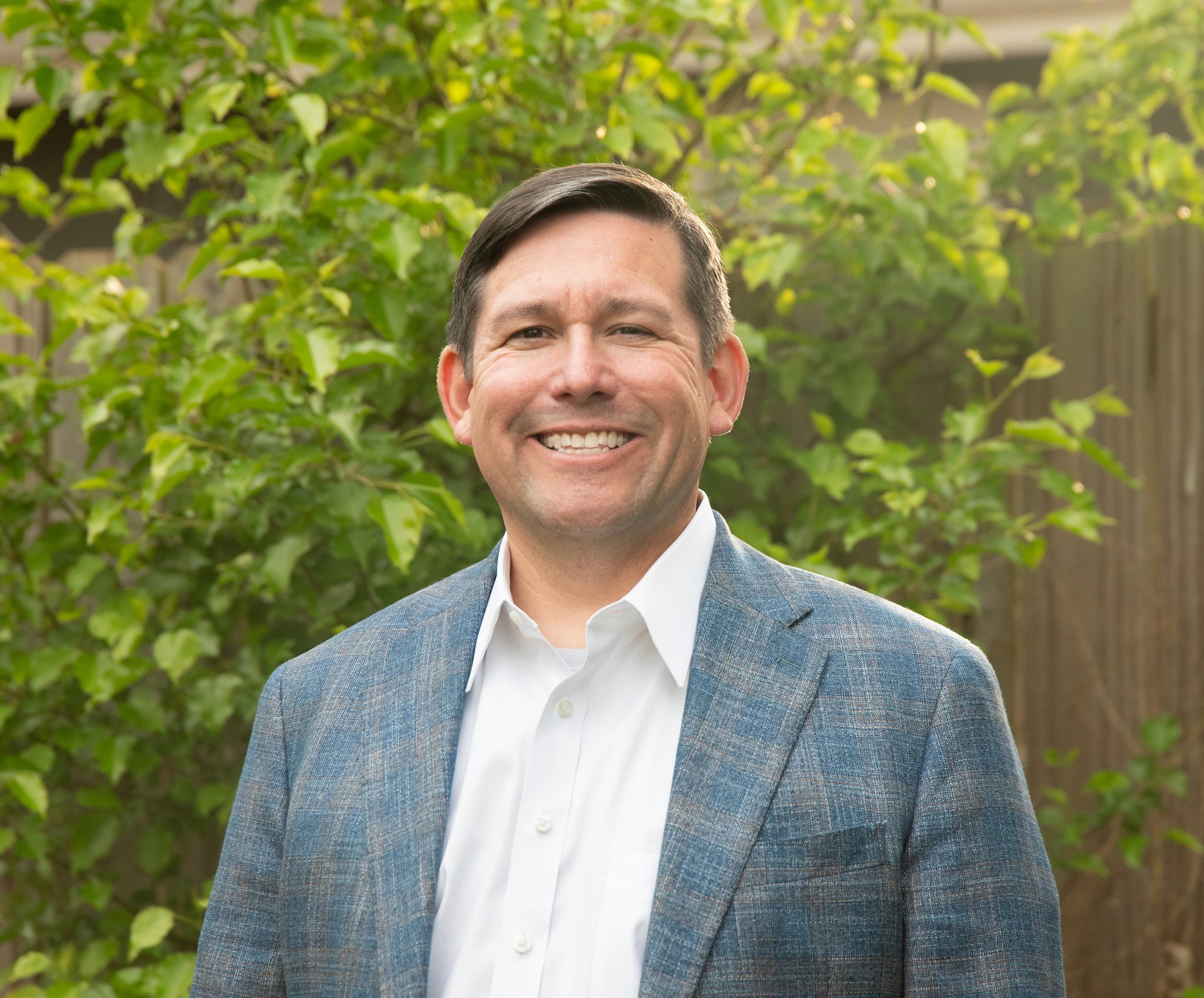

Dana Deree, President of AGC, Shares How 20 Years of Diplomatic Service Led Him to Transform Legal Immigration
The moment that would eventually change Dana Deree's life came not in a boardroom or a policy meeting, but at a visa interview window in Managua, Nicaragua. He was a young vice consul processing routine applications when dozens of H2B beekeepers appeared before him, workers on their fourth, fifth, and sixth seasonal contracts to the United States.
"My local employees said, 'These are the richest guys in their village,'" Deree recalls. "They are making good money in the US, they send it home, put their kids through school, build houses, invest in their own businesses."
That observation planted a seed that would germinate across two decades of diplomatic service, multiple continents, and one global pandemic before finally blooming into AGC, the ethical recruiting firm Deree now leads. The company specializes in H2A and H2B visa workers and stands as the only US-based private H2B company to achieve Clearview certification as Global Ethical Recruiters.
But to understand how Deree arrived at this moment, you have to go back much further, to a childhood marked by poverty, homelessness, and the foster care system.
Dana Deree's Early Life: From Homelessness to the Marine Corps
"I'm the son of an immigrant from Central America," Deree explains, setting the stage for his story. "My mom did not speak a word of English when she came to the US at nine. She didn't own shoes until she was six."
Raised by a single mother alongside his brothers, Deree grew up in circumstances that most would consider insurmountable. The family was very poor, sometimes homeless. By age ten, Deree became a ward of the state, remaining in foster care until he graduated from high school.
A week after graduation, still just seventeen years old, Deree shipped off to Marine Corps boot camp. It was the beginning of a trajectory that would take a kid who aged out of foster care to become a US diplomat serving on Secretary of State Condoleezza Rice's 24-hour watch.
After the Marines, where he served as a lance corporal and machine gunner during the Gulf War, Deree returned to Arkansas to continue higher education. He earned both his undergraduate and master's degrees from Harding University in Searcy, then taught in Arkansas public schools for six years.
How Dana Deree Discovered the US Foreign Service
The pivot toward diplomacy came almost by accident. Shortly before graduating with his undergraduate degree, Deree was in the college placement office looking for work. The job he would actually get was at a poultry processing plant as a "product reconditioner," a position that involved picking up pieces of chicken that fell off the conveyor belt, washing them, and putting them back on.
But while in that placement office, something else caught his eye.
"I saw a brochure for the US Foreign Service, the existence of which I had never contemplated before," he says. "It said, 'Serve your country, travel the world, learn languages.' And it just sounded like the coolest thing in the world to me."
The path to becoming a diplomat is not easy. It typically requires international experience and language skills, neither of which Deree possessed. His only international experience at that point had been as a Marine machine gunner in the Gulf War. But he was deeply involved in his community and civic leadership, eventually parlaying that engagement into an argument that the Foreign Service should hire him.
They did. Dana Deree joined the Foreign Service on September 10, 2001.
"Which made for a very interesting second day," he notes with characteristic understatement.
Dana Deree's Two Decades in the US Foreign Service
Over the next twenty years, Deree served across the globe: London, Managua, the State Department Operations Center, Tijuana, Kapisa in Afghanistan doing counterinsurgency work, Auckland covering New Zealand and Samoa, back to Washington as the Nicaragua Desk Officer and then as a branch chief in the Office of Children's Issues handling international adoption issues. He later went to Honduras as Consul General and finished his State Department career in Mexico City as the coordinator for US Citizen Services for all of Mexico.
That final posting dealt with everything from passports to arrests to murders to kidnappings to hurricanes. "Just all the things that can happen to Americans overseas," Deree summarizes.
But it was the consular work, the visa processing and immigration policy, that kept drawing him back. In New Zealand and Samoa, teams he led adjudicated hundreds of H2A farm workers and thousands of cultural exchange participants. In Samoa specifically, he encountered C1D crew visas for workers joining vessels around the world.
"Very similarly to those beekeepers back in the day, this is a country with limited economic opportunity," he observes. "And this was a way for people to parlay their hard work into changing their lives."
Dana Deree's Work as Consul General in Honduras: Exposing Recruitment Fraud
The culmination of Deree's immigration focus came during his tenure as Consul General and acting Deputy Chief of Mission in Honduras, where immigration was at the forefront of US policy concerns. Before even arriving, during the standard consultations with government entities that diplomats conduct before overseas postings, Deree learned troubling news from the Department of Homeland Security.
Despite relatively few H2A and H2B visas being issued in Honduras, there was a high degree of non-compliance. Workers were absconding, overstaying, disappearing. DHS was considering eliminating Honduras from the program entirely.
Knowing how vital these legal pathways were to the people using them honestly, Deree set himself a goal: at minimum, preserve the program for those following the law.
"I had my anti-fraud unit conduct a detailed study of every employer, attorney, recruiter, facilitator who had anything to do with anybody getting an H2A or H2B visa in the previous five years," he explains.
The findings were revelatory. A relatively small percentage of entities were responsible for a large percentage of the non-compliance. By immediately refusing visas to workers coming through those bad actors while fast-tracking those with perfect or near-perfect compliance records, Deree's team convinced DHS that the system had been tightened.
But the investigation revealed something even more disturbing about the root causes of non-compliance.
"It was very common for local recruiters to extort these workers for as much as ten to fifteen thousand dollars," Deree says. "And these are astronomical numbers for very impoverished people."
How Dana Deree Created a Solution to Worker Exploitation
The mechanics of the exploitation were insidious. Workers would go to loan sharks to pay the recruitment fees, then receive placement on a visa list, an airplane ticket, and passage to America. The debt pressure created two outcomes: either workers who had no intention of actually working and simply disappeared into the US upon arrival, or workers who genuinely wanted to comply with the law but faced enormous pressure to overstay because their family members' lives were at risk if they failed to repay the loans.
"The employer is not recruiting these workers and getting them their visas," Deree explains. "They're hiring some firm in the US, but almost exclusively those firms themselves subcontract the actual recruiting to what usually amounts to a guy in a village. Guy in a village is offering very attractive rates to those US facilitators and employers because they're then making their money out of extortion from these desperate workers."
Deree's solution was elegant and practical. He presented an idea to the US Agency for International Development: fund a program through the Honduran Ministry of Labor to provide recruiting services for free, cutting out the predatory middlemen entirely.
USAID approved the proposal. The program was later replicated in El Salvador and Guatemala, with each country eventually processing around 10,000 workers per year through the ethical channel.
Dana Deree's Vision for Country-Specific Supplemental Visas
Deree also recognized a structural problem in the existing visa system. The statutory cap on H2B visas is severely limited: 33,000 on October 1 and 33,000 on April 1. With US demand far exceeding supply, employers relied heavily on "returning workers" from established pipelines in Mexico, Jamaica, and South Africa.
There was little incentive to recruit from the Northern Triangle countries of Honduras, El Salvador, and Guatemala, the very nations experiencing the most severe irregular migration crises.
Deree proposed a new class of supplemental visas available only to workers from countries with migration issues. If that were the only way to get additional workers, employers would have to hire from those countries, creating a new pipeline of returning workers and offering a legal alternative to dangerous irregular migration.
The idea gained traction. The Trump administration's Secretaries of Labor and Homeland Security approved the supplemental visas, set to take effect on Leap Day 2020.
Then COVID-19 happened.
How the Pandemic Changed Dana Deree's Career Path
All land, air, and sea transportation to and from Honduras was canceled. The supplemental visas were pulled. Deree's carefully planned job fairs with the Ministry of Labor vanished.
Instead, with more than 10,000 US citizens trapped in Honduras, Deree led the embassy's evacuation effort, which he describes as shutting down all operations and getting Americans out through every means available: military transport, empty ICE deportation planes returning to the US, negotiated deals with United and American Airlines.
His own family evacuated home to Arkansas while he remained at post. The separation was agonizing. When he transferred to Mexico City hoping it might be easier to travel back and forth, the isolation continued.
"Very shortly after I got to Mexico, I just realized I needed to retire," Deree says. "I needed to be a dad and a husband."
Dana Deree Launches AGC: Building an Ethical Recruiting Company
Facing the question of what to do with the rest of his life, Deree made a list. Two pages on a legal notebook cataloging everything he thought somebody might pay him to do with his experience.
He considered international organizations based in Arkansas, security consulting, political appointments, corporate positions at Walmart or Tyson. Somewhere on the second page was an idea for a business to ethically recruit workers from Honduras.
"It was really just an idea," he says. "But the very first thing I did was call people I knew who had been doing it for years and asked for their advice and thoughts."
The response was overwhelming. One company that staffs more than 10,000 H2B workers annually in hospitality offered to be his first client. An immigration attorney offered to partner with him at no cost while they built the business together. Another company processing 30,000 H2A and H2B visas offered discounted services to help him get started. Friends wanted to invest.
"Nothing else was particularly exciting me or the doors weren't open," Deree recalls. "And this one, the doors swung open and I was pushed through them. I don't even know that I ever had a choice."
The business launched in December 2021. Deree and his co-founders each invested $50,000 and never took out a loan. They made their money back in year one.
AGC's Growth: From Startup to Acquisition in Just Over Two Years
The growth was explosive and demanding. "We had to build the airplane while we were flying," Deree says. Early clients included Marriott Vacation Club, Holiday Inn, Montage Resorts, National Parks, Graceland, Tyson Foods, auto manufacturers, and Riceland, the world's largest rice producer.
In the early chaos, all hands were on deck. Deree's son, then a junior in high school, helped make visa appointments.
Just as AGC was launching, the Biden administration revived Deree's original idea for country-specific supplemental visas. The timing was serendipitous.
"We were on the ground with our own recruiters in Honduras right when that came out," he says. "I didn't even know it was coming. It was just really great timing that we took advantage of."
By 2023, with the weight of running a growing company from his attic while managing the inevitable ups and downs, Deree began conversations with BDV Solutions, now called Vanteo and owned by Astara Capital Partners. In April 2024, just two years and four months after launch, AGC was acquired.
Deree continues to run the company as a subsidiary, now with access to marketing, IT, and technology resources that let his team focus on what they do best.
AGC's Ethical Certification: Dana Deree's Commitment to Zero-Fee Recruiting
Perhaps the achievement Deree is most proud of is AGC's Clearview certification as Global Ethical Recruiters, a rigorous designation from Stronger Together, a UK-based organization funded by Walmart, Amazon, Target, and similar corporations.
"I believe we are the only US-based private H2B company to have that," Deree says.
The certification process included unannounced site visits, interviews with workers and employer clients, and comprehensive review of operations, contracts, and HR manuals. The focus was precisely on the issue that had troubled Deree since his Consul General days: ensuring zero cost to workers.
"It is illegal to charge workers anything, but it is so prevalent out there," he explains. "They're not even supposed to pay for a taxi to the airport or the food they eat the day they fly to the US. They don't pay us a dime. Everything comes from the employers."
The results speak to the effectiveness of the ethical approach: AGC maintains a 99-plus percent visa approval rate and a 98 percent retention rate.
Dana Deree on the Future of H2 Visa Programs and the Role of Technology
Today, AGC staffs workers for the Belmont and Saratoga racetracks, Oaklawn in Arkansas, hospitality venues, landscaping companies, manufacturers, and carnivals. The company continues expanding into new economic sectors.
Deree is also advocating for increased visa caps and the return of country-specific supplementals.
"You can have all of the barriers to immigration that you want, but with our economy so big, it's just always going to be a draw for people who are desperate," he argues. "So it's much better to have legal pathways that take care of everybody."
On the question of technology and artificial intelligence in immigration, Deree sees potential for the State Department to use AI tools to pre-screen visa applicants, helping identify those most likely to comply based on factors like family ties, travel history, and community involvement.
"While a human will always have to and should always make the final decision, I think AI tools could help organize the applicant pool to highlight the most likely risks, including for security, while at the same time highlighting the people who are highly likely to comply," he suggests. "Which will make the humans' jobs easier."
Dana Deree's Message to Employers: Ethical Recruiting Is Worth the Investment
For employers navigating the current immigration landscape, with the end of temporary protected status, reduced refugee admissions, and the elimination of certain work authorizations, Deree has a pointed message.
"There are workers to be had in a legal way. It is going to cost more money," he acknowledges. "But I would say that employers are at great legal and reputational risk if it is too inexpensive, because it costs what it costs."
The choice, as he sees it, is clear: You can get workers through exploitative systems where they have been extorted, have gone to loan sharks, and could have their family members harmed. Or you can work with ethical and legal recruiters who charge reasonable fees.
"You pay your lawyers, you pay your accountants, you pay your electricity bills," Deree says. "You should pay a reasonable fee to have reliable labor year after year, which is going to allow you to keep your doors open, expand, and make far more money than any of this costs."
It is advice born from a career spent on both sides of the visa window, from a childhood that taught him what desperation looks like, and from an unshakeable belief that legal pathways, done ethically, can transform lives.
Just like they did for those beekeepers in Nicaragua all those years ago.




Bob Webber
SEP 16, 2025
Charles Kuck
SEP 15, 2025

Christa Byker
SEP 11, 2025