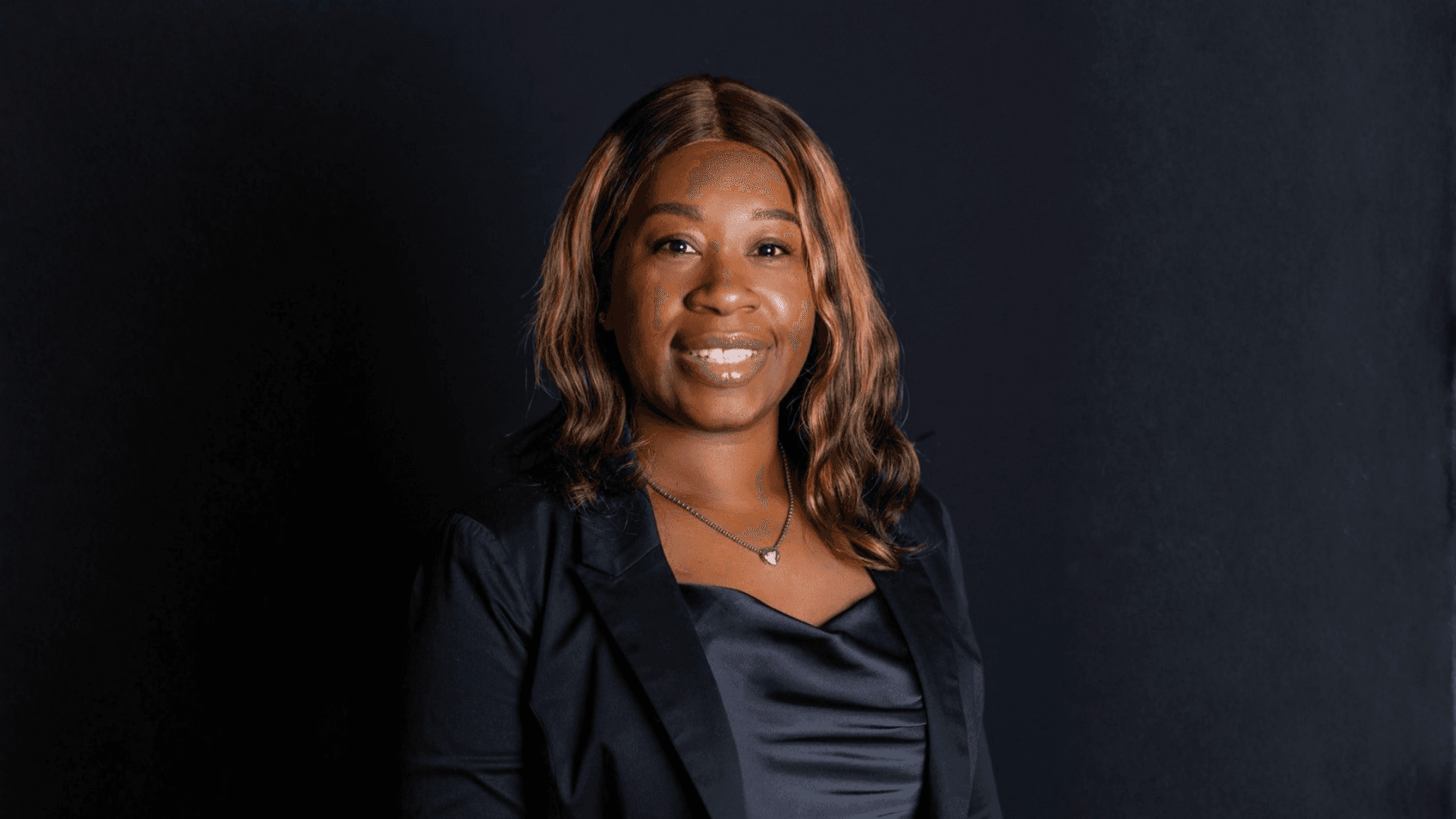

How a Corporate Acquisition Sparked an Unexpected Career in Global Mobility
When Ebony Thompson's former employer faced a major acquisition involving 75 expatriates, her manager approached her with an unexpected proposition. Would she be willing to learn global mobility and immigration work to help manage the transition?
"She offered to train me in global mobility and immigration, saying, let's get through the acquisition first. If it's not for you, we can revisit later," Thompson recalls. "I dove in head first and from that point on I was hooked."
That moment of professional serendipity launched Thompson into a career path she hadn't anticipated but couldn't imagine leaving. Today, based in Michigan's Southfield area, she has become a voice for innovation and empathy in an industry facing unprecedented challenges.
Ebony Thompson's Journey Through Immigration and Global Mobility
Thompson's story reflects a common truth in global mobility circles. As she notes, most professionals in this field either stumbled upon it or were placed into it by circumstance. What sets successful practitioners apart is what happens after that initial introduction.
For Thompson, the hook went deep. Navigating the complexities of cross-border moves, supporting individuals through life-changing transitions, and learning the intricacies of immigration law sparked a passion she hadn't anticipated. "I actually haven't looked back since," she says.
Over the years, Thompson has developed expertise across a wide spectrum of visa categories. From TN visas and green cards in her early days to L1s, L1 blankets, E visas, O visas, and the increasingly critical H1B and F1 student visas, her knowledge base has expanded with each role. Currently, her focus centers on STEM OPT and F1 students, positioning her at the intersection of education and employment immigration.
Why Empathy Matters Most in Global Mobility Work
Ask Thompson about the most essential skill for global mobility professionals, and her answer is immediate and unequivocal: empathy.
"The number one skill to me when it comes to global mobility is empathy," she explains. "If you don't have empathy, it would be very hard because this is a flexible area, this is a flexible scope."
She draws a clear distinction between traditional HR work and global mobility. While both involve policy and process, global mobility demands something more. "When you're relocating people's families or removing them from everything they've known in their families and putting them in a whole other place across the world, you have to have empathy, you have to be flexible."
This human-centered perspective shapes her approach to every case. Behind each visa application, each relocation package, each compliance requirement stands a person making one of the most significant decisions of their life.
Advice for Early-Career Global Mobility Professionals
For those entering the field, Thompson offers straightforward guidance: embrace the learning curve and never stop asking questions.
"Learn as much as possible, always ask questions," she advises. "No two days are the same, no two relocations are the same. Which is one of the reasons why I love it so much."
That variability prevents the monotony that plagues some careers. "Every day is a new day, so I don't feel like it's a repetitive cycle like some people would fill in their career," Thompson says. "Whereas with global mobility, every day is different and you never know what's going to happen."
Even with years of experience, she maintains a learner's mindset. "I learned something different every day. So I'm still not... I still haven't learned everything there is to know about global mobility."
Navigating H1B Uncertainty and Travel Restrictions
Recent H1B policy developments have created significant challenges for global mobility teams. Thompson observes a troubling trend among her peers: advising employees to halt travel plans due to uncertainty about re-entry and visa status.
"The biggest topic is stopping employees from traveling," she reports from recent roundtables and peer discussions. "That's unfortunate because people like, right now we're coming up with the holidays and people want to be with their families, but because of the what's unfolding with the H1Bs and what can happen or the unknowns, everyone's stopping the travel process."
The uncertainty extends to recruiting strategies. Thompson's teams previously advised hiring H1B candidates with at least two years remaining on their visas, allowing time to pursue green cards if desired. "Right now it's hard to say where we should start or where we should stop," she acknowledges. "Should it be one year now to bring them in or how do we pick that up?"
Technology Adoption as Global Mobility's Biggest Bottleneck
When asked about recurring industry bottlenecks, Thompson doesn't hesitate: underutilization of technology.
"I see a lot of outdated policies and processes," she observes. While acknowledging that technology adoption isn't universal, she emphasizes that tools like AI can fundamentally transform global mobility operations. "Other technologies can really help companies boost processes, help with policies. You can use it for a wide range of things."
The adoption curve for AI specifically remains slow, which Thompson attributes to lack of awareness. "I think that a lot of companies don't realize some of the technology that's out here that could help their companies boost the policies, processes within the global mobility area."
How AI is Transforming Immigration Policy and Process Development
Thompson practices what she preaches. She has integrated AI into her daily workflow with remarkable results.
"In the beginning it was a little fearful because of what it could do," she admits. "But I think everyone's now realizing this AI is our friend. Especially in global mobility."
Her use cases demonstrate AI's practical impact. When developing policies, she outlines her thoughts and initial draft, then uses AI to help structure and enhance the document. "I may have thoughts and I may put them on paper and type them up and then I can go to AI and say this is what I'm thinking for this process or this policy. And I would like to include A, B and C and it will help me generate that policy."
The time savings prove transformative. "When I used to do policies, let's say a few years ago, I might work on a policy depending on what it is and then how many people have to approve it and review it may take a month to three months. Now I can literally put a policy together within a day or two."
She's equally enthusiastic about AI's utility for presentations. Facing a tight deadline for a talent acquisition training, she turned to AI for help structuring her slides. "It put my slides together. And of course I did some revisions and put it on our own letterhead slides, but it was helpful and I was able to get that done within an hour and 30 minutes, opposed to taking two, three days."
Vision for Next-Generation Global Mobility Programs
If Thompson were designing a global mobility program from scratch in 2025 or 2026, she would prioritize three elements: enhanced employee experience, unified internal-external systems, and simplified communication.
The first priority reflects her core value of empathy. "I would definitely want to improve user or employee experience," she states.
Her second priority addresses a common frustration: the disconnect between internal and external systems. "I would want an internal program that not only works internally, but can be shared with external," she explains. "When you come to hiring a new hire, they don't get access to things until they start. So it makes it hard to put together a program."
She envisions a unified platform where all stakeholders can access relevant information and updates. "This system would house all communication. I should be able to go to this tool and send an update. And that employee knows that because of that email title, it's from me or it's from someone on our team."
The third priority involves "bridging communication gaps," including translating documents and simplifying legal language to make immigration processes more accessible.
The Immigration Policy Change Ebony Thompson Would Make Tomorrow
Given the power to change one piece of immigration legislation, Thompson's choice is immediate and emphatic: eliminate the H1B lottery system.
"I'm always about employee experience, so I am of course biased to why I feel like this should be... this process should be removed," she acknowledges. "But it's stressful. It's not just stressful on the employee and stressful on the company."
She paints a stark picture of the system's human toll. Companies may submit over 100 candidates into the H1B lottery with only 10 selected. "I've seen people go through the process for two, three years straight and not get elected."
The consequences extend beyond professional disappointment. "They have to figure out how to maneuver or change their life because they've probably started here through F1 and they were a student and then they got on the H1B or trying to get on the H1B and they don't get elected for it."
Thompson chooses her words carefully but doesn't shy from the emotional reality. "I think it can be traumatizing because they're looking to start a life here in the US and then to not get elected and then that F1 student visa runs out. What do they do? Especially if they have families?"
Key Trends Shaping Global Mobility and Immigration in 2025
Looking ahead, Thompson identifies two critical trends for the coming year.
First, talent shortages will continue fueling skill migration. "Countries are streamlining visa programs to attract professionals in tech, healthcare and engineering," she notes. "I would love to see that happen here in the US."
She points to other countries that have opened visa pathways and simplified processes to fill critical skill gaps. "I think it would be great if the US could take that on as well. I hope that can happen soon."
Second, technology and AI will increasingly transform operations. "Organizations are adopting the AI powered tools for automation, case tracking and predictive analytics," Thompson observes. "This improves the transparency and reducing processing time."
Advice for Organizations Hesitant About AI Adoption
For teams on the fence about AI implementation, Thompson recommends starting early with realistic timelines and clear goals.
"Let's aim for end of next year, but let's start now. Let's prepare," she suggests. Creating a predictable rollout timeline can ease uncertainty and help stakeholders feel comfortable. "It doesn't have to be right away. Everyone's not going to feel comfortable jumping in feet first and ready to go. But if they roll it out and have a nice predictable timeline, it should ease that uncertainty and help them move forward."
Why Immigration Must Balance Technology with Human Touch
Despite her enthusiasm for technology, Thompson maintains that AI should enhance rather than replace the human element in immigration work.
"Immigration continues to be a powerful driver of innovation, diversity and economic growth," she reflects. While acknowledging that policy frameworks and service delivery often struggle to keep pace with evolving demands, she sees technology as part of the solution, not the complete answer.
"AI has the potential to make immigration more predictive, personalized and proactive," she explains. Machine learning can anticipate process delays and flag compliance risks. Natural language processing can simplify legal language. Automation can handle repetitive tasks, freeing professionals for strategic work.
"However, technology alone isn't the solution, it must be paired with empathy, cultural intelligence and ethical design," Thompson emphasizes. "AI should enhance but not replace the human touch."
Supporting Employees Through Immigration Uncertainty
For individuals navigating the current immigration landscape, Thompson offers practical guidance grounded in her employee-first philosophy.
She advises people to understand their support systems, familiarize themselves with terminology, and clarify legal and tax implications. "Cross border moves can affect their tax status, healthcare access," she notes. "Seek professional guidance."
Beyond practical steps, she acknowledges the emotional challenge. "Embrace the changes. I know they're not always what we want, but sometimes we have to sit back and accept what's happening and then try to make it work for us the best way that we can."
Finally, she encourages self-advocacy. "Always asking questions, seeking clarity. Working with HR immigration counsel and the immigration internal immigration teams."
A Michigan Connection to Global Mobility
Thompson's Michigan roots add personal context to her professional journey. Based in the Southfield area, working in West Bloomfield, she serves clients navigating some of immigration law's most complex challenges while maintaining the grounded, practical perspective that characterizes Midwest professionalism.
In an era of H1B uncertainty, technology transformation, and evolving global mobility needs, Thompson represents a new generation of immigration professionals who combine deep technical knowledge with genuine empathy for the people behind the paperwork.
Her journey from unexpected opportunity to passionate advocate demonstrates that sometimes the best career paths are the ones we never planned. And her vision for the future, balancing cutting-edge technology with unwavering commitment to human dignity, offers a roadmap for an industry in transition.







Bob Webber
SEP 16, 2025
Charles Kuck
SEP 15, 2025

Christa Byker
SEP 11, 2025