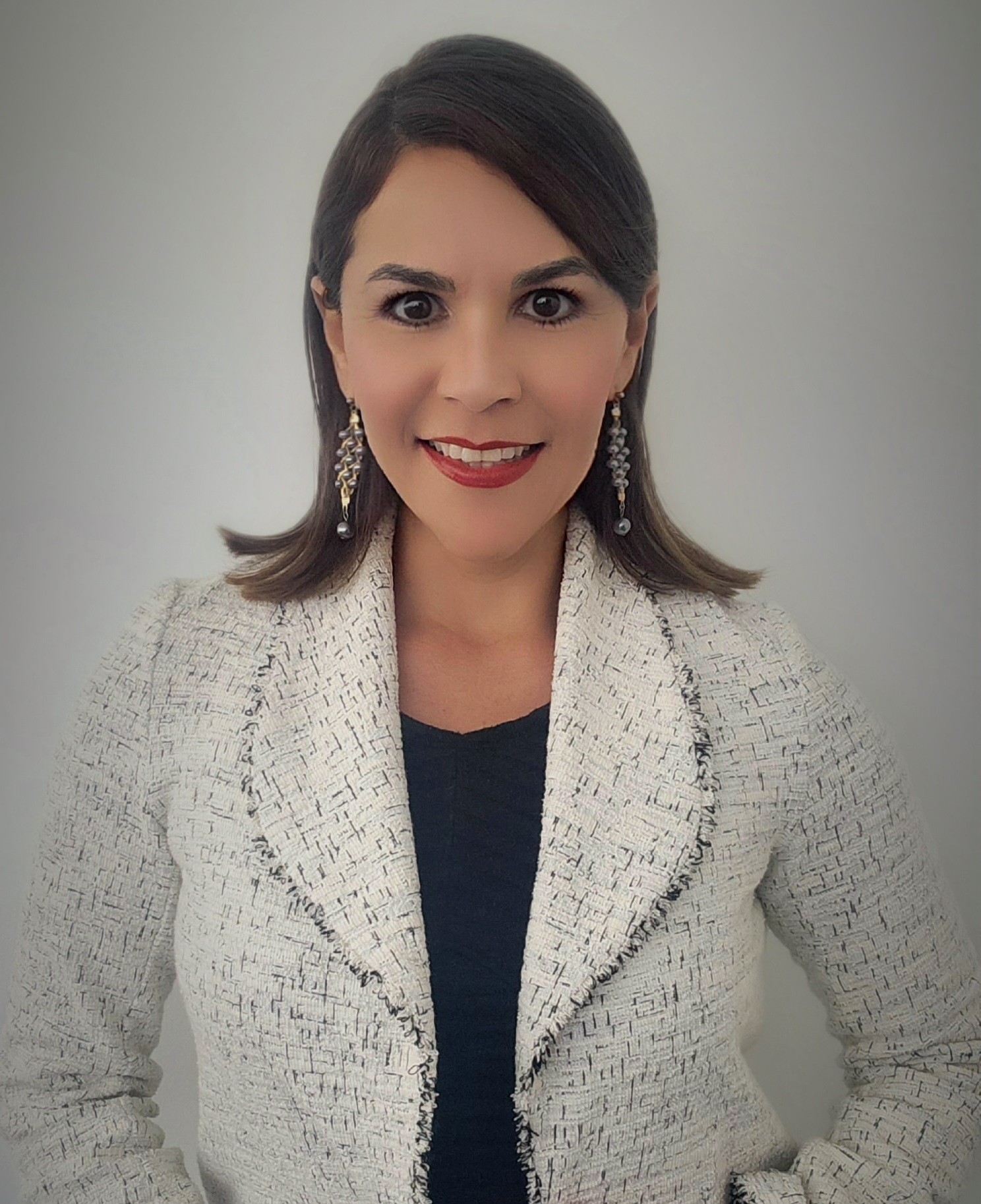

She was nineteen. A Stanford undergrad on summer break right before 9/11, sent over to a small US Pretrial Services office in El Centro, California, to interview a young woman who had been picked up at the border on a drug trafficking charge. The woman was barely out of her early twenties. Dark hair. Dark skin. She spoke Spanish, and the office needed someone who could speak it back to her, fluently, without the stiffness of an interpreter.
A glass screen sat between them. Josefina Carrillo asked her questions, and the young woman answered, and at some point during the conversation she paused and said something Josefina has never forgotten: I feel really comfortable talking to you.
"It dawned on me," Josefina recalls, "that I could have been in her shoes had my life been completely different."
That single sentence, spoken across a partition in a federal office in the Imperial Valley, did something quiet to her. It planted an idea. Years later, after a winding career through rare opportunities, nonprofit advocacy, big firm corporate immigration, a small full-service practice, a serious health crisis, and a pandemic, that idea would become the foundation of her own solo immigration law firm in San Diego.
Growing Up on the Border in Calexico, California
To understand why that US Pretrial Services moment landed the way it did, you have to understand where Josefina is from.
She was born in Los Angeles to Mexican parents and grew up in Calexico, a small town that, she later learned, once held the highest percentage of Mexican residents of any city in the United States. The border was less a wall than a routine. "I grew up going across the border like it was no big deal," she says. There were no documents to show, no questions to answer. You said American born, and you walked or drove through.
Almost everyone she knew looked like her. Almost everyone she knew spoke both languages, switching between them mid-sentence at the grocery store, at school, at home. The 100-degree desert sun darkened her skin and no one wore sunscreen because no one talked about it. Being Mexican, being bilingual, being a child of immigrants: none of it was a category. It was just life.
Josefina proudly graduated as Valedictorian of Calexico High School in 1999. She was a big fish in a small pond. That all changed when she got to Stanford University.
The Stanford Classroom Where Identity Came Into Focus
She remembers the room. A small Computer Science seminar. A female professor scanning the class for an opinion. The professor said, I was looking for you to see what your opinion was. But I didn't see the dark hair.
Josefina looked up. She looked around. And then she understood.
"I realized, oh, wow, I am the only one here with dark hair," she says. "Okay, maybe I am something different than what I'm used to, or what I'm going to be considered." She is careful to note that she has rarely felt actively discriminated against. But that small comment in a Stanford seminar was the first time she felt the word immigrant attach itself to her, the first time she saw herself from the outside.
The US Pretrial Services internship came not long after. So did a second pivotal moment, in law school at UC Davis, that would tip her decisively toward immigration as a possible career.
A Law School Interpretation Job That Became a Calling
A classmate at UC Davis Law School, King Hall, was working with the school's immigration clinic and had a client in crisis. He was Mexican, Spanish-speaking, mentally ill, HIV positive, and in removal proceedings after a domestic violence conviction. The client could not explain what had happened in his household. His wife could not explain it either. The language barrier had effectively swallowed his case.
The clinic needed an interpreter. Urgently. Josefina volunteered. From the first moment she met with the client, he opened up to her; so did his wife and children. They prepared for trial.
She drove to San Francisco with the family and sat through the immigration court proceedings. He did not have to testify; the written statements she had helped translate were enough. About a year later, she heard that his cancellation of removal had been approved. He received his green card. He attended his daughter's Quinceañera. A few months after that, he passed away.
"It's the way that you speak with people," she says, reflecting on what that case taught her. "Just the way that you're able to empathize, or just speak to us in our own language, as if we were related, as if we were friends for a long time. I feel comfortable talking to you. You are honest, and I trust you. That's what did it for me."
She had heard that sentence twice now, from two very different people, in two very different rooms. She started saying yes to every immigration opportunity she could find.
From Rare Opportunities to Nonprofit Advocacy to Big Law and Back Again
Josefina describes her career as a series of "puzzle pieces." Each one taught her something the next one would test.
After law school in 2006, she moved to Santa Monica, California, for the opportunity of a lifetime. She was contracted to watch telenovelas (Spanish soap operas) in the high-profile litigation of Televisa v. Univision, and analyze them for contract infringement. “I grew up watching telenovelas whilst doing my homework; now I got paid for it!” She says jokingly.
Following her time in LA, Josefina moved to San Diego where she scratched an itch she had long before as an extern for the District Attorney’s Office in Sacramento. At a Latino networking event, Josefina met several San Diego prosecutors and landed a volunteer position as a Deputy DA in Chula Vista, California, where she co-chaired a prison-murder trial. Another puzzle piece that made it clear to her she did not want to pursue a rigid career in criminal prosecution.
Josefina’s first big break in immigration came when she ran a domestic violence program at an immigration nonprofit near downtown San Diego, sitting across from victims of violence and absorbing the full weight of their stories. It was also the gateway to her conducting instructional immigration seminars throughout the county. The work was important. It was also overwhelming; as were the eyes of management looking over her attire and her jovial demeanor.
From there she moved into corporate immigration at a large international law firm. The world flipped. “I remember the day I got the job offer letter with the salary amount. I literally jumped up and down with joy!” However, where she had once spent her days in conversation with clients, she now spent them at a desk, mostly interacting with senior attorneys and paralegals. The expectation was endless hours. The compensation was real. The trade-off was everything else.
"I was in my early 30s, and I was in that lifestyle of mine where I want to go out, I want to travel, I want to think about a future with a family," Josefina says. "There's no way that I can even go on a date or travel the world if I'm behind a desk twelve hours a day." Unequivocally, she left the corporate firm, and finally took the European trip she had dreamed about since college.
Josefina came back with a clearer mind and joined a small full-service immigration law firm in San Ysidro where consulting was hands-on again. She built strategies for clients across humanitarian, family, and corporate matters. She was in the room where it happened. She was expected to meet client quotas in monetary gain for the firm. She also, eventually, became the de facto manager of the staff. Another puzzle piece carrying a world of experience. Five years in, the cost of that stressful role caught up with her in a way she had not seen coming.
The Tumor, the Resignation, and the Pregnancy
"I grew a tumor," she says, with a directness that almost flattens what comes next. "It was out of an emergency that I didn't even walk out of the office. I was helped out of the office, and two days later I was getting a 6-pound tumor removed from my left ovary, including the ovary."
She thought she would never become a mother. Becoming a mother was something she had quietly, urgently wanted. At 37, she found love again, had two miscarriages, and started preparing herself for in vitro.
Josefina submitted her resignation. And then, before she could begin any of the medical processes she had been bracing for, she found out she was pregnant.
She had miscarried before. So she made a decision about how she would carry this one. "If it means that I have to sit on a couch for the next nine months, I will do that," she says. "But I would not have been able to do that had I not had all of the experience that I had."
In 2020, Josefina received the best Valentine’s Day gift ever - her healthy baby boy, Valentino. The pause that her body and her job change forced on her was, she realized later, a foundation she had spent a decade quietly laying.
How the Pandemic Reshaped Josefina Carrillo's Solo Practice
Then the pandemic arrived.
It was not, for everyone in her life, a kind season. Family members died. Her brother nearly died of COVID in the hospital. But for the version of her career she was trying to build, working remotely from a laptop raising a young child at home, the moment opened a door that had previously been closed.
"I can return to work on my own terms," Josefina says. "I can be remotely from my computer. I can consult with clients who look for me, if I put myself out there. I can talk to them on the phone and meet them at a coffee shop when necessary. And that, for me, gave me a freedom that I had never felt before." Josefina went on to create her own website and business cards with a business phone number and a postal address to begin working from home.
Clients who had worked with her years earlier began calling. I've been looking for you for the last three years. Where have you been? She built her practice almost entirely through referrals, slowly, deliberately, without paid advertising. At times, she would even bring her son along to a client meeting, or he would help get a print out from the printer at home.
The puzzle pieces were slowly coming together, yet something big was missing as Josefina’s clientele was growing -- an office space to call her own. In late 2025, she finally moved into the San Diego high-rise office she now describes, half-laughing, as her "boss office," with big glass windows showcasing mountain and city views she has clearly earned.
Building an Immigration Practice on Her Own Terms
Today Josefina Carrillo, Esq., runs a tightly held solo immigration practice in San Diego focused almost entirely on what she calls affirmative work: representing individual and corporate clients in Family and Employment-Based Immigrant Petitions, Adjustment of Status Applications, Consular Procedures, Labor Certifications, Nonimmigrant Visas (including Fiance, Investor, and Student), Citizenship and Naturalization Matters, Waivers, Paroles-in-Place, U Visa and VAWA matters, DACA, Green Card Renewals, and Employment Authorization Applications. Many of her naturalization clients are people whose green card applications she filed five years earlier, returning for the next and final chapter in their immigration journey.
She did not take on removal defense cases up until recently. She is honest about why. The clientele that has found its way to her, and the work she has the most experience guiding well, sits on the affirmative side. Strategy. Consultation. Long-term planning for a person, sometimes for the rest of their life. Success.
Nevertheless, the immigration climate in the United States right now has recently called upon her to take on a few removal proceedings for asylees in dire need of an experienced, trustworthy, and honest immigration attorney.
She is detail-obsessed about case review and preparation, and she is candid about why. She has seen how many attorneys do not take the time to review a case record fully and miss vital details in a person’s immigration history. “I have had several clients whose prior representatives failed to see that the individual had gained permanent residence decades before.”
She has watched what happens when paperwork goes wrong in front of an immigration officer: a misordered packet, a wrong birthdate, a generic cover letter, missing evidence, an attorney sitting silently in the back of the room while a client absorbs the consequences. "That leaves a big margin for error," she says. "You're showing you're not detail oriented. It's unprofessional."
She would rather take fewer cases and review every margin of error herself than scale into a volume she cannot personally stand behind. In many cases, she has had to rectify grave mistakes made by other legal representatives, or their staff members, whose focus is everything else but the client’s case. Running her own firm has resolved that conversation. "I want to be the face that they see, and I want to be the voice that they hear," she says. "Clients these days, they want to see and hear their attorney."
She also knows what it feels like, as a Latina woman, to have her appearance, her schedule, and her pricing questioned by people who would not question the same things in a male attorney. “In my office, I can dress like I want, listen to the music I want, and make it in time for a yoga workout or attending to my son’s school activities whenever I want.”
Poquitos Pero Benditos: A Philosophy for the Long Run
Ask Josefina whether she dreams of building a large firm with thousands of clients and a wall of staff, and the answer is gentle and unequivocal.
There is a saying in Spanish, she says, that captures her practice better than anything she could write on a website: poquitos pero benditos. Few of them, but very blessed.
She is not closed to growth. She has a substantial following on LinkedIn, Google, and Avvo pages, and has begun posting educational immigration videos on YouTube, and she can imagine a future in which the right tools allow her to take on more clients without taking on more staff. But the shape of the practice she wants is already clear. Small. Personal. Strategic. Successful. Hers.
The Lesson She Wants Other Immigration Professionals to Hear
Toward the end of the interview, Josefina returned to a thread she had been pulling at the whole way through. She had been reflecting on the founder of LegalBridge, an Indian immigrant on H-1B who had once asked, in a moment of crisis, I came to the United States for my freedom. Where is my freedom?
She has thought a lot about that question.
"Yes, this is a free country, and yes, I have the freedom to do all of this," she says. "But you need to train yourself to get to that point. A lot of our ancestors had no training. They were just sink or swim. My mother, Maria Elena Victoria Gamboa Robles, immigrated to the United States with the clothes on her back and a few cents in her pocket following in the footsteps of her parents, Francisco and Victoria, who labored under the Bracero program throughout California.
Thanks to them, I am here today. We have the blessing that, because of what our ancestors did, we are able to experience an educated freedom and to make a conscious use of that freedom with whatever tools that we've gained along the way."
For Josefina Carrillo, every puzzle piece of her career, the border childhood, the Stanford classroom, the US Pretrial Services interview, the UC Davis immigration clinic, the telenovelas, the prosecutor’s office, the nonprofit, the corporate desk, the small firm, the tumor, the pregnancy, the pandemic, the boss office in San Diego, just to name a few, has been a tool. Freedom was always there. The training is what made it usable.
And on the other side of the screen, somewhere, another young woman is waiting to hear someone speak to her in her own language, and feel comfortable enough to say so out loud.



Bob Webber
SEP 16, 2025
Charles Kuck
SEP 15, 2025
Christa Byker
SEP 11, 2025