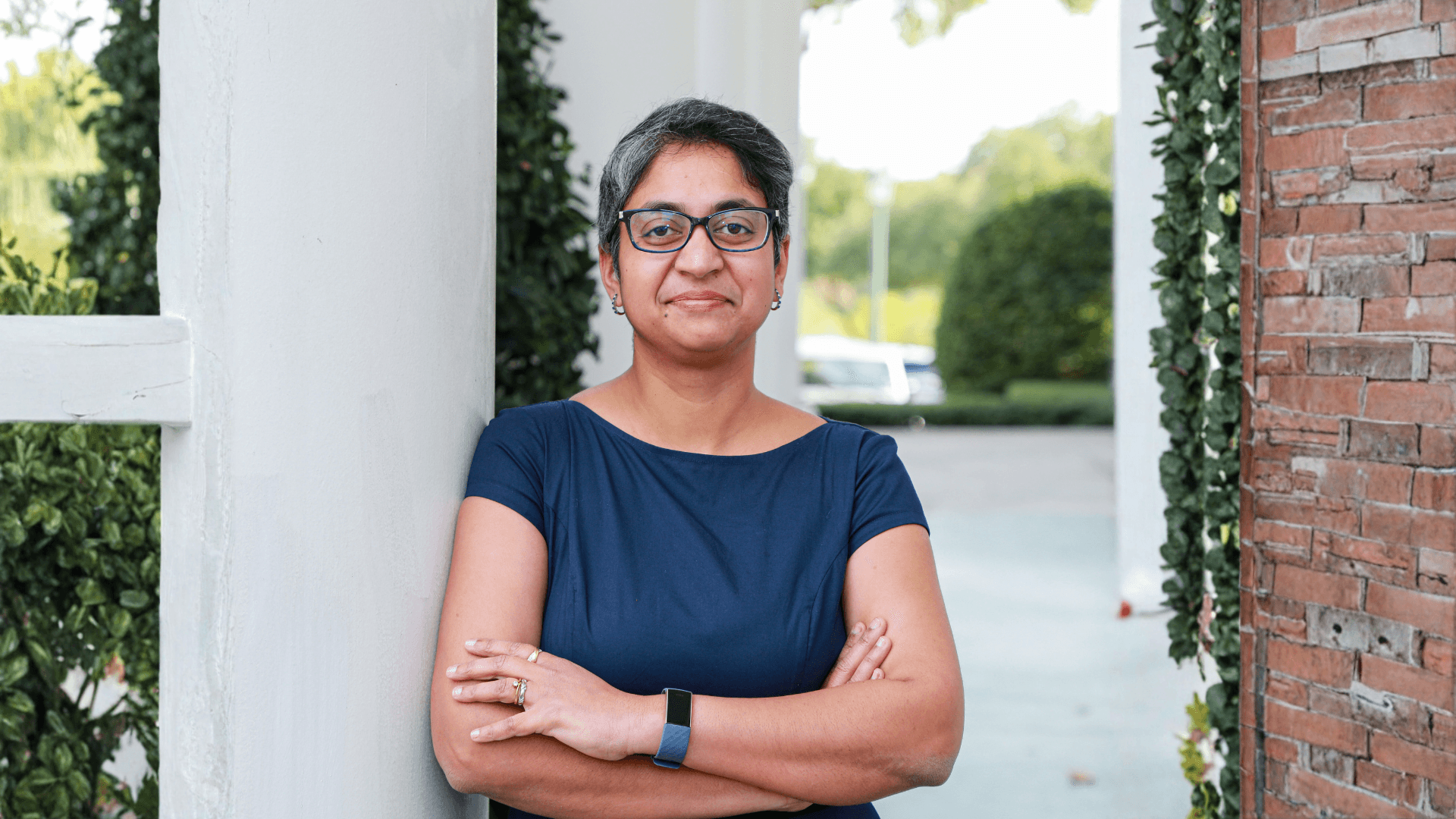

Sharadha Sankararaman, Immigration Attorney and Former Software Engineer, Shares Her Journey Through Crisis, Code, and Compassion
A LegalBridge Magazine Interview
The letter had no date. That was the problem.
Sharadha Sankararaman was in her second or third year of law school when a deportation notice arrived, declaring she was in the country illegally and had 30 days to leave. "My problem was, okay, 30 days to leave is fine, but 30 days from when?" she recalls. "There's no date on the letter."
At the time, she had just bought a house. Her daughter was two years old. Law school exams were a month away. And she had done everything right. F-1 to H-1B, every step by the book.
"If this could happen to me, who did everything right, how many people are they going to mess up?" That question changed everything.
The Unlikely Path: From Computer Science to Courtroom
Sharadha's journey to immigration law was never the plan. With an undergraduate degree and master's in computer science, she spent 14 years as a software engineer. Law school had always been a quiet dream, one her mother had discouraged back in India. "My mom said, I can't get you married, so you need to go into the traditional science field. Everyone in the family, they are an engineer or a doctor."
A decade into her career at a major bank, working on consent orders and compliance reviews, the legal world kept pulling at her. She enrolled in law school part-time while working full-time on her H-1B visa.
Then came the notice.
What happened, she later discovered, was an administrative error. Her paperwork had been adjudicated at a service center instead of the field office. Someone with no authority over her case, and no knowledge of its history, made a decision that nearly upended her life.
A friend from law school knew the mayor. The mayor connected her to an attorney. "That's how I figured out what happened," Sharadha says. "My point is ask. Ask good questions."
Before that moment, she had been what she calls "anti-immigration" as a career path. "I was like, I'm not doing immigration because I'm going to have a lot of Indian aunties and uncles asking me for free advice."
The deportation scare changed her calculus entirely.
What Immigration Law Really Looks Like in 2025
Today, Sharadha runs a business immigration firm with five attorneys in Texas. She describes the current landscape with the frankness of someone who has seen too much to sugarcoat anything.
"I'm busy, but I'm not good busy," she says. "Right now, I'm just fighting to keep them in the country."
Good busy, she explains, is productive work. Getting the best legal minds, the best brains, into the United States. "Right now, I'm just fighting battles." She describes employers calling her, questioning whether their businesses can survive. People who have been in their industries for 25 years, suddenly uncertain about their futures.
Her advice to fellow attorneys navigating these waters is rooted in community and self-preservation. "Invest a lot of time working with other people. It is nice when you have a cabal of people who you can interact with. You vent and then you get back. Keep your chin up. Invest in humor as much as possible."
And then there are the fish.
USCIS and ICE: The Office Mascots
In Sharadha's office, two fish swim in a tank. Their names: USCIS and ICE.
"We actually killed about 10 of them," she admits without hesitation. "We are just left with two."
The firm made a pact. If they could keep the fish named USCIS alive for one year, they would expand the fish family. The anniversary falls on the 25th. If USCIS survives, the plan is to add 20 more fish.
"We kill fish," she says matter-of-factly. "So we need to have contingencies baked in."
The dark humor is intentional. When your work involves navigating a system that can upend lives without warning, laughter becomes a survival strategy.
The Software Engineer's Mind Meets Immigration Law
Sharadha's engineering background shows up in unexpected ways. Her case letters, she notes, are remarkably short. "Where my colleagues would generate a 45-page letter, they can get five pages out of me. It's a very lengthy letter for me."
She approaches legal questions like debugging code. "What if this happens? What if that happens? What if something happens 10 years down the line? The use case scenarios are constantly running in my head."
The efficiency can be a double-edged sword. "Where I suck is I cannot have a long conversation. You are trying to give an answer and move on. There's a quantifiable answer. It'll work. This won't work. Yeah, you're going to get completely messed up."
When it comes to artificial intelligence in legal practice, her engineering background makes her both curious and skeptical. "I still think like a software engineer. You are always curious." She experiments with new AI tools. She plays around with technology to understand how it works.
But she doesn't trust it to do her job.
"The cynic in me, I still have to go verify everything that it spits out. I cannot just take it for its word. Then I'm not doing my job if I do."
Her firm has a strict policy: law clerks and interns cannot use AI for their work product until they've manually completed at least five cases of a given type. The logic is simple. "If you don't know what it is, how do you verify what it is producing?"
Where she does find AI useful is as a filter for her own communication. "I use it to filter out my emails. I'll be in a bad mood, I'll do a word dump. I'm like, can you make it sound better? When I don't have a filter, it acts like a very nice filter for me."
"My Friend Told Me So": The Phrase Every Immigration Attorney Dreads
Ask Sharadha about common mistakes immigrants make, and her answer is immediate.
"I hate this phrase. I detest this phrase from the bottom of my heart. 'I did something because my friend told me so.'"
She recounts the story of a student who had been admitted to Caltech for a master's in physics. "I would give my arm and a liver for it," she says. Instead, the student transferred to another school that eventually lost accreditation. Why? Because a friend suggested it.
The pattern extends beyond students. She regularly works with spouses, often women from Asian countries, who arrive on H-4 visas knowing almost nothing about their immigration status. "They don't know what an I-94 is. They don't know where their spouse works. They don't know what their passport number is, what their visa status is, how much the spouse makes."
In domestic violence cases, which her firm takes on as pro bono work, this lack of knowledge can be devastating. She describes working with an H-4 visa holder whose spouse passed away. The woman was clueless about bank accounts, Social Security numbers, and benefits she might be entitled to claim.
"There's need for that basic level of education that has to be given to people before they come here," Sharadha argues. She suggests something as simple as mandatory training at the consulate level before visa issuance, similar to programs she's heard about in France.
The Power of Community: A 30-Minute Rescue
When asked for a client success story, Sharadha doesn't choose a complex filing or a hard-won appeal. She chooses a case where she filed nothing at all.
A domestic violence victim reached out. She didn't know if her spouse had filed for her H-4 extension. Going back to his home to find out meant risking rape and assault. She needed the information urgently but couldn't contact him.
"She didn't know her spouse's SSN, her I-94. She did not remember where he worked."
Sharadha asked questions until the woman recalled her husband's employer. From there, she tracked down the company owner and asked if he used an immigration attorney. He did. And Sharadha knew that attorney.
Within 30 minutes, they had confirmed the H-4 had been filed. The woman was in status. Crisis averted.
"Best thing that happened that day for me," Sharadha says. "Literally I had no filing to do. It is just that the community helped out. He could have said no, but he didn't."
The Real Work of Immigration Law
"The most common misconception is immigration is all about forms," Sharadha says. "But forms are really like less than 5% of our jobs."
The real work, she explains, is understanding impact. It's spotting issues before they become problems. It's setting expectations so clients understand not just what paperwork is needed, but how their lives will change and what they need to do to stay in compliance.
She sees troubling trends among Indian nationals seeking expedited paths to green cards. EB-1A petitions built on fabricated credentials, published articles, and manufactured media coverage. "You got on an EB-1A, you got your green card, you worked for two, three years and voila, your green card just went away. What do you do?"
The consequences cascade. Try to return to H-1B status after such a revocation, and the original misrepresentation will follow you. "There's no waiver. So you're out of luck."
Her message: "I understand the urge to get to a destination fast. But you need to be smart about it."
A Request for Grace
When the interview draws to a close, Sharadha offers one final thought, directed at clients navigating an increasingly volatile immigration landscape.
"Give us grace. We're trying to figure out and learn as we are going. I understand the anxiety, I understand what you're reading online, but just give your attorneys a little bit of grace because they are trying to figure out and they're really trying to do the best thing for you."
From a woman who once faced deportation despite doing everything right, it's a reminder that immigration law is practiced by people, not systems. People who keep fish named USCIS and ICE in their offices. People who track down information for abuse victims in 30 minutes. People who write five-page letters when 45 would be easier to justify.
People who never stopped asking the question that started it all: if this could happen to me, how many others is it happening to?
Sharadha Sankararaman is the managing attorney at her Texas-based immigration law firm, where she specializes in business immigration. She holds degrees in computer science and spent 14 years as a software engineer before pursuing her law degree. Her firm provides pro bono services to victims of domestic violence as part of their commitment to giving back to the community.



Bob Webber
SEP 16, 2025
Charles Kuck
SEP 15, 2025

Christa Byker
SEP 11, 2025