
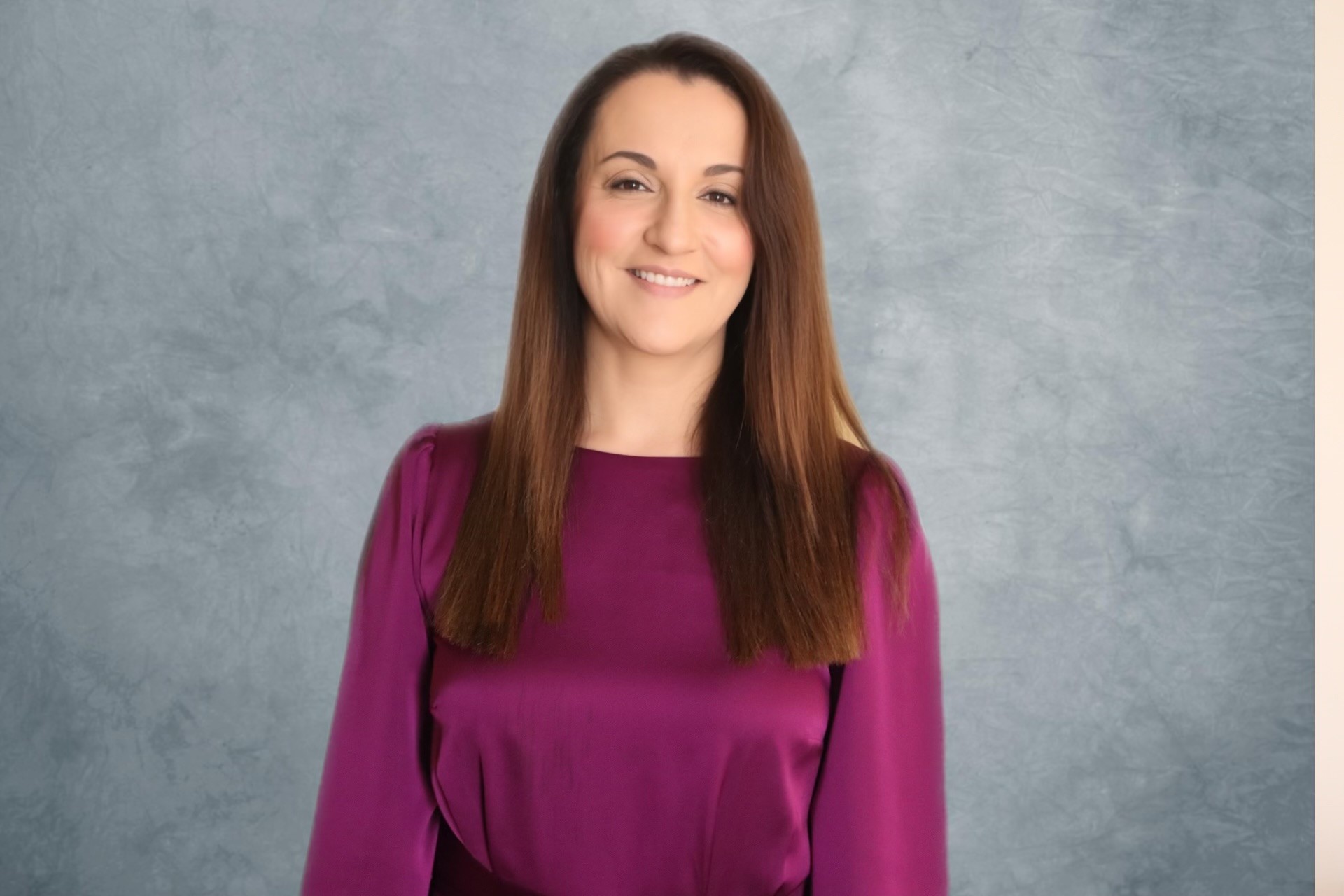
When Naïanka Rigaud sees a green card approval land in her inbox, she still does what she calls her "little internal dance." Nearly twelve years into her career at Erickson Immigration Group, the thrill has never faded. "I'm still the geek that anytime someone gets a green card, I celebrate," she says. For Rigaud, each approval is not just a case closed. It is a life changed, a door opened, a story she understands on the most personal level.
Rigaud’s journey is deeply rooted in having had a front-row seat to what it truly means to be an immigrant. Born in the U.S. to Haitian parents and raised in Haiti, she spent the first sixteen years of her life in a country where opportunity was scarce and circumstances were not always chosen. When she moved to the United States for college, followed by law school, she carried with her both the weight of what she had witnessed and the determination to build something meaningful from what lay ahead. Those early experiences ultimately shaped her decision to pursue immigration law—driven by a desire to advocate for others navigating similar paths and to help create opportunities where barriers once stood.
Today, as a newly promoted partner at Erickson Immigration Group, one of the world's leading global business immigration firms, Rigaud has turned that personal history into professional purpose. Her story is one of perseverance, mentorship, and an unwavering belief that immigration, at its core, represents something simple and profound.
"If I had to summarize it in one word," she says, "it would be freedom."
Naïanka Rigaud's Path: From Law School to Immigration Law at Erickson Immigration Group
Rigaud entered law school with a clear conviction. She wanted to work in human rights. Growing up in Haiti, she had witnessed firsthand the conditions that drive people to leave their home and what they know to seek new lives abroad. The intersection between human rights and immigration felt natural, and she devoted her academic career to both.
But the path took an unexpected turn after graduation. When she discovered Erickson Immigration Group, she was introduced to a dimension of immigration law she had not previously considered: the corporate and business side. "A lot of people, myself included at the time, think of immigration and think of the humanitarian side of it, people that are displaced or refugees or asylees," she explains. "And don't necessarily think of the other side, which is the business and the corporate side. That is very much a niche practice."
What she found at Erickson was not a departure from her values but an expansion of them. Business immigration, she learned, is its own form of enabling freedom: helping skilled professionals from around the world find pathways to contribute, grow, and ultimately build permanent lives in countries where their talents are needed.
"I found it very interesting and very rewarding," she says. "And so I kind of established myself here."
Growing with the Firm: Naïanka Rigaud's Rise from Law Clerk to Partner at EIG
When Rigaud joined Erickson Immigration Group, the firm was considerably smaller than it is today. That scale turned out to be a gift. "When a business is much smaller, there are actually other opportunities to grow and see different levels of the business aspects of things," she recalls. As a law clerk, she found herself wearing hats that would never have fit at a larger firm: coding the company newsletter, helping with rebranding efforts, contributing to the website redesign.
"There are so many other hats that you are able to wear when it's a small firm," she says. "I was able to be part of the growth of the business essentially. And that's very rewarding, to see where we came from as a firm, and myself included."
Central to that growth was a relationship that Rigaud credits as transformative. She speaks about her mentor, Hiba Anver, now a fellow partner, with unmistakable gratitude. "I would be remiss if I did not shout her out," she says. "She really took me under her wing from day one. I remember walking through the door and meeting her for the first time. She allowed me to see her own growth, and in seeing that, I thought, this is something that I can aspire to become."
That mentorship became a blueprint. Not something to copy wholesale, but a foundation from which to develop her own style. Over the next twelve years, Rigaud climbed from law clerk to associate, to senior associate, to manager, and now, in January 2025, to partner. "Sometimes I pinch myself," she admits. "Is this real life?"
What Erickson Immigration Group Does: A Global Business Immigration Firm
Erickson Immigration Group is a global business immigration firm with offices in the U.S., Australia, the UK, Ireland, and Singapore, along with satellite offices around the world tailored to clients' needs. The firm handles the full spectrum of corporate immigration: securing work permits for employees, helping corporate clients meet their hiring needs, supporting companies as they open offices in new markets, and ensuring compliance with employment regulations around sponsorship.
The firm also assists with personal immigration matters for the employees of its corporate clients, including family-based applications, naturalization, and citizenship.
Rigaud's own practice focuses on permanent residency and naturalization matters within the United States. But her ambitions within the firm extend beyond casework. As a partner, she has positioned herself at the intersection of law and technology, working closely with the firm's tech department to explore how emerging tools, including artificial intelligence, can improve efficiency and client service.
"We like to say we grow with our clients," she explains. "As our clients look to open offices or find talent in different regions, our growth is going to continue to mirror that."
AI in Immigration Law: Naïanka Rigaud on the Future of Legal Technology
Rigaud is candid about the tension that AI introduces into immigration practice. On one hand, the technology promises efficiency gains that her clients, many of whom work in the tech sector, increasingly expect. On the other, the sensitive nature of immigration data demands caution.
"We deal with a lot of private information: people's passports, Social Security numbers, companies' budgets and financial information," she says. "So we have to be very cautious and responsible when utilizing any AI platforms or tools. But that is the future, and we're very much aware of that."
The urgency has only intensified in recent years. With shifting executive orders and rapidly changing policy landscapes, clients need real-time information delivered with precision. "A new executive order is released that restricts entry for nationals of a certain country. We need to be nimble and provide that data at our fingertips to the client," she says. "Our clients are going to be in front of their CEOs, their CFOs, their chief of staff, and they're going to need to provide that information. Us being able to be partners to them and provide that information as quickly as possible is going to be key."
But Rigaud also sees a more nuanced shift on the horizon. Many of her tech-sector clients are exploring whether AI can replace certain human roles, which creates a trickle-down effect on immigration demand. "If the client doesn't hire, then we don't have visas to process," she observes. Yet she remains optimistic. Even if technical roles shift, companies will still hire for other positions, and the need for skilled immigration counsel will adapt rather than disappear.
In the meantime, she finds a measure of comfort in what AI cannot replicate. "A lot of clients want to get on a call. They want more human interaction," she says. "And I think that's where, in a way, it's a little bit comforting to know that humans are still needed."
The Green Card Backlog: What Naïanka Rigaud Would Change About U.S. Immigration Policy
When asked what single piece of immigration legislation she would change, Rigaud does not hesitate. The employment-based green card backlog, she says, is the issue that mostly impacts the individuals she supports.
Under the current system, nationals of certain countries face dramatically longer wait times for permanent residency than others. For some of Rigaud's clients, the wait stretches beyond ten years, even as they continue to contribute to the U.S. economy, build careers, raise families, and put down roots in communities that have become home.
"Some of my clients wait ten-plus years to receive a green card after contributing to the U.S. economy," she says. "And really just establishing themselves here, and having to wait this long to just become a permanent resident and be able to benefit from your hard work is quite unsettling and frustrating for folks."
It is an issue that resurfaces with every administration, she notes, often raised as a potential legislative fix but never resolved. For Rigaud, who understands immigration not as an abstract policy matter but as a deeply human experience, the backlog represents a failure of the system to honor its own promise.
A DACA Success Story: How Erickson Immigration Group Changed One Client's Life
Among the many milestones Rigaud has celebrated, one recent case stands out. Last year, her team successfully helped a DACA recipient secure H-1B sponsorship, a transition from one of the most precarious immigration statuses to one that offers a genuine path forward.
DACA and Temporary Protected Status, she explains, are among the least stable statuses in the immigration system. They can be revoked at any moment depending on the political environment, leaving recipients in a state of perpetual uncertainty. "Just having that person leave an unstable status and get something that they feel they can actually see a path forward with," she says, "that was a pretty big success story."
It is the kind of case that reminds Rigaud why she entered this field. Former clients who received their green cards five years ago still reach out when it is time to apply for citizenship. "Do you remember me?" they ask. And she does. She remembers their stories, where they came from, what they overcame.
"Anytime that we're able to allow our clients to achieve their own personal and career goals," she says, "I view it as a success."
Leadership Lessons from Naïanka Rigaud: Advice for Aspiring Immigration Attorneys
For young attorneys who dream of following a similar path, Rigaud offers advice that is as practical as it is generous. "Be a sponge as much as possible," she says. "Learn from the people around you. Different people have different experiences and ways of doing work. Not one way is the perfect way. But absorbing as much knowledge and as much experience as you can is definitely going to help you figure out your own path."
She emphasizes that mentorship is not about imitation. It is about observation, adaptation, and eventually finding your own voice. "You'll actually also find ways that maybe something could have been improved or done a different way and better," she says. The goal is to gather enough perspective to lead with authenticity rather than by someone else's playbook.
And then there is the matter of work ethic. "Immigration as a whole is a very personal and very challenging space, especially these days," she says. "Hard work is needed if you want to succeed. If you don't have the discipline and the work ethic, then you're going to be limited in your growth."
As a leader within Erickson Immigration Group, Rigaud is fiercely protective of the culture that shaped her own career. Despite the firm's growth, she insists on maintaining the collegial, open-door atmosphere that made it special in the first place. "No one takes their title as a standoffish thing," she says. "Having an open-door policy and allowing people to continue to be mentored and have that support for their career is what I want to ensure we maintain. That's really what has made this place so special to me, and why I've stayed so long."
The Bigger Picture: Why Naïanka Rigaud's Story Matters for Global Mobility
Rigaud's journey from Haiti to the partnership table at a global immigration firm is more than a career story. It is a testament to the very system she works within every day. She is both an advocate for immigration and living proof of what it makes possible.
In a political climate that often reduces immigration to headlines and talking points, Rigaud brings something rarer: perspective rooted in experience. She thinks daily about the people in Haiti and in countries facing similar crises, people who feel helpless and uncertain about their futures. "Not a day goes by where I don’t think to myself, what could I do to help?" she says. "Because sometimes you feel helpless too."
But she channels that empathy into action, one case at a time, one green card at a time, one quiet celebration at a time.
"It's very important to me to highlight my background, as a Haitian-American," she says, "especially because of the narrative right now in terms of the politics surrounding Haiti."
For Rigaud, every approval is personal. Every case is a reminder that freedom is not a given. It is something you pursue, something you build, and sometimes, something someone helps you achieve.


Bob Webber
SEP 16, 2025
Charles Kuck
SEP 15, 2025

Christa Byker
SEP 11, 2025