
A family was trying to reunite in the United States.. An Afghan asylee, who had worked for the U.S. military in Afghanistan, wanted to bring his wife to safety in the United States. The paperwork moved through the system until it reached a consular officer overseas, where it stalled. The officer was asking for a document the man's wife could not obtain without traveling back into Afghanistan and putting herself at real risk. For someone who had already fled, returning was nearly unthinkable.
Most attorneys, hitting that wall, would push. They would argue, escalate, send strongly worded emails. Regina Cocco took a quieter approach, and it proved more effective. She asked herself what, precisely, the officer felt stuck on, and whether there was another way to resolve the issue without forcing a frightened woman to cross back into Afghanistan. She proposed an alternate solution, and after a long stretch of back and forth with the post, the officer adopted her suggestions, and issued the visa.
"The fact that I had done that job really helped with the success," she says. She is not speaking figuratively. Before Regina Cocco was the attorney on the outside trying to read the officer's mind, she was the officer making those decisions.
That single quality, the ability to sit on both sides of the adjudicator's desk, is the thread that runs through her entire career and now defines her work at Cocco Law PLLC.
How Regina Cocco Found Her Way Into Immigration Law
Her interest in immigration law started early. In law school in Philadelphia, Cocco took every immigration course on offer and spent a year in a clinical placement at a nonprofit immigration law center. It was one of the paths she imagined taking. Then, for a while, she took a different one entirely, joining the Philadelphia public defender's office and building a career in criminal practice.
Immigration never quite let go of her, though. It returned through her life, not her resume. Her husband works for the State Department, and a posting to Kosovo became the first of several moves abroad. Over the years her family lived inKosovo, Algeria, Morocco, and Turkey before eventually settling in Burlington, Vermont.
Living internationally pulled her back toward the field she had set aside. She began working for the State Department, first on exchange programs that intersected with the consular world, and later as a consular officer. Suddenly everything she had learned in law school and practiced years earlier became useful again, this time from the government's side of the glass.
A Decade Inside the System: Regina Cocco at the State Department and USCIS
Cocco's time in government gave her two things most immigration attorneys never get. The first was a consular officer's instinct for how visa decisions are actually made. The second came after the family returned to the United States, when she took a compliance role at USCIS that placed her shoulder to shoulder with the agency's fraud work.
That role sat at the intersection of contracting, E-Verify compliance, and immigration fraud. She assessed whether companies and individuals who had committed immigration fraud should be recommended for suspension or debarment, serious consequences which can block federal contracts. It did not look like classic immigration practice, but it ran directly through the fraud directorate, and I-9 compliance remains a significant area of practice for immigration attorneys.
Fraud prevention, done well, taught her a particular kind of discipline. "You have to be pretty analytical," she says. "It takes a lot of patience and an open mind." That mindset, she believes, is exactly what serves clients best, even when it is not always how the government itself approaches the work.
Starting Cocco Law PLLC: Why Regina Cocco Went Solo
The idea of her own practice was not new. Her supervisors used to joke that she would end up there. As a consular officer who had been an attorney first, Cocco could not sit through interviews without a lawyer's reflex kicking in. Watching unprepared applicants speak for themselves, with no one beside them to translate the stakes, she kept thinking the same thing.
"Had I been this applicant’s attorney, how would I have prepared them?" she asked herself in interview after interview. Getting to finally answer that question, in real life and on behalf of real clients, is part of what drew her out on her own.
Before opening Cocco Law PLLC, she spent a year representing clients at a Vermont refugee resettlement nonprofit, the U.S. Committee for Refugees and Immigrants. The timing was its own kind of trial by fire. She was hired just as the political landscape shifted and immigration law changed almost overnight. It was a hard moment to step into the work, and, she admits, an exciting one. A year later she opened her own firm.
Her practice is shaped by her background, focusing on consular practice, visa issues, business and family immigration, and I-9 compliance. She enjoys digging into complicated consular cases, analyzing refusals and fraud issues, and especially likes O and P visas. "I like complicated cases," she says simply.
Regina Cocco on AI in Immigration Law: "Not Who Thinks for You, But Who Thinks Like You"
For someone who spent so long in government, where the systems were locked down and AI was off the table, Cocco came out feeling behind the curve on technology. The irony is that her government years made her unusually hungry for efficiency.
Consular work is relentless. An officer can run a hundred or more interviews in a single morning, often on clunky government systems that were never designed to talk to each other. To survive it, she built her own shortcuts, hotkeys and small workarounds and a deliberate order of operations, anything to make sluggish tools move faster. That instinct never left her.
It also shapes how she thinks about artificial intelligence now. She has watched many attorneys worry about being replaced, and she does not share the fear. The value, in her view, is not a machine that does the thinking. It is a tool that thinks the way she does and simply works faster, freeing her to "save my brain for things that are important legally." She is candid about the limits, too. She would not trust a general chatbot with real legal work, because the cost of a confident error in this field is too high.
Tearing Down the Wall: Regina Cocco on Attorneys and the Government
Ask Cocco what she would change about immigration if she could change one thing, and she does not reach for a single statute. She reaches for a relationship.
There used to be less distance, she explains, between practitioners and the agencies. USCIS and the State Department once saw themselves more plainly as administrative bodies, processing benefits that people had a right to apply for. Now a wall has gone up, and the constant churn of policy changes keeps pushing the two sides further apart, pulling attorneys away from actual casework and breeding a low hum of animosity.
She does not see it as us against them. She still has friends and former colleagues inside both agencies, good people she believes are now stuck on the other side of that wall. "I'd like to get back to a space where it's more collaborative," she says. Coming from someone who has worked on both sides, it lands less like a wish and more like a memory of how things used to run.
The Fraud Problem: Chasing Metrics Instead of Root Causes
Cocco sees a clear trend in the current moment, and it is one she has personal history with. There is a growing emphasis on fraud, or at least on talking about fraud, with more resources flowing toward enforcement across the Department of Homeland Security.
Her concern is not that fraud prevention matters. It is how the work gets measured. Too often, she argues, the government chases high numbers and easy wins, the kind that look good in a post, which tends to mean going after "low hanging fruit" and even the victims of scams rather than the genuinely complicated cases. "That's not in anybody's interest," she says.
The better approach, in her telling, is the patient one she practiced inside the system. Do the deep dives. Find what is actually driving the trends. Identify the legislative gaps that let fraud through in the first place, and close them, rather than punishing the applicants who were taken advantage of along the way.
Regina Cocco's Advice to Immigrants: Honesty Is a Long Game
When the conversation turns to the people she serves, Cocco lands on a single recurring mistake, and she is working it out almost in real time as she says it. The danger, she has noticed, is fear. Clients are afraid to be fully honest, sometimes even with their own attorneys.
That fear carries a real cost, because an immigrant's life is rarely one application. It is many filings stretched across years, changing status, renewing work authorization, reentering the country. Inconsistencies introduced early can resurface later and do lasting harm. The risk grows when people switch attorneys over time and the full picture gets lost between them.
Her guidance is blunt and reassuring at once. Clients do not have to trust the government, she tells them, but they should trust their attorney. The relationship she wants is a genuine collaboration, where the client is honest, takes the advice, and works the case alongside her rather than handing it off and hoping.
Working Within the System: The Lesson at the Heart of Regina Cocco's Practice
Return, finally, to that Afghan family and the document that could not be safely obtained. What makes the story matter is not just that the visa came through. It is how.
Consular officers hold enormous decision-making power, Cocco notes, yet they are also bound tightly to the Foreign Affairs Manual and to State Department policy. The art is in reminding them, respectfully, that there is room to be flexible while staying fully within the rules. She could have made noise. Instead she found the path that fixed a potential wrong from inside the system itself.
That is the through-line of her career, from the consular window to the fraud directorate to her own letterhead. Regina Cocco has spent years learning how the other side thinks, and she has turned that understanding into her clients' advantage. For an industry where the two sides feel further apart than ever, her practice is a quiet argument that the most powerful thing an advocate can do is understand the person across the desk, because she has been that person.
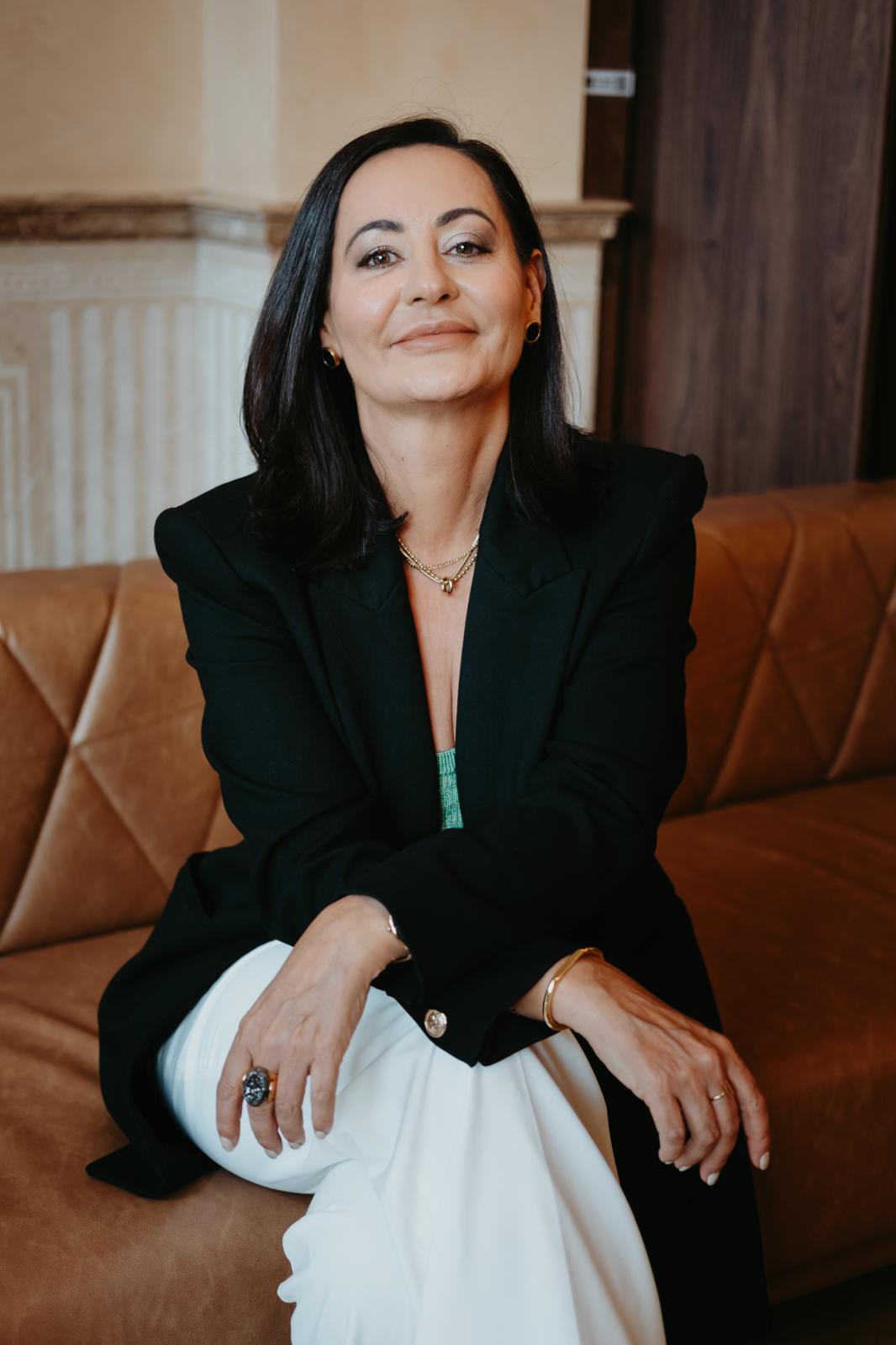
Regina Cocco is the founder of Cocco Law PLLC, an immigration practice based in Vermont focusing on consular and visa issues, business and family immigration, and I-9 compliance. This feature is part of LegalBridge Magazine's series spotlighting leaders in immigration and global mobility.


Bob Webber
SEP 16, 2025
Charles Kuck
SEP 15, 2025

Christa Byker
SEP 11, 2025