

Pioneering Personalized Excellence in Extraordinary Ability Cases
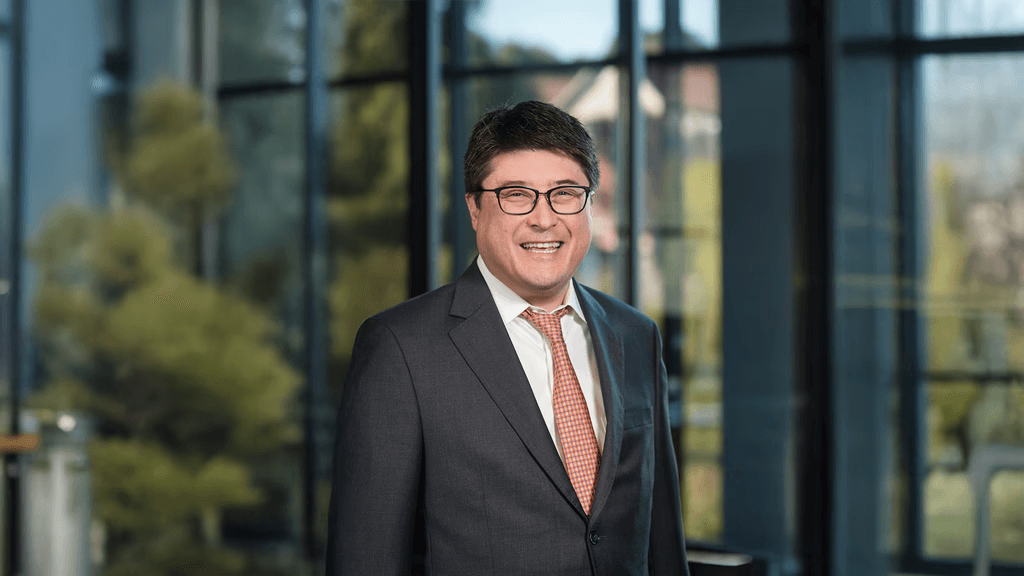
Austin Duebel, Founder of Hoga Immigration | Philadelphia, PA
When Austin Duebel tells the story of how his law firm got its name, something remarkable happens. The word "hoga," a Hindi term meaning "it will be," encapsulates not just a moment of cultural connection but an entire philosophy about immigration law itself: belief, manifestation, and the unwavering conviction that good things will happen.
It was one of his first EB-1A cases as an attorney. His client, facing the urgent pressure of his daughter aging out of eligibility, would end every call with this simple word of faith when speaking about his immigration situation. When Duebel surprised him by closing their first conversation with "hoga," the client was floored. Here was an attorney from Philadelphia who understood not just the legal mechanics but the deeply personal stakes of the journey.
That case achieved what Duebel calls "remarkable" results: adjustment of status approval in just under three months after a straight-through EB-1A approval. The entire family secured their green cards before the daughter aged out. But more importantly, Duebel discovered something essential about the kind of lawyer he wanted to become.
An Unconventional Path to Immigration Law
Duebel's journey into immigration law wasn't predetermined, but in retrospect it was a natural progression. He is a German-American dual national, with his father having come to the United States on an L-1 visa himself. Growing up between Connecticut and the Netherlands, where he moved at age 12, Duebel further developed a natural affinity for international perspectives. It was there, too, that Duebel learned what it meant to be a foreigner and also a global citizen - someone who calls multiple countries home. From learning a new language to interacting in a classroom where not one individual was from the same country, Duebel got hooked on learning about new cultures, new places, and connecting with new people. He admits that even now, when he has to look up a province of birth or a mailing address abroad, he gets sidetracked by what Google Maps and Wikipedia has to say about it.
Returning to the United States for college, Duebel knew that he wanted to pursue something that would give him that international connection. When an immigration paralegal position at Fragomen in Los Angeles opened up, he took a leap. He had never been to the West Coast, never worked in law, but something told him to try.
Those two years as a paralegal proved transformative. Working on high-volume H-1B and L-1 cases, Duebel progressed from traditional casework to conducting intakes, meeting thousands of people seeking visas for a major tech company. "There's really something here where I don't just want to be building forms, but actually advising on strategy," he realized. Duebel then set his sights on becoming an immigration attorney, and gained experience with major large clients, mid-sized companies, universities, small startups, and even individuals across almost all visa categories. But throughout these experiences, he identified gaps. Big firms excelled at efficiency but often sacrificed the human element. Mid-sized firms struggled between ambition and innovation. Small firms offered creativity but sometimes lacked structure. Above all, the company was the priority, not the person whose immigration matter was at stake, but certain case types enabled a closer individual focus.
Two months ago, Duebel launched Hoga, synthesizing the best of what he had learned while creating something fundamentally different.
The Gap in the Market: Treating People Like People
"The type of firm that I wanted to create was really more with theclient in mind," Duebel explains, "and that means the foreign national themselves rather than the big companies.”
This distinction matters profoundly. At large firms handling corporate immigration, foreign nationals often become secondary considerations in a company-attorney relationship. They report feeling like numbers, lacking meaningful attorney interface, being processed rather than represented.
Duebel's practice primarily focuses on individual petitions for extraordinary ability cases: EB-1A, NIW, and O-1 visas. But his approach defies conventional wisdom about what "extraordinary" means.
"We're not going after the PhDs and the 500 citations," he emphasizes. "We're going after tech workers, creatives, and startup founders that maybe in the past have been neglected for consideration, but now through very creative, dedicated, tailored arguments, we can tease out what really makes them extraordinary."
This philosophy has produced remarkable results. As he shares success stories on LinkedIn, potential clients see themselves reflected in unconventional profiles: site reliability engineers, system developers, technical program managers, and brand-new startup founders.
"These people don't fit a template. They have to be personalized," Duebel notes. This personalization, while time-intensive, represents his competitive advantage in an increasingly crowded market.
Navigating the H-1B Crisis and O-1 Pivot
When recent H-1B policy changes sent shockwaves through the immigration community, Duebel observed the industry response with both understanding and caution.
"Law firms started licking their chops," he recalls. "Everyone was now, okay, let's look into O-1s." But he warns against the rush mentality that accompanied this pivot.
Many firms tout the USCIS 95% approval rate for O-1 visas, suggesting they're nearly guaranteed with minimal effort. Duebel sees danger in this narrative. "There's been a lot of internal vetting by our industry of lawyers that actually curate what kind of O-1 cases actually make it to USCIS's door."
His prediction: as major tech companies flood USCIS with O-1 applications of varying quality, approval rates will inevitably drop, just as they did with NIW cases when they exploded in popularity.
"We're going to be inundated by O-1s that are of subpar quality. And as a result we're going to see that approval rate drop," he forecasts.
This is where Hoga's approach offers protection. By maintaining rigorous standards and avoiding the "McDonald's model" of assembly-line petition production, Duebel aims to sustain his exceptional approval record even as industry averages decline.
Reimagining the Immigration System
Ask Duebel what single change he would make to US immigration policy, and his answer reveals both pragmatism and vision.
"We have the H-1Bs and we have the O-1s and there's no middle ground in between," he observes. This gap particularly harms startup founders who can't self-petition on H-1B and may lack the credentials for an O-1.
His ideal solution resembles the E-2 visa but without treaty country requirements, opening pathways for Indian and Chinese entrepreneurs who currently face limited options. "We have so many Indians and Chinese that want to launch their own businesses that maybe don't have those O-1 credentials yet," Duebel notes.
The stakes extend beyond individual cases. "We don't want a brain drain where we train all these workers in universities and now are leaving because they can't find a job or they can't keep an H-1B job," Duebel argues. A startup-friendly visa would help retain talent that drives American innovation and economic growth.
A Message of Hope in Uncertain Times
For immigrants navigating today's challenging political landscape, Duebel offers perspective grounded in both realism and optimism.
"First and foremost, yes, we have a government in power that is not immigrant friendly, but there are an overwhelming millions of Americans that do want you here," he begins. This distinction between political leadership and public sentiment matters deeply for maintaining morale during difficult times.
His advice emphasizes trusting the process without becoming paralyzed by anxiety. "Don't panic too much, don't overanalyze your case too much to the point where everything is obsessed over where you get in your own way."
But he also counsels increased vigilance compared to previous eras. The days of filing a merely adequate petition and expecting approval are over. "Now I think you need to put more care and attention into your narrative, and it's worth really talking to your lawyer and making sure that you can have a conversation with them to understand their strategic philosophy behind yourcase." He advocates that the approach should be the client’s technical expertise working in harmony with the lawyer’s strategic vision, with emphasis placed on the narrative angle portraying their extraordinary ability in a manner that truly reflects exceptionalism in their industry.
A lawyer that truly understands how to craft this narrative angle is not one that merely pounds out a templated profile again and again, but rather one that has been able to master creating an argument for a number of different individuals. "It's about the lawyer that has done a plethora of different kinds of profiles and still gotten them an O-1 or EB-1 or an NIW approval, which shows that really they know the law."
The Future: A Watershed Moment
Looking ahead, Duebel sees the immigration field approaching a potential transformation.
"We are nearing a crossroads, if we're not there yet already, where the US Government is really changing their perspective on immigration," he observes. The current administration's approach will have lasting impacts extending well beyond its tenure.
But crisis creates opportunity. The McDonald's model of immigration law, where H-1Bs are "grinded out" through perfected assembly lines, may finally prove inadequate for cases requiring true customization.
"To now try and apply that logic to O-1s, to EB-1As, to things that had so much nuance in the past that still require that, if not more now," Duebel argues, "I think we may be at a watershed moment for more tailored petitions and more dedicated attorney representation of clients."
In this vision, everyone benefits. USCIS receives higher-quality petitions. Clients get meaningful attorney relationships and support. Attorneys engage in fulfilling work that challenges them intellectually rather than numbing repetition.
"We could come up with a leaner, more dedicated immigration support system in actually helping these foreign nationals get the visas that they deserve," Duebel concludes.
Keep the Faith
As our conversation draws to a close, Duebel returns to the theme of faith that inspired his firm's name.
There are "unscrupulous lawyers" who oversell weak cases, he acknowledges, and overly harsh ones who dismiss viable applications. "But there are also phenomenal lawyers out there," he insists. "There are especially within the extraordinary ability realm so many gifted colleagues that I have that are doing great things, that are listening to clients, that are building well-crafted cases." Now, more than ever, extraordinary ability aspirants should seek out qualified counsel instead of pursuing shortcuts on their own.
His final message to immigrants mirrors the philosophy that defined that first EB-1A case: "Keep the faith. And keep the faith also in your legal representation."
In an era of uncertainty, when policy shifts create anxiety and headlines generate fear, this might be the most important guidance of all. Not blind optimism, but informed confidence. Not passive hope, but active partnership with skilled advocates who see the human being behind every petition.
"It truly is worth it," Duebel reflects on quality legal representation. Because at the end of the day, these aren't just visa applications. They're families staying together. They're dreams taking flight. They're contributions to American innovation and culture that will ripple forward for generations.
Hoga. It will be.
About Austin Duebel
Austin Duebel is the founder of Hoga Immigration LLC, a boutique immigration law firm based in Philadelphia specializing in extraordinary ability cases including EB-1A, NIW, and O-1 visas. With experience spanning major international immigration institutions, mid-sized practices, and small firms, Austin brings a unique perspective to immigration law that prioritizes individual client relationships and creative case strategies. His practice focuses on helping tech workers and entrepreneurs who don't fit traditional extraordinary ability templates achieve their American dreams through personalized, high-touch legal representation.



Bob Webber
SEP 16, 2025
Charles Kuck
SEP 15, 2025

Christa Byker
SEP 11, 2025