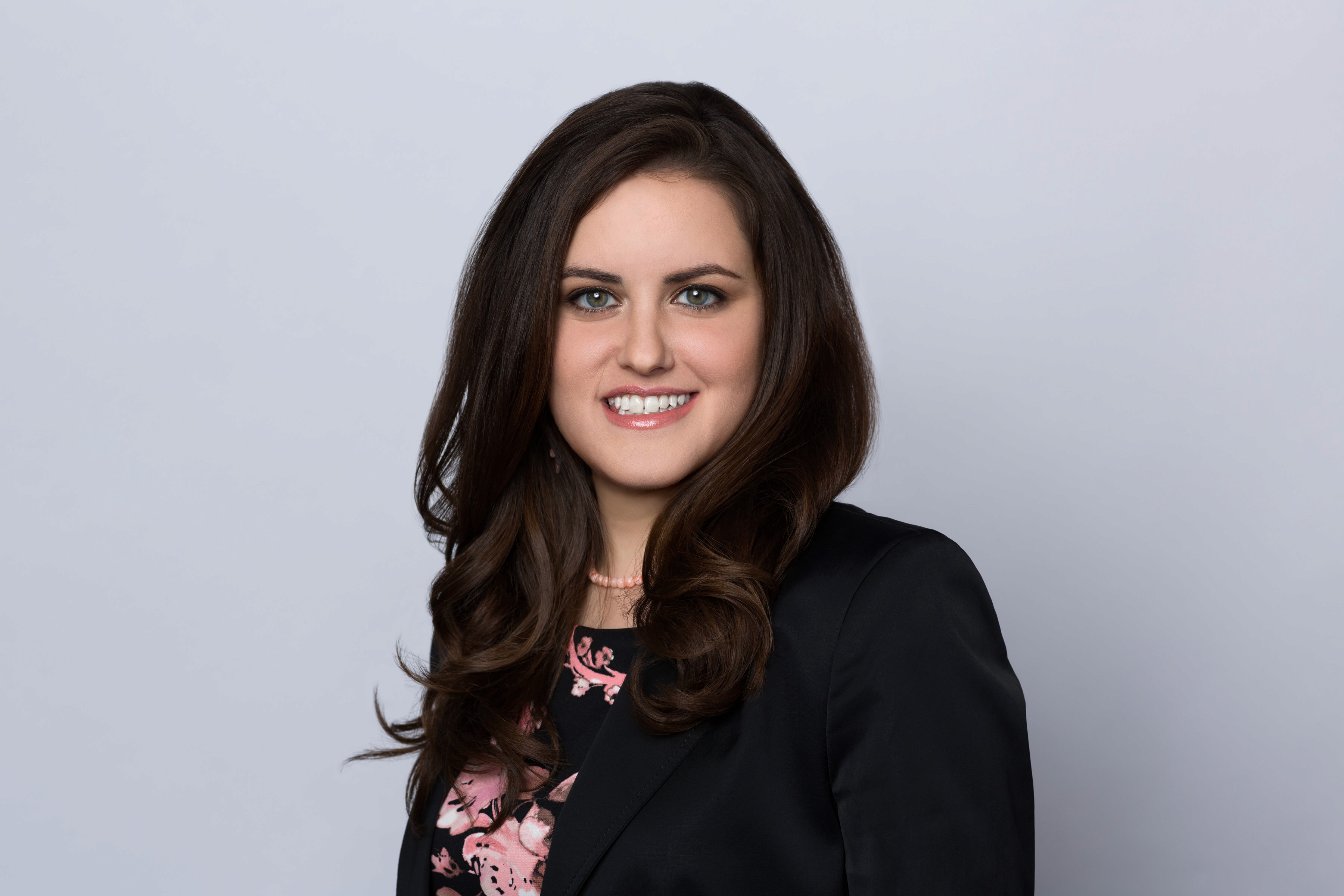

When Simona Cervasio Owens moved to Rhode Island in 2018 with a baby at home and no professional network to speak of, she saw something unexpected: opportunity. After years of building expertise at immigration law firms in San Francisco, she decided the moment had finally arrived to bet on herself. "I don't know anyone here," she remembers thinking. "So that's my opportunity."
That leap of faith, fueled by a deeply personal understanding of the immigrant experience and an unwavering commitment to client communication, has shaped a thriving solo practice focused on business immigration law. Now based in Redwood City, California, Owens specializes in O-1 visas, EB-1 petitions, L-1 cases, and naturalization, bringing both technical precision and genuine human accessibility to a field often criticized for its complexity and opacity.
Simona Cervasio Owens: From Naples to San Francisco and the Path to Immigration Law
Owens's journey into immigration law began with curiosity. Originally from Naples, Italy, she came to the United States drawn by the chance to study how American common law differed from the civil law system she had grown up with. She earned her master's degree at UC Hastings College of the Law in San Francisco, where she was struck by how accessible and down-to-earth her professors were – very different from the formal, distant academic culture she had experienced in Italy. "Here, everyone feels approachable," she recalls. "You can simply grab a coffee with a professor and ask questions without all the formality.”
That culture of openness made a lasting impression, one that would later shape how she approached her own clients.
Her first real exposure to immigration law came through an internship at a San Francisco firm specializing in asylum and removal proceedings. Attending court hearings alongside supervising attorneys, she watched life-altering legal battles unfold firsthand. "It was eye opening and sparked an interest in this area of law," she says. But over time, the emotional weight became unsustainable. Listening to deeply personal and often harrowing stories from clients seeking immigration relief began to drain her. "I'm very empathetic," she explains. "Eventually, it just became too much."
Why Simona Cervasio Owens Pivoted to Business Immigration Law
Rather than leave immigration law entirely, Owens pivoted to business immigration, where she could combine her passion for the field with her natural strengths in technical analysis, precision, and problem-solving. Naturally curious about how visas worked, the specific requirements for each category, and the reasoning behind approvals and denials, she immersed herself in the complexities of the field. Working as a contract attorney for multiple firms in San Francisco and on the East Coast, Owens systematically deepened her knowledge across the full spectrum of business immigration cases. She mastered several visa categories and processes – both immigrant and nonimmigrant – building expertise in navigating the strategic and procedural nuances essential for achieving successful outcomes.
"Clients and colleagues often tell me it’s rare to find someone with a profile like mine," Owens notes. That breadth of experience, combined with her independent spirit, eventually led her toward a solo practice. "I’ve always liked the idea of making my own business decisions and working on my own terms – with the clients I choose and the schedule I set"
How Simona Cervasio Owens Started Her Own Immigration Law Firm
Starting her own firm was not without hesitation. Owens, like many – particularly women – faced the doubts that come with imposter syndrome, questioning whether she was truly ready or had mastered every visa category she wanted to handle. But when she finally took the plunge, she discovered those doubts and fears were unfounded. "Once I got started, I realized I knew more that I thought," she says. "You just have to take the leap and trust yourself."
Her outgoing personality made client development feel natural, and her own experience as an immigrant gave her a distinct advantage. She understood, viscerally, what causes stress during the immigration process, and reflecting on her own journey, she asked herself "How was I treated? What did I need to understand? Where did the process fall short, and what could be improved for others?”
The answer, she found, was communication. Clients wanted timely updates, clarity on the process and next steps, and quick notice of any changes. So Owens built her practice around responsiveness. "As soon as I receive an update or a communication from immigration agencies, I contact the client right away," she says.
Her approach stood in stark contrast to what she had observed at larger firms, where clients sometimes waited weeks to learn that a Request for Additional Evidence had been issued. "The delay only increased their stress," she recalls. She carefully noted what clients valued and what they did not, and structured her practice around those insights.
Simona Cervasio Owens on AI in Immigration Law and the Value of Human Accessibility
While Owens embraces technology, including AI tools for drafting and automating repetitive administrative tasks, she remains firm that human connection is what truly sets exceptional legal service apart from the rest. "AI is the future, so we cannot deny that," she acknowledges. "But what continues to distinguish great legal service from average is human accessibility and judgment."
She draws parallels between the warmth of her American legal education and the kind of service she strives to provide. Just as professors at UC Hastings made themselves genuinely available to students, Owens makes herself accessible to clients navigating the stress and uncertainty of immigration cases. "If clients are feeling anxious or need answers quickly, I make myself accessible.”
Owens views AI as a complementary tool, not a replacement. It can streamline processes, assist with drafting, and boost efficiency, but it is not infallible. “AI can be very inaccurate, and individuals attempting to navigate immigration processes through ChatGPT are likely to make mistakes that could seriously jeopardize their cases,” she explains.
Current Trends in O-1, EB-1, and Business Immigration: Insights from Simona Cervasio Owens
When it comes to trends in her core practice areas, Owens has noticed a significant increase in scrutiny for EB-1 cases. She often sees clients come to her firm after their petitions were denied or after receiving Requests for Evidence that overwhelmed their previous counsel. In many of these cases, she notes, the underlying problem is clear: the original applications failed to explain precisely how the applicant met each criterion, supported by specific evidence.
"You cannot submit an application without clearly showing how the client meets the criteria they qualify for," Owens emphasizes. "You have to explain to the officer why this person meets these requirements and of course, provide clear supporting evidence." She stresses the importance of translating highly technical qualifications, whether in medicine, engineering, or professional sports, into plain language that adjudicators can understand.
At the same time, Owens has observed a broader shift in the landscape.. With growing uncertainty around H-1B visas, companies are increasingly considering alternative pathways like L-1 and O-1 visas. "The trend is shifting from H-1B to other types of visas," she says. As scrutiny intensifies and rules become more complex and unpredictable, companies are adapting their strategies to secure the best talent in a competitive, high-stakes market.”
Simona Cervasio Owens's Advice for Immigrants Navigating the System
For immigrants navigating the system, Owens offers direct, practical advice. First, do not rely on ChatGPT, friends, or relatives for immigration guidance. "Immigration law is extremely fact specific," she warns. "Every case is unique, and what worked for someone may not work for you."
Second, seek legal help early – do not wait until a case is denied. "Working with an attorney from the start can prevent a lot of mistakes, long delays and added stress."
Finally, when choosing an attorney, do your due diligence. Look up the attorney's state bar profile, confirm their license, and check for any disciplinary history. "This is the type of Google search that it's worth doing," she says. In a field where scam services and unlicensed notaries frequently prey on vulnerable immigrants, careful verification is essential.
Building Confidence One Case at a Time: Simona Cervasio Owens's Message to Aspiring Solo Attorneys
For attorneys considering their own leap into solo practice, Owens has a simple but powerful message: confidence grows with experience. She emphasizes the importance of staying current through professional associations like AILA, which provide daily updates on policy changes and access to legal resources.
But beyond the technical resources, her advice is rooted in mindset. "You have to be prepared for the uncertainty, especially at the beginning,” she acknowledges. Starting a solo practice is challenging, particularly when it comes to managing finances before you have a steady stream of clients." Yet for those willing to embrace the uncertainty, the rewards are significant: the freedom to choose your clients, set your own schedule, and build a practice that reflects your values.
"It's a daily experiment," she says with evident satisfaction. "But that's what fascinates me."
Simona Cervasio Owens is a business immigration attorney based in Redwood City, California, specializing in O-1, EB-1, L-1 visas, naturalization, employment-based and family-based green cards.





Bob Webber
SEP 16, 2025
Charles Kuck
SEP 15, 2025

Christa Byker
SEP 11, 2025