
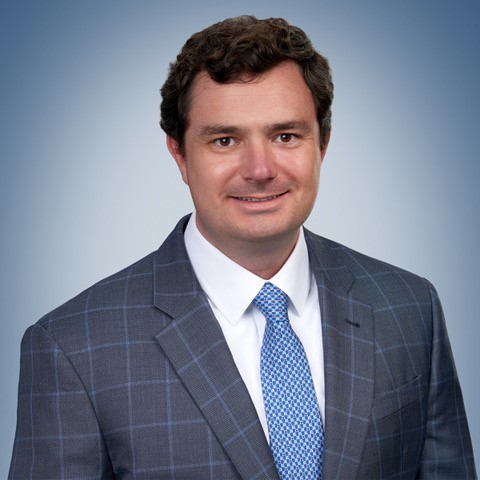
At international immigration conferences, Bram van Melle has noticed a pattern. Almost every colleague he meets has a personal migration story, often a deeply moving one, that explains how they ended up in the field.
He does not.
"In the Netherlands, Dutch people will be called kaaskop, cheese heads," he says. "And I couldn't be more full of cheese as they come."
Born near Utrecht, raised in a small Dutch village, educated in Amsterdam, van Melle has spent 15 years at Everaert Advocaten Immigration Lawyers helping people from all over the world do something he has never had to do himself: move to a new country and build a life there. What drew him in was not his own story but everyone else's. "I've always been interested in people who move from one place to another, and what drives people," he says. "They're usually people with interesting stories. It's fascinating."
That outsider's curiosity, paired with a decade and a half on the front lines of Dutch corporate immigration, gives him an unusually clear view of where global talent is heading, why the Netherlands keeps pulling it in, and how the country's welcome is quietly changing.
From Refugee Law Lectures to 15 Years at Everaert Advocaten Immigration Lawyers
Van Melle's path into immigration law began at university, where he had the chance to work alongside law professors who specialized in migration law. At the time, the focus was refugee law and human rights law more broadly, and it caught his interest in a way nothing else had.
After graduating he spent several years as a civil servant. The work was interesting, but migration law never let go of him. When he decided to return to it, he had one non-negotiable condition. "If I were to work in the field of migration law, I wanted to be on the side of the migrant," he says.
That principle led him to Everaert Advocaten Immigration Lawyers, where he already knew one of the attorneys from his university days. "That was about 15 years ago," he says, "and it's been a happy marriage since."
Today the firm has around 15 attorneys, five paralegals, and a total team of 35 to 40 people. It is licensed exclusively for inbound immigration to the Netherlands, though it maintains what van Melle describes as a great network of colleagues across Europe and worldwide for questions in other jurisdictions. The firm is organized into sections that serve different types of clients, from individuals with complex citizenship cases to corporate clients. Van Melle's own practice sits firmly on the business side, assisting companies with their immigration needs.
Why Amsterdam Keeps Attracting Global Companies and Talent
Ask van Melle why the Netherlands punches above its weight as a destination for international business and he starts with geography. Central location in Europe, strong shipping ports, major airports. The country has functioned as a hub for a long time, and companies have always noticed.
Amsterdam in particular has carved out a specific reputation. "Amsterdam has always been a popular city for tech companies," he says, "and a lot of cool companies, or companies that consider themselves cool."
The appeal goes beyond business infrastructure. "People like Amsterdam with the relaxed atmosphere," he explains. "It's a city, but at the same time it's not such a big city where you get lost." For international employees weighing a relocation, that combination of professional opportunity and livable scale is a significant draw.
Netherlands Immigration Policy Shift: Still Inviting, but More Selective
Van Melle is careful to separate two conversations that often get blurred together. The political debate that dominates the news in Europe is about asylum seekers and refugees. Corporate immigration and global mobility operate in a very different space.
For most of his career, that space was uncontroversial. "The Netherlands has always been really inviting and really trying to make sure that businesses would want to come and bring in highly skilled people," he says. With a large services industry, the country has a structural need for skilled talent. "That was always part of the policy and never really something that was up for debate."
The last few years have introduced a new variable: scarcity. Housing has become very expensive. Finding the right schools has become difficult. There is more public discussion about how much room the country has.
That pressure is now filtering into corporate immigration, not as a closed door but as a more discerning one. "The Netherlands is still inviting in general for corporate immigration and for good businesses," van Melle says, "but they're a little bit more picky. Some businesses we really want, and some we're okay if they're not here and they go to other countries."
For global mobility professionals and HR teams, that is a meaningful shift. The system still works well, but the assumption that any company can set up and bring in talent without friction is weaker than it was five years ago.
The Dutch American Friendship Treaty and a New Wave of Americans Moving to the Netherlands
One of the most striking trends van Melle has observed recently involves the United States. Americans have always come to the Netherlands in significant numbers, often for a year or two in Amsterdam as a bucket list experience before returning home.
The motivation has changed. "Since the new administration came in, there are more people in the US who are basically just leaving the US because they don't feel safe anymore," he says. He points specifically to transgender people, to couples in same sex marriages who feel their status is once again under debate, and more broadly to people who are considered on the left in the American political context. "They feel we're not welcome anymore in this country. So we've seen a larger influx of that coming into the Netherlands as well."
The legal vehicle making this possible is the Dutch American Friendship Treaty, which allows US citizens to enter the Netherlands and establish themselves as self employed under a relatively favorable policy. People in the services industry, artists, and independent professionals can enter and set up with far less difficulty than most other nationalities face.
Van Melle's practical advice for US nationals is direct. The Netherlands does have a startup residence permit, and it is popular with non EU applicants. But for Americans, he says, the treaty route is flexible and meeting the needs of our US clients, and therefore usually the preferred option over any visa other type.
Where Highly Skilled Migrants to the Netherlands Come From: US, India, and China
On the highly skilled migrant side, three countries consistently top the annual volume charts: the United States, India, and China.
The US connection is longstanding, with a large number of American companies doing business in the Netherlands. India represents a different pattern. "The Indian business is a lot of IT consultancy firms," van Melle explains, "and they come in for big projects, bringing in their own people." For corporate immigration teams supporting project based deployments, that flow is a major part of the Dutch caseload.
Netherlands Permanent Residence Pathways for Highly Skilled Migrants and Intra Company Transfers
A recurring question from HR teams and relocating employees is whether temporary work permits actually lead anywhere. In the Netherlands, van Melle says, they generally do.
Whether someone arrives as an intra company transferee or as a highly skilled migrant, the permit itself may be temporary, but the program ultimately allows the person to stay. After five years in the country, and after completing civic integration requirements such as language and integration exams, most people become eligible for permanent residence.
What van Melle finds most interesting is how often the intention to stay develops after arrival rather than before it. "We see a lot of people who, by the time you speak with them in the very beginning, don't have the intention to stay in the Netherlands for very long," he says. "And then after a few years they find out, hey, my kids are in school now and we're actually quite enjoying ourselves here. How can we get into permanent residence or even citizenship?"
For employers, that pattern has a clear implication. The path from a first assignment to long term settlement is intact for most immigration categories, and planning for it early is better than scrambling for it later.
Bram van Melle on AI in Immigration Law: Know Your Own Needs Before You Buy
Like nearly every immigration lawyer he speaks with, van Melle is in the middle of an ongoing debate about artificial intelligence. Practitioners are increasingly using AI to help with certain tasks, but most are still searching for the right way to do it.
His first concern is professional obligation. "As licensed attorneys, first and foremost, you need to keep the data safe, and confidentiality needs to be guaranteed," he says. "So I think everyone is a little bit hesitant in finding the right balance of what software to use and how to use it properly."
His second concern is fit. The market is now crowded with products aimed at legal service providers. "Often there are products that may have some cool features, but they miss the mark on others," he observes. Some areas of law, particularly those with high volumes of standardized contracts, have found it easier to automate. Immigration law is different. "In immigration law, a lot of the stuff is still manual."
None of that makes him a skeptic. He sees real potential and, more importantly, a client driven obligation to pursue it. "We can sit down and say, well, we're happy the way we are," he says, "but ultimately you need to provide your clients really good service, but you also need to provide them efficiency and good competitive fees." The target, in his view, is administrative work. "Anything that I or someone in my team shouldn't be doing, we need ways to make sure that AI is helping me out with that."
For other immigration professionals navigating the same questions, his advice is to resist the temptation to buy first and think later.
"Focus first on the tasks internally," he says. "Do you have a good overview of all the things you need to do? Only then can you categorize what things you want to outsource or automate. Rather than immediately getting a license to a product, make sure you first understand your own needs before you invest in something." The risk of skipping that step is real. "It's very easy to throw a lot of money at something, but if you don't really know what you're looking for, it's very difficult to get the right product."
Bram van Melle's Advice for Moving to the Netherlands: "It's Always the Right Time"
When asked whether now is the right moment for someone abroad to consider a move to the Netherlands, van Melle does not hesitate. "It's always the right time to move to the Netherlands."
He follows that up with a more measured note. Relocating to another country is a big step, and the first question is always what for. Is it because you love the country? Because you are coming for love? Because your employer wants you there? Each of those answers leads to a different set of considerations.
His guidance is the same in every case, and he acknowledges with some humor that it comes with a certain amount of self interest. "Make sure you're well prepared and get some advice beforehand, just to understand what you're getting yourself into."
For employer sponsored moves in particular, he is optimistic. "I always get the feeling when I talk to my international colleagues that we have a pretty fast and efficient immigration system when it comes to corporate immigration," he says, while noting that his refugee law colleagues would give a very different answer about their side of the system.
Fifteen years in, the cheese head who never had a migration story of his own remains the country's most enthusiastic advocate. "It's always a good idea to come to the Netherlands," he says. "I love this country, and Amsterdam especially. But make sure you're well prepared."






Bob Webber
SEP 16, 2025
Charles Kuck
SEP 15, 2025

Christa Byker
SEP 11, 2025