
Hurricane Andrew had just torn through South Florida. Schools in the farmland south of Miami were unusable, so their students were bused north to wherever there was room. There wasn't much. Classrooms overflowed with kids who spoke no English, many of them the children of immigrant farmworkers.
A teacher looked around the room for a solution and found one in a bilingual elementary schooler who happened to be good at school. She sat Raquel Trujillo-Oria between two Spanish-speaking students and told her to run the lesson for them.
"I was their interpreter," Trujillo-Oria says. "I had to do the lesson with them in Spanish. I didn't realize it until thinking about this a little bit, but I feel like I've always kind of helped immigrants."
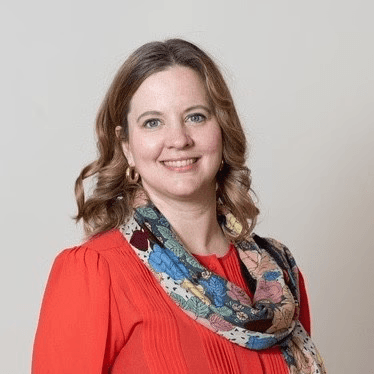
Decades later, she is a Director Attorney at Lisinski Law Firm, a national law firm with more than 50 immigration attorneys, handling a wide variety of immigration cases, including humanitarian cases. She oversees legal strategy, supervises attorneys, and helped design the firm's newest service line. She has never practiced any other kind of law. The child in that classroom, it turns out, was already doing the job.
Raquel Trujillo-Oria's Cuban Roots and Miami Upbringing
Trujillo-Oria was born and raised in Miami, where nearly everyone's family story starts somewhere else. Hers starts in Cuba.
Her grandmother arrived in New York from Cuba seven or eight months pregnant. Her mother was born shortly after, and that birth eventually helped the family secure legal status. Her father left Cuba in the 1960s after Fidel Castro took power. He was about 15, and his route to the United States ran through Spain before he landed in New York with distant relatives he barely knew.
"They lived and worked and grew up in not the greatest conditions," she says of her parents, "but were able to pick themselves up and work hard." She sees that pattern everywhere in the Hispanic immigrant community she has spent her career serving. "That grit to work hard. My brothers and I were able to have the life that we have now, and opportunities, because of that hard work."
Growing up, none of this felt remarkable to her. "Everybody's family in Miami are immigrants, so I didn't think of it so readily then." It took a law school clinic, and one difficult client, to turn a familiar background into a calling.
The Law School Case That Made Raquel Trujillo-Oria an Immigration Attorney
Around 2007, Trujillo-Oria joined her law school's immigration legal clinic just as the courts were reshaping how criminal convictions are evaluated in immigration cases. The categorical approach and modified categorical approach were being hammered out in case law, changing how a state conviction is compared against federal standards for admissibility.
Her clinic was representing a detained man with a serious controlled substance violation. The team argued the new framework on his behalf.
They lost. The offense was too serious. But something else happened along the way.
"Being able to see, okay, I can be creative here, and this is not set in stone. You can really impact somebody's life and really help them if you push back and fight back and do some really good lawyering."
Word of her brief reached nonprofit immigration attorneys, who asked the law student to walk them through her legal argument. That experience of collegiality, of experienced lawyers treating a student as a peer, sealed it.
"From there, I completely fell in love," she says. "I haven't done anything since. I've only been practicing immigration."
Ask her to explain the pull and she lands on two things: the people she grew up around, including her parents, "really doing hard work to pick their families up," and the discovery that a bad outcome on paper is not always a final one.
Raquel Trujillo-Oria's Role as Director Attorney at Lisinski Law Firm
Today, Trujillo-Oria's work at Lisinski Law Firm sits above the day-to-day casework. She sets legal immigration strategy on cases, supervises attorneys, fields the high-level legal questions that come up across the firm's offices, and still takes client calls when needed.
The firm's core practice is humanitarian immigration, which she describes as its "bread and butter." She's also leading the firm's expansion into other practice areas, helping build them from the ground up: defining the legal strategy, working with marketing on the client profile, and mapping out the documents and forms each case requires.
She is candid that she is not the one making top-level business decisions. Her lane is making sure the legal side of every new offering is sound before it reaches a client.
Mentorship and the Lisinski Law Firm Attorney Development Program
If you want to hear Trujillo-Oria's voice change, ask her about new attorneys.
"That's always been a heartstring for me," she says. "Every immigration attorney can tell you that you're usually just thrown into the fire. You have to sink or swim."
She has been a member of the American Immigration Lawyers Association (AILA) for longer than she can count, serving on the national New Members Division committee and her local chapter's version of the same, "always pushing to get resources to the new members."
Earlier this year, she turned that commitment into structure. Trujillo-Oria developed an attorney development program at Lisinski Law Firm that groups attorneys of every level into small cohorts that meet several times a month. Junior attorneys get access to senior colleagues. Senior attorneys hear firsthand what younger lawyers are struggling with, and that feedback flows back to the firm's legal leadership team.
"I'm really proud of that program," she says. "I hope that other immigration practices implement things like that."
Her reasoning goes beyond any single firm. "Immigration is such an expansive area of law. There are so many different ways your career can take. And at the end of the day, the newer attorneys are the ones who are going to be in our shoes one day. I want to make sure that we build a really good immigration attorney bar for the future."
Raquel Trujillo-Oria's Advice for New Immigration Attorneys
Her guidance for lawyers entering the field is practical:
Join immigration bar organizations. AILA in particular, she says, offers "a ton of resources," and most immigration attorneys are already members.
Ask an experienced attorney to co-counsel. "If you want to try a type of case, reach out. Say, hey, would you mind counseling with me to help walk through it?" Immigration is always busy, she acknowledges, "but I think most attorneys would be willing to take somebody under their wing."
Keeping Pace With Fast-Moving Immigration Policy
Trujillo-Oria has watched the government change the rules for 15 years. What is different now, she says, is the speed.
"Over the last few years it's been a lot faster. So you always feel like, am I up to date? "
Her answer is a team. At Lisinski Law Firm, the government’s policy changes land with a legal leadership team that evaluates each one against a simple set of questions: Does this affect our case types? Does it affect our clients? What do we do to pivot if it does?
"That's the benefit of being at a larger law firm," she says. "Having a lot of people that care about the clients, care about making sure that we're doing the right thing and in the right way."
Responsible AI in Immigration Law: How Lisinski Law Firm Approaches It
On artificial intelligence, Trujillo-Oria is neither a skeptic nor a cheerleader. "It's something that we can't hide from. It's coming, or it's here."
Lisinski Law Firm runs a firm-wide responsible AI program built around one principle: innovation cannot come at the cost of client protection. Privacy and attorney-client privilege are the non-negotiables. Within those limits, she sees real upside.
"We'll be able to evaluate clients' cases better. We'll be able to evaluate the government's communications with us better, faster. Being able to give clients responses faster."
That speed matters more than it used to, she points out, because client expectations have changed. "In this day and age, everybody's used to that immediate, instant gratification. You can go on Instagram or TikTok and get advice from six different immigration attorneys." When those clients hire a lawyer, they expect answers at the same pace. "Not just the immigration bar, honestly, any practice of law needs to look at how they can use AI to better represent their clients, give them timely responses, and help prepare their cases in a more efficient and effective way."
What Raquel Trujillo-Oria Would Change About U.S. Immigration Law
Asked which single piece of legislation she would add, remove, or adjust, Trujillo-Oria refuses to pick a piece. Her answer is the whole thing.
"I've been practicing for over 15 years. There have been hundreds of executive orders, regulations, things passed and changed through all the administrations. We really do need a comprehensive system so that we can make this system work for everyone."
She is careful to say this is not a call for open borders or closed ones. "Law and order is important in a civilized society. It's not let everybody in or don't let anybody in. Both extremes are probably bad."
What she wants is coordination and access. Right now, she says, attorneys are often left guessing what one agency is doing, and that agency may not know what another is doing either. "Who do we go to get information? It's just so complicated." A better system, in her view, would open communication between agencies and stakeholders, and make it possible to do things the right way "without tripping over hurdles every single time."
Common Mistakes and Misconceptions in the U.S. Immigration Process
"It's not just a form"
The mistake Trujillo-Oria sees most often starts with a government form and a confident applicant. "People see the forms and they're like, oh, I can fill out this form. It's not just a form. It requires legal interpretation. How are you answering those questions? What's the ramification of that answer?"
The notario problem
In Hispanic communities, the confusion is compounded by language. In many Latin American countries, a notario is an attorney. In the United States, a notary is someone who passed a test. "Unfortunately, that can have devastating results for people's cases," she says. Lisinski Law Firm regularly takes on clients whose earlier filings were handled by unlicensed preparers, and the work becomes undoing the damage and finding alternative relief.
Her conclusion is blunt: hiring "an accredited, licensed professional" is "probably the best investment they can make in their entire life."
"They don't contribute"
The misconception that frustrates her most is not about process at all. It is the idea that immigrants do not contribute to American society.
She answers from her own city. Her husband is Venezuelan. She is Cuban. Around them are Dominicans, Haitians, Brazilians, Russians, and more. "I don't think Miami would be what it is if it didn't have that Hispanic influence of all nations."
"You're not going to get a taco if there were no Mexicans," she says. "You're not going to have pastelitos here in Miami, or La Ventanita with cafecito, if you didn't have Cubans who helped build this city." With the country having just marked its 250th anniversary, she thinks the point deserves more airtime: "The U.S., 250 years later, would not be what it is without the immigrants."
Raquel Trujillo-Oria's Top 3 Tips for New Immigration Clients
When a new client walks in, Trujillo-Oria gives the same three pieces of advice.
Be truthful with your attorney. "We're all on the same team. I know it's hard at times because maybe there's shame or fear involved in divulging some information about their immigration or criminal history. But we need to know what we're dealing with." The firm runs background checks and requests immigration records through FOIA, but she says nothing replaces hearing it from the client directly. "It just helps us prepare the cases better."
Keep every document. Immigration is slow, histories are long, and FOIA responses are not always complete. "Keep every single document that you're ever given by any government agent, so that when you get to an attorney, they can review it and give you a good analysis."
Hire an attorney. "Whether it's Lisinski Law Firm or another firm. There are so many immigration attorneys out there doing great work." She admits there are far more immigrants who need help than lawyers to help them, which is part of why her firm is investing in tools and multi-state reach. "But if you go to an attorney, you're going to have a better shot than if you don't."
What Immigration Means to Raquel Trujillo-Oria
Near the end of the conversation, the question turns from practice to meaning. What does immigration mean to her?
"Hope," she says, without hesitation.
"People come with different intentions, different ideas, different backgrounds. But at the root of all of that is hope. Hope for a better life, hope to make it in this country, hope to change their circumstances and strive and excel."
She does not think that hope is foreign to anyone. "Whether you're climbing the corporate ladder in your own career, or you're a law student who wants to become a lawyer, you have this hope that you're going to do something with your life. We're not that different from immigrants. They're people too, and they have those same hopes."
Some of the stories she hears are hard. But the work offers something she calls "such an intrinsic value": a green card, a work permit, soon a naturalization certificate, delivered to someone who may not have known any of it was possible.
"Sometimes we get clients who have no idea that they even have that option," she says. "Being able to say, hey, you may have an avenue to permanent resident status or citizenship, is a game changer for them."
It is, in a sense, the same job she was handed in an overcrowded classroom after the hurricane. Someone sat down next to her, lost. She translated. Thirty years on, she still does.




Bob Webber
SEP 16, 2025
Charles Kuck
SEP 15, 2025
Christa Byker
SEP 11, 2025