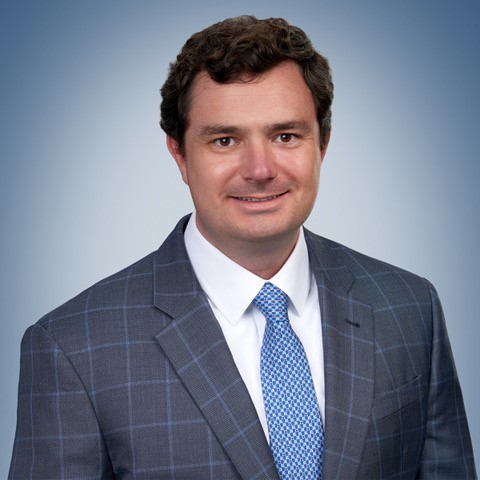

The child has never gone home. Born in the United States before his due date with a serious medical condition, he still lives in a hospital, kept breathing by equipment built specifically for him. His parents are Brazilian. They had come to the U.S. the way many expecting families from South America do: to shop for strollers and baby clothes that are expensive and hard to find back home, and then return.
Instead, they ended up in removal proceedings.
"No crimes. They entered with a visa," says Luciano Barcellos, founder of Barcellos Law, the Orlando immigration firm that took their case. "They didn't want to be here. They wanted to go back to Brazil, but they just can't leave the child here."
Barcellos Law won cancellation of removal for the couple. It is the case Barcellos names first when asked about the work that has stayed with him, and it captures something about how he practices law today: technically precise, deeply personal, and operating in a climate he describes plainly as "way more rigorous."
From Brazilian Attorney to Florida Immigration Lawyer
Barcellos did not arrive in U.S. immigration law by accident, though he did arrive by an unexpected route. He had been practicing as an attorney in Brazil since 2010 and later earned an LL.M. at the Sorbonne in France. Back in Brazil, an email from the University of Miami caught his attention: a dual degree program offering a JD and LL.M. in three years, with eligibility to sit for the bar exam.
He took it. And as he approached graduation on an F-1 student visa, he faced the same question his future clients would bring to him. "I said, I want to stay. What do I need to do to stay?"
The answer sent him deep into immigration law. He read, consulted with immigration attorneys, and took immigration electives at law school that were not required. He passed the bar in the middle of the COVID-19 pandemic and opened his own firm, Barcellos Law.
Why Business Immigration Became the Core of Barcellos Law
The original plan was corporate work and contracts. The market had other ideas. "Immigration was booming, and it's still booming for Brazilians," Barcellos says. Today roughly 90% of the firm's practice is immigration.
The core is business and investment immigration: EB-1, EB-2, L-1, E-2, and EB-5 petitions, alongside marriage and family-based cases, some humanitarian matters, and a growing removal defense practice.
Owning a firm was always the goal. Barcellos comes from a family of lawyers: his father, grandmother, grandfather, and wife are all attorneys. He remains a partner at his family's firm in Brazil, which employs around 100 people and more than 30 lawyers. Many of its clients wanted to invest in or move to the United States. "So it was always the plan, to be honest."
His wife, Patricia, licensed in New York, is his partner in the U.S. firm. Barcellos is licensed in Florida.
Advice for Attorneys Starting Their Own Immigration Firm
Nearly six years in, Barcellos is candid about how the early days felt. Despite a decade of practice in Brazil, the move to a common law system from a civil law one made everything feel new.
"I was too afraid of everything," he recalls. "Is this going to work? Do I really have the capacity to handle this?"
His advice to his younger self, and to anyone considering leaving a partnership to launch their own firm, is simple: trust yourself more. "When you want to make something work, either you go all in or you don't."
The firm went all in. This year, Barcellos expects revenue to come close to doubling last year's.
The Business Lesson: Start Inside the Box
Law school does not teach attorneys how to run a business, and Barcellos is modest about his conclusions. But one principle has guided the firm's growth: there is a proven format for most things, and it pays to learn it first.
He began asking what established immigration firms were doing that he was not. How did they structure engagement letters? What processes did they follow? The answer was to put the firm "in the box that works for most companies," then deliberately choose where to step outside it.
To build that foundation, the firm recently hired a fractional COO with more than 20 years of experience managing immigration law firms. Barcellos had not heard of the role until about a year earlier. The decision came when he recognized the firm could keep running as it had and be fine, but "if I wanted to go next level, I needed to have a next level business organization." His experience at the larger Brazilian firm taught him the value of procedures, rules, and values that let a firm "grow responsibly."
Client Relationships as a Competitive Advantage
Where Barcellos does step outside the box is client relationships. He charges mostly flat fees rather than hourly rates, and he stays personally involved, meeting with clients throughout their cases at no extra charge.
"I know that most firms, they talk with the attorney once in a while. Everything else is with the paralegals," he says. Barcellos Law has paralegals too, but he wants every client to know he is personally following their case.
"A lot of attorneys know immigration law," he says. Technical quality is expected. What sets a firm apart is being "way closer to the client" than the competition.
AI in Immigration Law: Useful, but Not Trusted Blindly
On artificial intelligence, Barcellos is pragmatic. His firm uses it, but with guardrails. AI still gets "a lot of things wrong," he says, so the firm never hands over decisions. "We have our style, we know what we want, and then we ask the AI to do it our way." Everything is double checked.
Still, he sees no option to sit it out. Like the arrival of computers and the internet, "it's not a matter of whether you like AI or not. You have to use it, otherwise you're going to be behind."
He also expects AI to push legal fees down significantly in the coming years, and he wants his firm prepared. His philosophy, borrowed from a Portuguese saying: if you can't beat them, join them.
Immigration Trends: More RFEs, More Denials, More Removal Cases
From the front lines, Barcellos sees a clear pattern: heightened scrutiny across nearly every category.
EB-1, EB-2, and NIW petitions face more requests for evidence and a higher denial rate. Cases he knows would have been approved without an RFE two years ago now draw challenges, even though many petitions are still being approved.
Marriage-based cases are being investigated closely for fraud, which he acknowledges authorities should do.
Asylum has become more rigorous, with cases now able to be referred directly to immigration court rather than first going through a USCIS affirmative interview.
Removal proceedings are rising sharply, including for people who, a few years ago, would likely not have been placed in proceedings.
That last trend weighs on him. Many of these individuals entered on a visa and fell out of status over one or two issues. "They are not criminals," he says, while acknowledging that "the law is the law." It brings more work to the firm, but it is hard to watch emotionally.
How Barcellos Law Is Adapting EB-1A Petitions to Stricter Standards
For extraordinary ability petitions, Barcellos's answer to tougher adjudication is more explanation and more evidence.
Take the criterion of a leading or critical role in a distinguished organization. Two years ago, showing the client's role and a few facts about the company was often enough. Now the firm must prove the organization's distinguished reputation directly, through awards the business has won and letters from competitors or others in the field.
The same is true for showing a benefit to the United States. The law has not changed, he notes, but in practice that benefit used to be largely presumed once extraordinary ability was established. Today the firm builds a full argument for it. "The petitions now are a little bit longer."
The firm has also become more selective. It does not take cases it believes will be denied, which means turning away many clients it would gladly have represented two years ago. "The person really needs to be super extraordinary to get an EB-1A nowadays." Growth in the removal defense practice has helped offset what the visa side is losing.
Second Chances Clients Didn't Know They Had
Beyond the family whose child remains in the hospital, Barcellos points to clients who came to his firm after their cases went badly elsewhere, including investors who had spent significant sums and still faced denials, and who eventually secured green cards.
Some had been represented by firms that never made clear how serious their situation was, including the risk of being barred from returning to the U.S. By the time they reached Barcellos, they still had fewer than 180 days of unlawful presence and time to request voluntary departure. That path allowed them to leave without triggering a three or ten year bar, apply for new visas through the consulate, and return.
"We saved, let's say, a bunch of people from being banned," he says. "And they are here now."
Looking Ahead
Barcellos does not pretend the road is easy. The immigration climate is challenging, adjudications are tougher, and AI will reshape how legal services are priced. But his approach is consistent: learn the proven model, invest in structure, stay close to every client, and prepare rather than resist.
For a lawyer who once asked the same question his clients ask today, what do I need to do to stay?, the work remains personal. And the answer, as he has learned, often comes down to going all in.





Bob Webber
SEP 16, 2025

Charles Kuck
SEP 15, 2025

Christa Byker
SEP 11, 2025