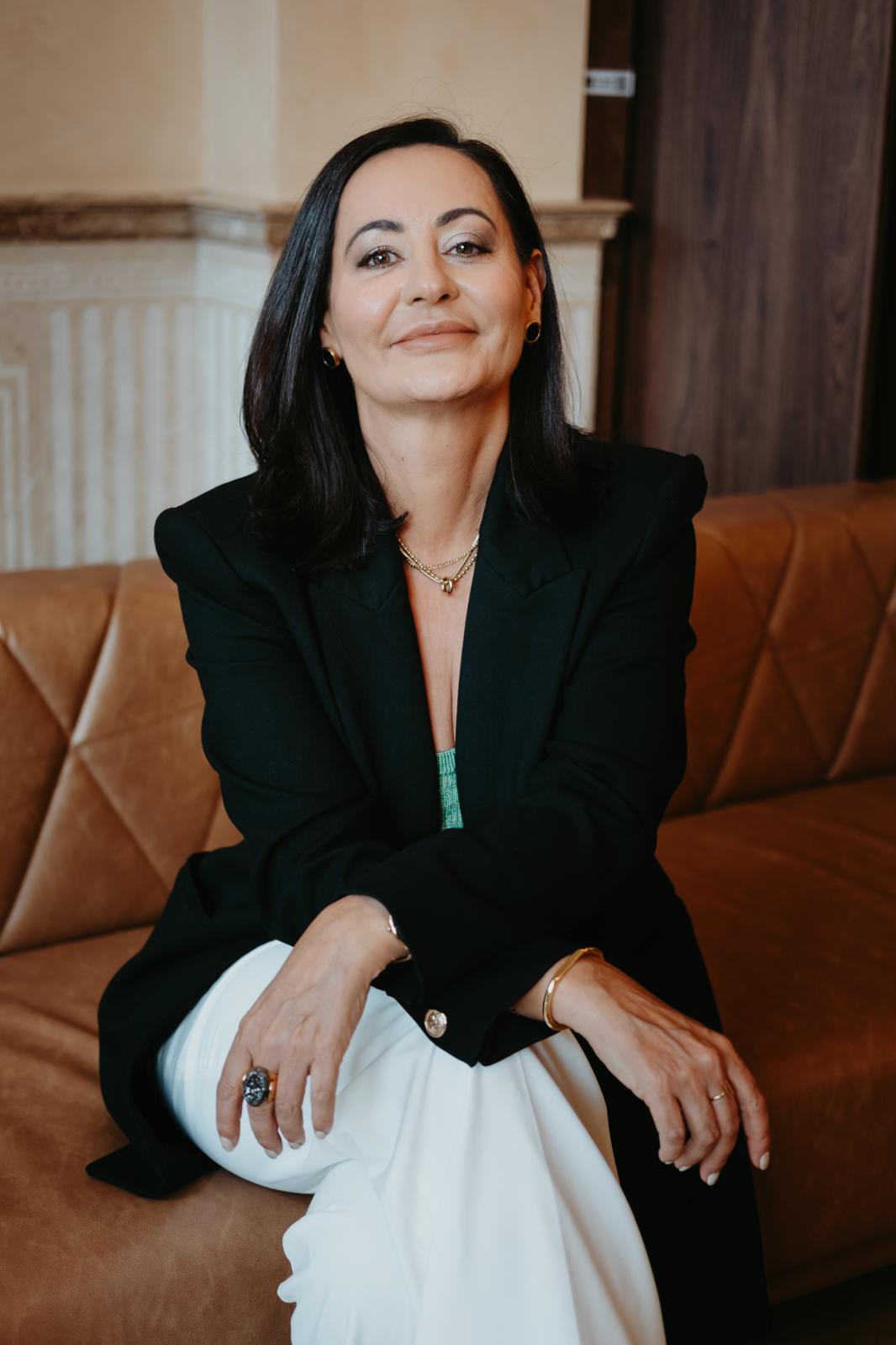

In 1997, a young Brazilian woman filed for a green card petition in Florida and then waited. The agency handling her case was not yet called USCIS. Somewhere inside it, her file went missing.
"It took years. It was really painful for me to get my green card at the time," Marisol Andrade says. She hired an attorney in Miami. She remembers the process being difficult and uncertain, and she remembers how important the case was to her: if the case failed, she was going back to Brazil, to a life she had already packed up and left.
"I had a life already set here, and I couldn't see myself back there," she says.
Nearly thirty years later, Andrade is the attorney on the other side of that desk. She co-leads Andrade Bowers, an immigration law firm with more than 25 people across the United States and Brazil. And the reason she does this work has never really changed from what it was when she was the one waiting on a file.
"It's a huge responsibility, and I see it as such because I'm an immigrant myself."
The Green Card Case That Inspired an Immigration Attorney
Andrade arrived in the United States in 1997. The delay, the missing paperwork, the attorney in Miami, the years of uncertainty: all of it left what she calls vivid memories.
"I have vivid memories of when I realized that I really needed an immigration attorney," she says.
Those memories came with a promise attached."I remember thinking that if I became an attorney one day, I would love to help immigrants because it was something that connected so deeply with my own story."
It would take her another fourteen years to get there.
From a Bachelor's at FAU to a the 2008 Market Crash to Law School
Andrade graduated from FAU in 2003 with her bachelor's degree. Law school was already in the back of her mind, but she was not ready for it. So she built a career in real estate.
Then 2008 arrived. The market crashed, and the timing question answered itself.
"I said, okay, now it's time," she recalls. "I started law school."
Once she was there, the direction narrowed fast. She took an immigration class. She interned in international law in Washington. For three years she explored the two fields, always circling the same territory. "I come from abroad and I speak more than one language," she says. Immigration and international law became the two areas she was most drawn to.
She graduated in 2011 with internship experience in international law, but had not yet worked in the immigration field.
The Immigration Firms That Never Called Her Back
Andrade sent her resume to immigration firms in Orlando. None of them responded.
"They never responded to me," she says. "And I always joke, because now they're my competitors in Orlando."
She took a role in international law in Miami instead, working with Subway's Latin American operations. By most measures it was a success. She was happy in Miami. The job was a good one. But it wasn't where she ultimately saw herself.
"I realized it wasn't really where my heart was," she says. "I'm an entrepreneur. I always wanted to build something of my own—to build something big."
How a Coffee Meeting Helped Launch Marisol Andrade's Immigration Practice
The firm did not start with a business plan. It started with coffee.
Andrade began networking with accountants in Orlando, where most of her personal network already lived. One of them ran an accounting firm with a large Brazilian client base, and no immigration attorney to send them to.
"He said, do you want to start doing a few cases for us, and I can refer them to you," she says. She was still at Subway. She said yes and took the work on the side.
The first cases were straightforward: changes of status to students and extensions of status. She focused on matters she felt prepared to handle while continuing to research, learn, and build her experience.
"That little side job started growing, growing, to the point that I had to quit my job," she says. She moved back to Orlando and opened the firm.
Twelve years later, that side job employs more than 25 people between Brazil and the United States, serving a primarily Brazilian client base.
Andrade credits the growth to principles that sound simple but became foundational to the firm. "If you do a good job, and you are consistent, and you are honest, and especially in this field of immigration, it's very important for you to relate with your client," she says. She and her law partner Andrea built the practice around a single habit: "We try to put ourselves in the client's shoes, and to think, it could be me that is in this situation."
The confirmation came years later, and from an unexpected place. Andrade went back and reread the personal statement she had written for her law school application.
"I wrote there, hey, I'm an immigrant, I would like to help immigrants," she says, still sounding a little surprised by it. "I should put that on my website as a reminder of what I wanted before I even started law school. Because everything came to fruition now."
Marisol Andrade's Advice for Attorneys Opening Their Own Immigration Practice
For attorneys weighing the leap, Andrade names the real obstacle plainly. "The biggest hurdle is, how to get clients," she says. "And how to take care of that client without experience."
Her advice comes down to a short list:
Pick your path honestly. Either work for a firm first and build experience until you feel confident, or open your own practice and accept that you will need to be exceptionally disciplined about knowing your limits, researching every issue, and seeking guidance when necessary.
Start small on purpose. "I started with more straightforward cases until I felt comfortable," she says. More complex matters can come as your knowledge and experience grow.
Learn constantly. AILA, continuing education, courses, research. "Trying to learn as much as possible" is not a phase; it is part of being an immigration attorney.
Network with the people immigrants already trust. Accountants, realtors, and other professionals who serve immigrant communities can become important sources of referrals and professional relationships.
Volunteer with immigration NGOs. It provides valuable experience while allowing new attorneys to serve immigrant communities and build relationships within the field.
Expect employment-based work to come later. Corporate clients can be more difficult to develop without an established track record. Family-based and more straightforward matters may provide a more natural starting point for a new practice.
Underneath the tactics sits a warning she returns to more than once. Immigration law looks simpler from the outside than it is.
"A lot of attorneys don't realize how complex it is," she says. "One little detail changes everything."
And the cost of that detail is not measured in fees."One mistake can change the course of someone's life. It could result in someone having to leave the country, or it could separate a family. The consequences can be extremely serious."
What Immigration Attorneys Are Seeing on the Front Lines Right Now
Asked whether the headlines match the reality inside her practice, Andrade does not hedge.
"Every day there's a new change. You have to be on top of every decision," she says. "Sometimes we have several developments in a single day, especially after a weekend."
The pace is now built into the firm's operations. Her partner Andrea Bowers runs a morning coffee segment on social media walking clients and followers through the day's immigration news.
The composition of Andrade's own caseload has shifted with it. Her firm is handling significantly more deportation and removal proceedings, while employment-based filings, including EB cases that once represented a larger share of the practice, have declined.
Andrade attributes the decline less to policy mechanics than to atmosphere."There is a lot of fear and uncertainty in the immigrant community right now, and I think that is deterring some people from pursuing immigration to the United States at this time."
But among many of the people already in the country, she is seeing the opposite response: a greater sense of urgency.
"There are a lot of people already in the U.S. who are doing everything they can to find a lawful solution to their immigration situation," she says. Couples who were dating are getting married. Employees who have any path to an employment based visa are pressuring their employers to file. "We're seeing a lot of people taking action now because they don't want to wait and see what happens."
And then there is the part of the practice that has grown dramatically: representing people in detention and removal proceedings. "We have people who are being detained, and we have to determine what relief or defense may be available to each of them." Some cases have a viable defense. In others, the best available outcome may be voluntary departure or another strategy that allows the person to leave the United States while preserving whatever future immigration options may remain.
Twelve Years of Immigration Law: Adapting to a Changing Landscape
Andrade has enough runway to see the shape of it. Immigration practice, in her telling, moves in waves.
During the first Trump administration, L-1 petitions faced increased scrutiny and higher levels of enforcement, and Andrade saw the filing landscape change significantly. “Everybody stopped filing for L-1s,” she recalls.
As the immigration landscape continued to evolve, EB cases became an increasingly significant part of the practice. Today, with increased immigration enforcement, removal defense has taken on greater importance.
"It goes into trends of how the immigration goes," she says. Her conclusion is less dramatic than the cycle it describes. "You have to adapt. You have to keep learning, stay on top of the news and understand the changes as they happen. That’s how you become a better attorney and, ultimately, a better advocate for your clients."
How Marisol Andrade Approaches AI in Immigration Practice
Andrade's firm is adopting AI, and she is clear about the posture: interested, and cautious.
"We're trying to learn as much as possible and integrate it with our office," she says. "We're using it, but we're cautious right now."
The first constraint is client data. "We have the client information that we have to protect," she says, and that shapes what gets used where.
The second is verification, and here her language sharpens. "You have to make sure that what you're presenting to your client that comes from AI is correct," She points to the growing attention courts are giving to AI-assisted legal work and the attorney's responsibility to verify it: "Courts are increasingly requiring attorneys to confirm that they have checked the sources and verified the work."
She understands exactly how the failure happens, because she understands how busy the practice gets. "When attorneys are extremely busy, there's a temptation to rely on what AI produces without taking the time to independently verify everything."
Her rule is simple and it lands on the signature line. "Do your homework. Read the work, check the sources and verify everything before you put your name on something produced with the assistance of AI. At the end of the day, it's your name on that work, and you're responsible for it."
None of that caution is skepticism. "I think it's a very good change," she says. "It can make us more efficient and give us more time to focus on the parts of the practice that really require the attorney—strategy, judgment and the relationship with the client."
What Immigration Means to Marisol Andrade
Asked what immigration means to her, Andrade pauses, then splits the question in two.
Immigration itself she describes as expansion. "It's an opportunity to grow, to learn about other cultures, other people, other ways to live, opportunities to thrive." She also sees it as structural and irreversible. "With globalization, immigration is a consequence. You can't go back. The more globalization, the more immigration."
In the United States specifically, she is measured rather than sentimental. "The United States is a very good place for opportunities," she says. "I would say it's a land of opportunity, for sure.."
Immigration law is the heavier half of the answer.
"I think it's necessary. I think you have to be very cautious, because it's a very delicate subject," she says. "You're changing lives. So either you change the person's life for the better, or for the worse."
But technical skill alone is not enough. Andrade believes immigration attorneys also need proximity to the people they represent.
Her prescription for the profession is not more technical skill. It is proximity. "The attorneys need to relate more to their clients. You have to put yourselves in their shoes.”
Her own experience as an immigrant gives her a deeply personal understanding of that perspective. "As an immigrant, I can do that. I don't know, if I wasn't an immigrant, how hard that is. Because you really don't know unless you've been through it."
Then she describes the thing she does know, and it sounds a great deal like 1997.
"There is a particular fear you feel when you're facing the possibility of having to go back—to a situation that may not offer the opportunities you have today, or may not even be safe," she says. "For some people, it means returning to a place where they don't feel safe, or where they've experienced a natural disaster. There are so many circumstances people can face when they're forced to return to where they came from."
That is why she treats the work the way she does.
"It's a very serious job. You have to have this responsibility, and be ethical always."
Frequently Asked Questions About Marisol Andrade
Who is Marisol Andrade?
Marisol Andrade is an immigration attorney and co-founder of Andrade Bowers Law Firm, an immigration practice from Orlando, FL with more than 25 team members across the United States and Brazil. A Brazilian immigrant who arrived in the US in 1997, she has practiced immigration law for 12 years and serves a primarily Brazilian client base.
How did Marisol Andrade become an immigration attorney?
Her own green card case shaped the decision. After her file was lost and the process dragged on for years, she wrote in her law school personal statement that she wanted to help immigrants. She graduated from law school in 2011, worked in international law, and opened her own immigration firm after side referrals from an accountant grew too large to handle part time.
What advice does Marisol Andrade give attorneys starting an immigration practice?
Start small with simpler cases until you are genuinely comfortable, learn continuously through AILA and courses, and network aggressively with accountants, realtors, and NGOs who already serve immigrant communities. She notes that employment based corporate work is difficult to win without an established track record.
What immigration trends is Marisol Andrade seeing in 2026?
Removal and deportation proceedings have increased sharply, while employment based filings such as EB-1 and EB-2 show a decline as fear deters new arrivals. At the same time, immigrants already in the US are accelerating their filings, including marriage based petitions and employment sponsored visas.
How does Marisol Andrade think immigration attorneys should use AI?
She uses AI and calls it a very good change, but insists on verification and data protection. Client information must be safeguarded, sources must be checked before anything reaches a client, and attorneys should remember that some judges now require them to certify that they verified AI assisted filings.


Bob Webber
SEP 16, 2025
Charles Kuck
SEP 15, 2025

Christa Byker
SEP 11, 2025