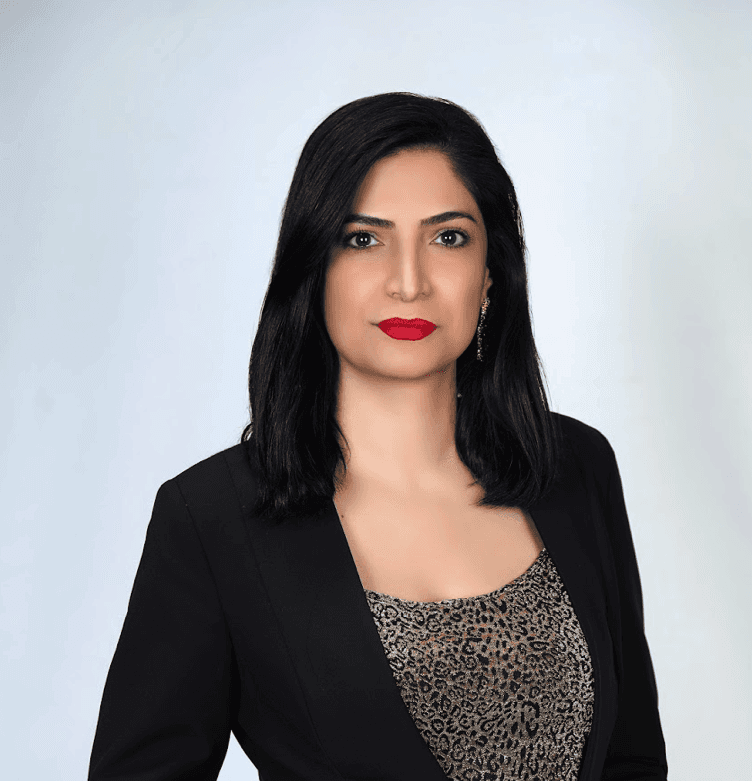

The woman had survived physical abuse serious enough to cause a miscarriage. Her humanitarian case had already drawn two Requests for Evidence from USCIS, and the broader trend for cases like hers was unmistakably bleak. Elham Sadri, her attorney, had watched similar cases across the country drift toward denial, and she was bracing herself for the same outcome.
Her client, however, was not.
"I am praying, and I am sure God will answer me," the woman would tell her, call after call. She had fled abuse. She had built a life in the United States as a nurse. And she was certain the approval would come.
It did. The approval notice landed this week, right at the edge of what Elham believes is a shifting trend for humanitarian cases. She called her client personally to share the news. "She was so happy," Elham recalls. "It was very sweet to me, because she kept saying, 'I'm praying. I'm sure it's going to be different.' And it actually worked out."
For Elham Sadri, the case is a reminder of why she does this work, and why she has spent the last several years quietly expanding the definition of what an immigration attorney is actually supposed to do.
From Client to Counsel: Elham Sadri's Own Path Into Immigration Law
Elham's path into immigration law was not theoretical. She lived it first.
She arrived in the United States on a student visa, went to law school here, and passed the New York bar exam. She tried a few practice areas early in her career, but something kept pulling her back toward immigrants as clients. "I really liked and related to immigrants," she says. "It just made sense the way that I was communicating and relating to clients."
The feedback she heard from those early clients crystallized what her practice would become. Over and over, they told her the same two things: she was transparent with them, and she was empathetic. It was a simple standard, and it came from somewhere specific. "The transparency and empathy that I expected myself for my own immigration case," she says, "I was giving it to my client."
That principle, treating every client the way she had once wished to be treated, is the through line of her career.
Why She Left to Start Her Own Firm
After years as an associate attorney at several firms, Elham took the leap and opened her own practice. Coming up on six years now, the firm is hers. The decision, she admits, was more instinct than strategy.
"Something changed in me. I can't describe how," she says. "I wanted to do more running rather than just following."
Asked what gave her the push, she returns to a piece of advice her first boss gave her on her first day. "Better ask forgiveness than permission," he told her. She took it to heart, and eventually took it to its logical conclusion: she stopped asking permission at all.
The Gap She Noticed: Estate Planning for Immigrant Families
Most immigration attorneys close a case at approval. The client gets the green card, the citizenship, the status, and the file goes into the archives. Elham started noticing that for her clients, approval was not the finish line. It was the moment a new set of questions began.
They had spent five, ten, sometimes fifteen years fighting for status. They had built wealth. They had built blended families, some members citizens, some not. And they had no idea what would happen to any of it if something went wrong.
"What happens to their family, their minor children?" Elham asks. "What would happen to their assets if they get arrested, get deported, get stuck outside the country and can't come back?" These are not abstract scenarios for immigrant clients. They are the specific, anxious what-ifs that sit beneath the surface of every post-approval conversation.
So she built a service line to answer them. Today, her firm offers estate planning tailored specifically for immigrant families, including scenarios that most U.S.-born estate plans never contemplate: non-citizen beneficiaries, different tax consequences for green card holders, detention and deportation contingencies, and emergency planning for families who often lack a deep bench of trusted relatives on American soil.
"I haven't seen anyone focusing on immigrant families' estate planning," she says. As far as she can tell, it is a category she is helping to create.
The Biggest Mistake Immigrants Make in Planning Their Future
Ask Elham what the single most common planning mistake is among her immigrant clients, and her answer is fast.
"Not having trust. Not even knowing they should have trust."
The education gap, she says, is enormous, and it starts with basic legal literacy. Many of her clients come from countries where the concept of a trust simply does not exist in the legal system. She knows, because she did too. "I'm coming from a country that doesn't have the trust concept in our legal system. So that was totally new to me, too. I understand why people don't understand it."
Then there is the misconception problem. Clients routinely assume a trust will take their assets away from them, or strip them of control. "There's no day that I'm not answering that question," she says. "What happens? Does the trust control my assets? The answer is no."
The misunderstanding extends to adult children, too. Parents often do not realize that once a child turns eighteen, they lose access to medical and financial decision-making power, even in an emergency. "Something happens to their children at nineteen, parents don't have any power over that," Elham says. "There are a lot of scenarios people don't even think about."
This, she says, is why education has become a core part of the work. She runs webinars and in-person seminars across the communities she serves, not to sell, but to inform. "Most of them don't even know. They don't even know what they don't know."
On AI, ChatGPT, and the Rise of Misinformation
The conversation turns to technology, and Elham's tone shifts. She is not anti-AI. She is skeptical of how her clients are using it.
More and more of them are walking into her office with confident legal opinions picked up from chatbots. "I get a lot of clients coming to me saying, 'I got this opinion,' and after so much digging through nonsense, they tell me they got it from ChatGPT," she says. One client insisted for multiple sessions that another attorney had told him something, until he finally admitted the "attorney" was an AI.
"Unfortunately, that's bringing up a lot of misinformation that people are dealing with, and it's really annoying."
She does not dismiss the tools outright. She acknowledges that AI is helping firms like hers operate more efficiently, and that the gains are real. But she draws a sharp line between efficiency tools used by trained attorneys and black-box answers consumed directly by vulnerable clients. "The issue is, which one is the good one that we can trust, with confidentiality, accuracy, properly trained?" she says. "There are a lot of options out there."
In her view, the practice of immigration law has not been replaced by AI. But the trust clients used to place exclusively in their attorneys has been partially outsourced to the internet, and the consequences of that are showing up in her consultation room every week.
A Citizenship Conversation That Captures Her Whole Philosophy
A recent client meeting illustrates how Elham thinks about the full arc of an immigrant's legal life. A woman who had held a green card for twenty years came in to separate property from her husband. She had no reason, Elham says, not to apply for citizenship. She was fully eligible. She just had not done it.
Elham told her plainly: go get your citizenship first. That is the number one thing. And if you are not ready, then we need to design your trust around the real tax consequences of dying as a green card holder rather than a citizen.
The advice is characteristic. It is practical. It is honest. It does not moralize or pressure. It simply lays out the real mechanics of the decision, and then builds a plan around whatever choice the client actually makes.
What Comes Next for Elham Sadri's Practice
Elham's vision of her practice keeps expanding outward from immigration, not away from it. She has moved into guardianship for unaccompanied minors and underage children. She is developing support around criminal immigration issues, where the two worlds collide. And she is deepening her family emergency planning work for immigrants who lack the safety nets other families take for granted.
The underlying logic is always the same: identify what immigrant families actually need at each stage of their lives in America, and then build a service that meets them there.
"I'm trying to see and foresee what their need is," she says, "and provide the service they need."
It is a quiet, methodical mission. It began with her own arrival on a student visa, it deepened through every client who told her she had treated them with rare transparency, and it now stretches across a practice that looks less like a transactional immigration firm and more like a long-term partner for the entire immigrant family journey.
Somewhere in that journey is a nurse who kept praying, a worried green card holder who needed a plan, and dozens of clients who walked in looking for a visa and walked out with something much larger: the beginnings of a life they could actually defend.





Bob Webber
SEP 16, 2025
Charles Kuck
SEP 15, 2025
Christa Byker
SEP 11, 2025