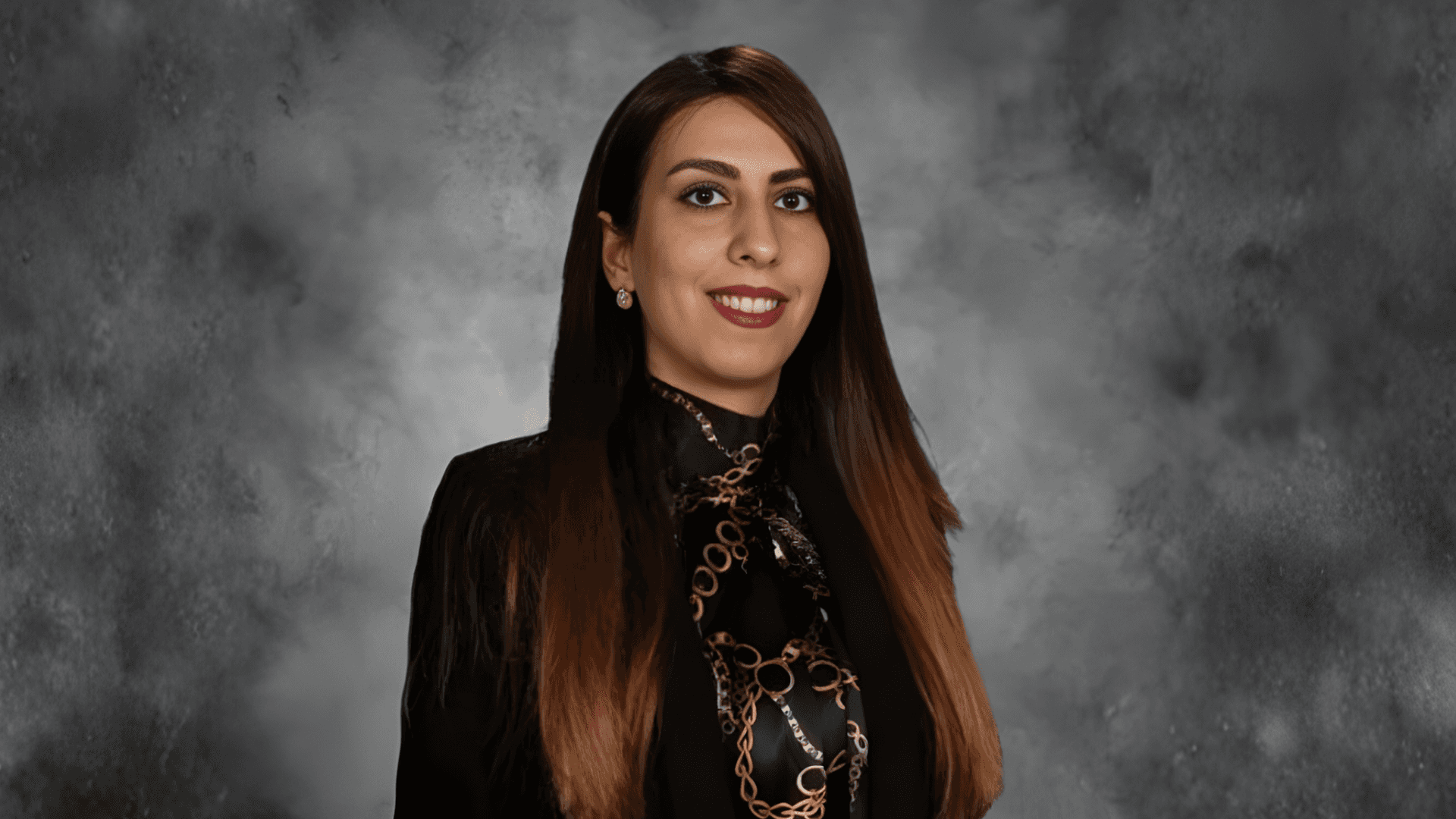

She arrived in the United States in 2014. Alone. No family. No network. English was her second language, and she was about to study law in it.
Before that, Shohreh Kananizadeh was already a legal counsel in Iran, working across multiple branches of law. She was no stranger to the courtroom. But a 2011 international law conference in Germany planted a seed that would uproot everything she had built and pull her across the world.
"That experience was transformative for me," she recalls. "It was the first time I was directly exposed to the global legal environment. I observed how different legal systems operate and how international collaboration functions. It also broadened my perspective beyond national borders."
She made the decision to study the American legal system, drawn to its unique common law structure. The move was anything but simple.
Shohreh Kananizadeh on Building a Legal Career in the U.S. as an Immigrant
Studying law in a second language demands a different level of discipline. Legal writing, legal analysis, exams: every part of the process becomes more demanding when it is not your native tongue. On top of the academic pressure, Shohreh was navigating immigration status requirements, tuition challenges, and the cultural shift of starting over in a country where she had to build everything from zero.
"From academics to professional networks, everything I achieved was self-made," she says. "Life as an international student in the U.S. is challenging. You constantly navigate immigration status, tuition, cultural differences, and academic pressures. These experiences, however, strengthened my resilience."
After law school, she began working in different firms as legal counsel, gaining hands-on exposure to employment-based immigration. Then came the bar exam.
She did not pass on her first attempt. She took it multiple times before finally earning her license. And she speaks about that chapter with unmistakable pride.
“Failure did not define me. Persistence did. Passing the bar was not simply about obtaining a license; it represented endurance, growth, and a deep belief in myself.”
Why Shohreh Kananizadeh Chose Healthcare Immigration Law
Her path to healthcare immigration was not a straight line. She worked across employment-based cases that required employer sponsorship, self-petition categories for exceptional talent, and investor visas. Over seven years, she filed more than 600 EB-1A and EB-2 NIW cases. But it was an encounter with a nursing staffing agency that pulled her attention toward what would become her specialty.
"I found it very meaningful to help nurses and physicians come to the United States and support the expansion of the healthcare workforce," she explains. "There is a real need for these services. That’s why this area became so interesting to me. I made an effort to learn as much as I could because it is a very niche field, and relatively few immigration attorneys focus on it."
It was a deliberate strategic choice. She saw both a deep personal meaning and a business opportunity in an underserved corner of immigration law. Today, her firm works with corporate hospital clients and staffing agencies, processing immigration cases for physicians, nurses, and physical therapists, focusing specifically on Schedule A petitions for healthcare professionals.
The Immigrant Experience That Shaped an Immigration Attorney
What sets Shohreh apart is that she does not just practice immigration law. She has lived it.
As an international student, she had only one year of Optional Practical Training (OPT) for her law degree. Finding an employer willing to sponsor her green card was a struggle. She eventually found that sponsor: a Chinese immigrant himself, a business owner who understood what it meant to be a foreign-born professional in America. He made it a practice to hire international students and file their H-1B petitions and green card applications.
"This is especially meaningful to me because, as an immigrant, I have gone through that journey myself and understand the experiences and emotions of international students, having once been in their shoes." Shohreh says.
The green card process took three and a half years. During that time, some of her own clients received their green cards and even naturalized before she did. She describes that experience as humbling rather than discouraging.
"That experience gave me humility. Being an attorney and an immigrant gives me a deeper emotional understanding of the process."
It was during those years that two clear motivations took shape. First, she wanted to build a firm where she could attract foreign talent, hire them, and help them secure their own immigration status, the same way her former employer had done for her. Second, she was a successful lawyer back in Iran. She was not going to downgrade.
"I established my own law firm here to advance professionally and broaden my expertise," she says. "Owning my firm also provides greater job security than working for others."
Shohreh Kananizadeh on Meditation, Mindfulness, and Running an Immigration Law Firm
Shohreh meditates every day. Fifteen minutes. It is a non-negotiable part of her routine.
She has attended a Joe Dispenza retreat. She has completed a two-week Vipassana silent meditation at a center near Palm Springs: more than ten hours of meditation daily, no conversation with other participants for the entire duration.
"After two weeks of silence, when I finally started talking again, my throat and vocal cords were sore, and making my voice come out felt surprisingly difficult," she says with a laugh.
But this is not a casual hobby. For Shohreh, the practice is central to how she leads her firm and serves her clients.
"Immigration law is extremely challenging, especially these days. It is high-pressure work, with strict deadlines, constant policy changes, anxious clients, and unpredictable government processing times. If you operate from a place of stress, that stress inevitably affects both your clients and your team."
Meditation, she explains, does not eliminate challenges. It changes how she responds to them.
"Instead of reacting emotionally to a sudden policy change or an unexpected delay, I take a moment to pause, assess, and strategize. That pause is incredibly powerful. Running a law firm means making decisions constantly. When your mind is scattered, your decisions are reactive; when your mind is clear, they are intentional."
She connects the practice directly to professional responsibility. In immigration, everything feels urgent. Clients are anxious. Employers are under pressure. Shohreh believes that emotional stability on the attorney's side changes the entire dynamic of those interactions.
"From a leadership perspective, I believe emotional stability is an essential part of professional responsibility. When I am grounded, every interaction becomes more productive."
Shohreh Kananizadeh's Perspective on AI in Immigration Law
When it comes to artificial intelligence, Shohreh holds a nuanced position. She sees both the promise and the danger.
"One of the biggest shifts I’ve noticed recently is that many immigrants turn to AI tools before consulting an attorney," she says. "I understand why. These tools are more accessible, fast, and free, and they can provide general information within seconds. But immigration law is not a field of general information. It is highly fact-specific."
She has personally tested AI tools in areas where she has deep expertise. In multiple instances, the answers were incomplete or simply incorrect. Not intentionally misleading, she clarifies, but lacking nuance.
"The issue is not that AI is useless. The issue is that it does not know your full immigration history. It does not know your prior entries, previous filings, potential inadmissibility concerns, employer specific details, timing strategies, or long-term goals. A mistimed action, misinterpreted eligibility requirement, or incorrect filing sequence can delay a case for years."
She points to a real consequence she now faces in practice: clients who arrive at consultations having already received conflicting guidance from AI tools, requiring her to spend additional time explaining the legal reasoning and citing USCIS policy manuals or statutory language.
"AI gives very good answers. But an attorney gives a tailored legal strategy."
She also recalls a cautionary tale from a California law conference where a speaker discussed an appellate court ruling that attorneys using AI for drafting must disclose it to the court. In one widely cited case, a lawyer submitted AI-generated content that included fabricated law, without verifying the sources. The court imposed a $10,000 penalty.
"Even though AI makes my work much easier, it is still very important to check everything. I always double or triple check to be sure."
What the Future Holds for Shohreh Kananizadeh's Immigration Practice
When Shohreh thinks about the future, she thinks in terms of impact and structure.
"My vision is thoughtful expansion, not uncontrolled growth. I want to build a practice that is known for efficiency, ethical clarity, and specialization, particularly in healthcare workforce solutions."
She envisions moving beyond case-by-case operations toward institutional relationships with hospitals, healthcare systems, and corporate employers, helping organizations plan immigration strategy at a systems level over the long term.
Education and public engagement are also part of the plan. She sees herself continuing to speak at conferences, contributing to professional discussions, and making immigration law more accessible for both employers and immigrant communities.
Shohreh Kananizadeh's Advice for Healthcare Immigrants Navigating the U.S. System
For the nurses and healthcare professionals she represents, Shohreh's primary message is one of patience rooted in reality.
"The first thing I tell everyone, not only healthcare professionals, is that getting a green card and going through the immigration process takes time," she says. "You have to be patient."
She acknowledges how difficult that advice can be in the current environment. Travel restrictions now affect 74 countries. Many nurses and physicians who were represented two years ago are still waiting for their priority dates to become current under the visa bulletin. When their cases finally do become current and they are ready for consular processing, new travel limitations can create yet another obstacle.
Meanwhile, the healthcare workforce shortage in the United States is well documented. The number of domestically trained nurses graduating each year is not keeping pace with demand, particularly in rural and underserved areas. Hospitals and staffing agencies are hiring internationally not as a preference but as a necessity.
"From the immigrant’s perspective, it is deeply discouraging. From the employer’s perspective, it disrupts workforce planning. From the system’s perspective, it creates inefficiency."
Yet she insists on hope.
"Lawyers are fighting for you. We have handled many litigation cases in federal court. I understand the journey and how families feel when their plans are delayed and they do not know what to do. Be patient. You will get to the United States."
This interview was conducted by LegalBridge Magazine as part of our series profiling leaders in immigration and global mobility.






Bob Webber
SEP 16, 2025
Charles Kuck
SEP 15, 2025

Christa Byker
SEP 11, 2025