
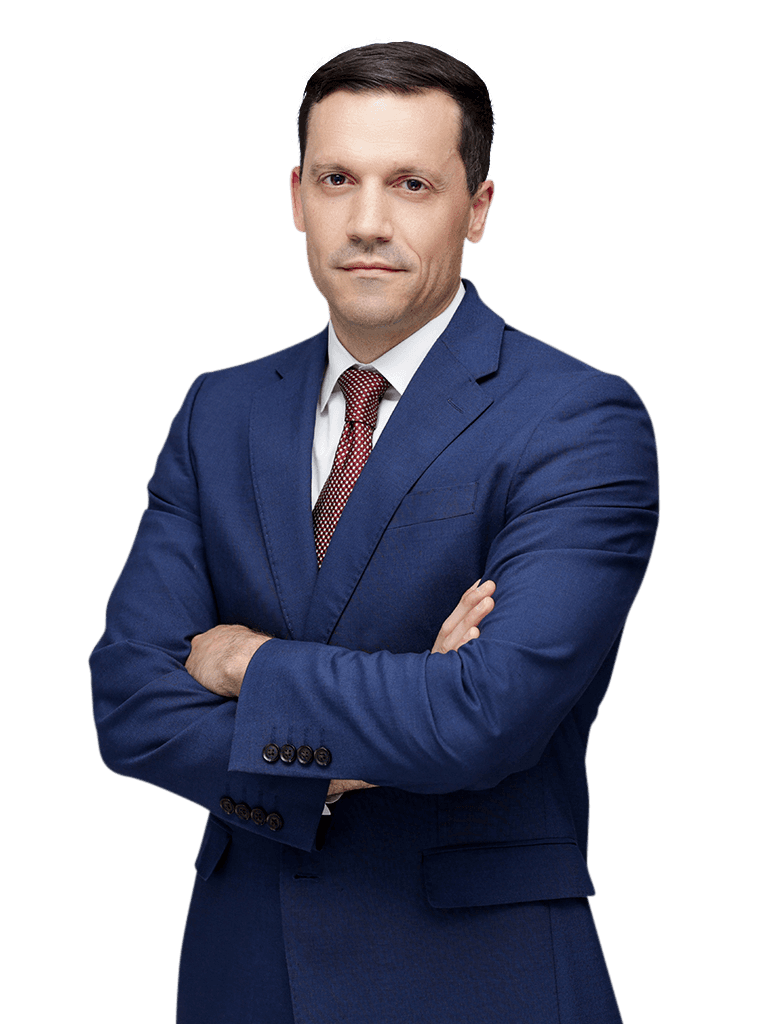
Zaia Law Founder Guilherme Zaia: "Things Are Still Possible"
An EB-2 National Interest Waiver petition that receives a Request for Evidence has, by Guilherme Zaia's estimate, roughly a 20 percent chance of being approved. His firm has been converting nearly all of them.
That number matters more than it used to. Zaia runs Zaia Law, a boutique business immigration practice in North Bethesda, just outside Washington D.C., and he describes the last several months as a period where "things have changed dramatically." Adjudication standards have shifted, approval rates dropped sharply last year, and clients arrive at his office carrying the anxiety that comes with reading the news.
"With all the changes, we have to constantly remind them that things are still possible," he says. "They can still achieve their visas. They can still get their green cards."
The job of reminding them is easier when the results back it up. This is the story of how a small firm stayed small on purpose, doubled down on business immigration when the climate got harder, and rebuilt its approach to strategy and RFE response around a partnership with AI that Zaia insists should always begin with skepticism.
Guilherme Zaia's Journey From Brazil to Immigration Law
Zaia came to the United States from Brazil about ten years ago. He did not plan on a career in immigration law. "I never thought that I would be working with immigration, honestly," he says. "But it makes sense now."
He is aware the framing sounds familiar. "The little cliche thing, from immigrants to immigrants," he says with a laugh. But he also means it. Having gone through the system himself gives him a clear sense of where each client stands and what the process feels like from the other side of the desk. "Doing this myself probably puts me in a good perspective. It's been very rewarding to be in this field."
Then, in the same breath: "It's been a hell of a ride, honestly speaking."
Zaia Law's Shift to a Business Immigration Practice
A year ago, Zaia Law was leaning into humanitarian and removal work. Today the firm dedicates 95 percent or more of its caseload to business immigration: EB-1, EB-2, O-1, L-1, and related employment-based categories.
The pivot was partly strategic and partly a matter of where the firm could do its best work at scale. Zaia credits the tools he adopted along the way as one of the reasons the shift was possible at all. But the more interesting story is what the firm changed about how it thinks.
How Guilherme Zaia Reads an RFE: Tracking Trends Instead of Guessing
Zaia's first principle for the current climate is that adjudication is a moving target, and a firm that is not tracking it is flying blind.
"Adjudication has been changing very constantly," he says. "We've seen a huge drop last year. So having good tools to keep track of these trends is very important."
His firm treats every RFE and Notice of Intent to Deny as data. The team takes each one apart to understand what the adjudicator is actually saying, then logs it so the lesson does not evaporate. "Sometimes you see one RFE this week, and the following week you don't even remember what that RFE said," Zaia says. "Keeping good track of it is very important."
Done fully by hand, that deep dive takes real time. Zaia puts it at four to five hours per RFE or NOID for a case he wants to genuinely understand. Using AI analysis as a starting point, he estimates the same work now takes about an hour and a half. He describes it as cutting roughly 60 percent of the effort.
The time is only part of the value. The other part is what the analysis surfaces.
Zaia Law's Final Review Process: Using AI to Find the Gaps
Zaia is precise about how his firm uses AI in strategy. It is not the first step. It is the last.
"We only use it as a final review tool," he says. After the team has collected documents, mapped evidence to criteria, and built its argument, the in-depth analysis runs as a check on the work. The question is simple: does an independent read of the case agree with what the attorneys concluded?
Usually it does. Sometimes it flags something the team missed. "Maybe we didn't think about this on our own," Zaia says. "So AI is giving us a good route over here. Let's talk to the clients, see if they have more documents regarding this point that we didn't catch in the first place."
That, in his telling, is the mechanism behind the RFE conversion rate. "AI is covering those spots that would probably be left with just a small gap, something that we as humans have probably forgotten about or just didn't pay attention to." In a category where post-RFE approvals are the exception, closing those small gaps has turned nearly every one of the firm's EB-2 NIW RFEs around.
He is equally clear about the limits. "You have to take everything that comes from AI with a pinch of salt, and then you have to do your own interpretation of things."
Guilherme Zaia's Message to Immigration Attorneys Who Are Skeptical of AI
Immigration attorneys are trained skeptics, and Zaia thinks that instinct is correct. His argument is not that lawyers should trust AI. It is that skepticism and adoption are compatible.
"It's totally fine for anyone to be skeptical, and you should, honestly," he says. "AI is never going to be 100 percent accurate. But this is where understanding how to use it appropriately is where your practice can leverage the most."
His favorite analogy is the rubber duck. Programmers explain a problem out loud to a toy duck on their desk and often solve it in the process. "Use AI in the same manner, but in a more intelligent way, because AI actually gives you better insight. It talks back to you. And then you don't have to believe everything. You can double-check."
The practical pitch is about time. "AI is definitely going to cut short a lot of the time that you do researching, because it points you to the right direction first." The research still happens. The attorney still owns the conclusion. But the first pass, the part where you figure out which memoranda and which lines of argument are even relevant, no longer starts from a blank page.
"If you're not certain about using AI and you're not very optimistic about it, you should try it and see how much time you can save, even if you're still doing your research on your own."
What Changed at Zaia Law: Document Collection, Case Organization, and Forms
Ask Zaia where the manual work used to live, and the answer arrives with feeling.
"Document collection. Oh my God."
Previously, the firm gathered client documents via shared folders, reviewed them, and then chased clients via message when something was missing, unreadable, or incorrect. Clients, for their part, often did not understand the checklists they were being sent. "This is probably where most law firms would struggle," Zaia says. "It takes a very long time."
Today the firm collects documents, communicates with clients, and reviews submissions in one place. A paralegal can reject a document with a reason attached, and the client gets a notification without anyone drafting an email. "Now we don't even have to get in touch with the client," he says. "It's extremely easy for the client."
The bigger change, though, is organizational. Collecting documents is one problem. Arranging them so that each piece of evidence sits under the right criterion, and understanding how each criterion contributes to the overall petition, is another. Zaia describes the difference as the ability to see the whole case at once rather than in fragments. "It allows us to see everything so clearly," he says, which in turn "allows us to enhance our strategy, because we have a better understanding about the whole case and not just smaller pieces."
The firm's forms process shows the same pattern. Zaia Law runs a triple check on every form: the paralegal reviews it, the shipping team reviews it again before printing, and Zaia reviews it a final time before signing. Adding AI-assisted form review at the front of that chain cut review and preparation time roughly in half. Even when the tool flags a false positive, he says, the paralegal can see what is happening and resolve it quickly. Fewer mistakes enter the chain, and fewer reach his desk. "We're almost there, actually, at this point."
Zaia Law by the Numbers: Fewer Paralegals, Faster Filings
Zaia is a business owner as well as an attorney, and he tracks the practice the way an owner would.
The KPI he watches most closely is how long a case stays with the firm from day one to filing. "The longer a case stays with us, the more expensive it costs for the firm," he says. "It's one more client to deal with. One more client to respond to emails, text messages, the portal." That number, he says, has improved substantially, though he considers the firm still in transition.
The staffing math is where the change becomes concrete. For roughly 100 cases at the quality standard he insists on, Zaia estimates he would normally need five to six paralegals, each carrying no more than about 20 cases. He runs the same volume with three.
"Not only are we more efficient, but we're also saving a lot in terms of how many people we need to operate these things."
Guilherme Zaia's Vision for Zaia Law: Double the Cases, Same Boutique Quality
Zaia does not want a big firm. He wants a boutique firm that handles a big firm's caseload.
"We plan to continue to grow," he says. "Maybe double our size in the next two years, but without having that need for overhead and without losing the quality, which is the most important part." The concrete target is 300 to 400 cases per year. "We're not there yet, but eventually we'll get there."
He is candid that the firm nearly went a different direction. Before settling on its current platform, Zaia Law was unhappy enough with the options on the market that it considered building its own. "I think a lot of lawyers think about that," he says. "There's nothing in the market that actually listens to what I need, or does things the way they're supposed to be from the practitioner's side."
What changed his mind was being listened to. He describes a relationship in which attorney feedback shapes the product, rather than one where a vendor decides how a law firm should operate and hands it down. For a small firm, that responsiveness is what makes growth without overhead realistic. "It allowed smaller and boutique law firms to grow without having to spend a lot more."
Asked whether there is anything he would say to other practitioners still on the fence, he keeps it short.
"Give it a try."
Key Takeaways From Guilherme Zaia of Zaia Law
Treat every RFE as data. Break down what the adjudicator is asking for, log it, and track patterns over time. Adjudication trends shift, and memory alone will not keep up.
Use AI last, not first. Zaia Law runs in-depth analysis as a final review to catch gaps in evidence before filing, then goes back to clients for the missing documents.
Stay skeptical and still adopt. AI will never be fully accurate. The value is in a faster starting point and a second set of eyes, with the attorney owning every conclusion.
Measure days to filing. The longer a case sits, the more it costs. Zaia tracks time from intake to filing as his core operational KPI.
Grow the caseload, not the headcount. Three paralegals now handle what Zaia estimates would have taken five or six, at the same quality standard.
Learn more at https://zaialaw.com/




Bob Webber
SEP 16, 2025
Charles Kuck
SEP 15, 2025
Christa Byker
SEP 11, 2025