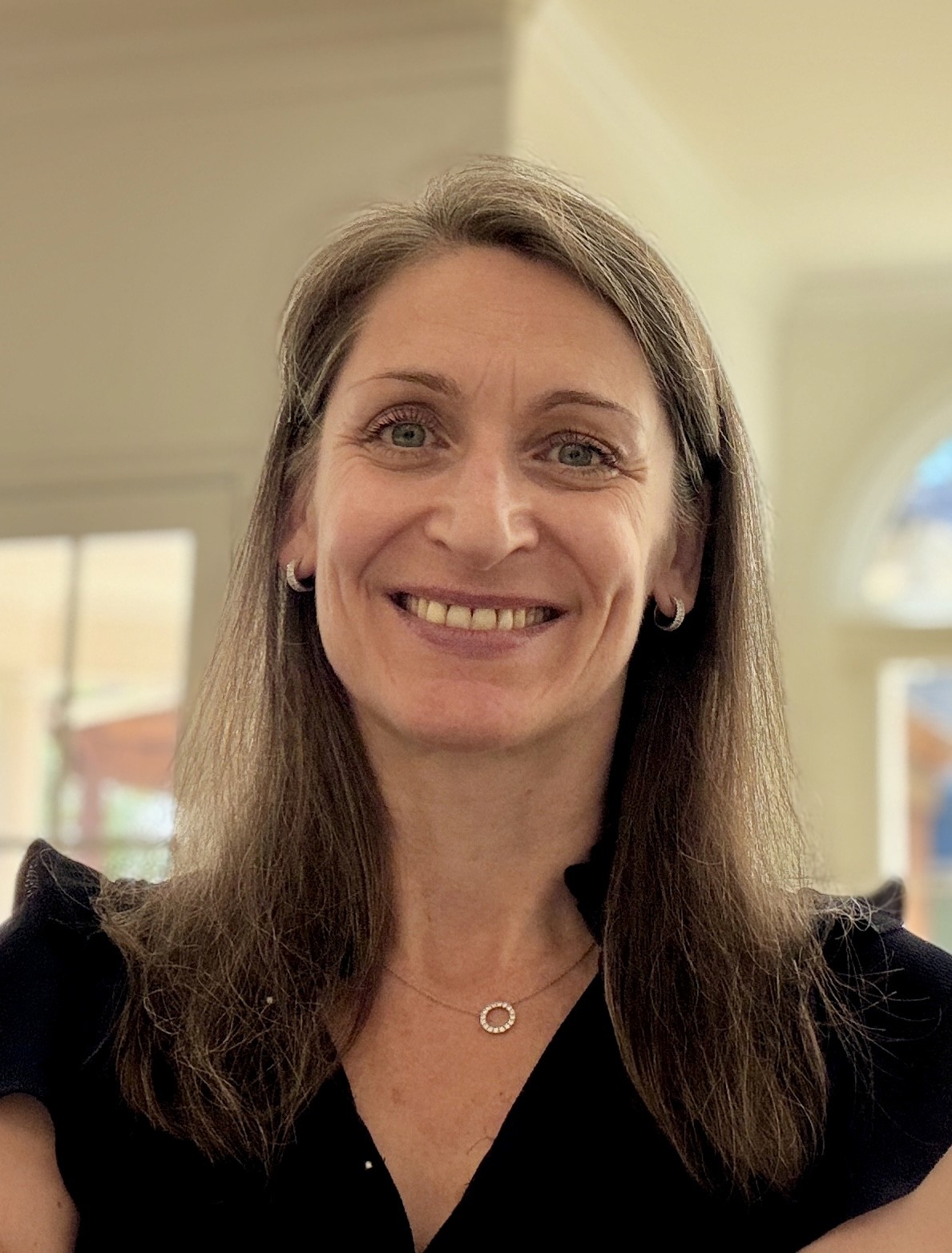

Laure Dachelet never planned to become an immigration attorney. For seven years, she served as a judge in France, presiding over courtrooms and delivering verdicts in a legal system she had studied and mastered. Then her husband's job brought the family to California in 2015 for what was supposed to be a two-year assignment.
A decade later, she is still in America. And the woman who once sat on the bench now stands before it, advocating for some of the most vulnerable people in the U.S. legal system: asylum seekers fleeing persecution, violence, and oppression.
"This is what I like to do," Dachelet says simply. "I wanted to be back to law."
How a French Judge Became a California-Licensed Attorney
The path from French judge to American immigration lawyer was anything but straightforward. France operates under Roman civil law; the United States uses common law. The two systems are fundamentally different, and there is no direct equivalence between them.
Most foreign attorneys face years of additional schooling to practice in America. But Dachelet discovered that California, at the time, was the only state allowing foreign attorneys to sit for the bar exam. She obtained her French attorney certification (as a judge, she already had the equivalent qualifications) and began studying American law.
She failed on her first attempt. She passed on her second try in January 2021.
Then came another twist. Her husband announced they might be moving to Texas.
"I was not exactly happy about that for many reasons," Dachelet recalls, "but one of them was that I just passed the bar. I don't want to go to another state where I would have to pass the bar again."
Rather than start over with another state bar exam, she researched which areas of federal law would allow her to practice anywhere with just her California license. The options included bankruptcy, Social Security, intellectual property, and immigration.
Immigration was the one that most appealed to her.
Why Laure Dachelet Chose Immigration Law: Finding Purpose in Asylum Work
The choice was not random. While still in California, Dachelet had begun volunteering with the Tahirih Justice Center, a nonprofit focused on gender-based asylum claims and VAWA applications. The work gave her a window into the world of immigration law and the human stories behind every case.
When she moved to Texas and saw a job posting for Political Asylum Lawyers, a firm that exclusively handles asylum cases, something clicked.
"I read the ad and I was like, well, if you don't answer this one, it means that you don't want to work," she says. The firm's founder, Brian Manning, is a former asylum officer. Dachelet started as an attorney in November 2021 and worked her way up to supervising attorney, then managing attorney, spending three and a half years immersed entirely in asylum work.
Today, she works as a contract attorney for multiple firms, including Political Asylum Lawyers and Access61, a Baltimore-based firm that provides limited-scope representation for immigrants in removal proceedings. The arrangement gives her flexibility and allows her to continue using her French and Spanish with clients from around the world.
"Working immigration is just a great way of meeting people from all over the world with very different stories," Dachelet reflects. "Mostly sad ones, unfortunately, but it gives you a sense of being here for something. You're really helping someone get security, safety, and peace of mind here in the U.S."
The Asylum Crisis in 2025: What Immigration Attorneys Are Facing Right Now
Dachelet does not sugarcoat the current landscape for asylum seekers. The situation, she says, is "messy" at best and "cruel" at worst.
From the USCIS perspective, there is a complete hold on asylum decisions regardless of the applicant's country of origin. "They're continuing to interview people, but they don't issue a decision," she explains. "People are happy to have their interview, and then they're just told, 'Just wait, and we'll see when we issue a decision.'"
In immigration court, the situation is even more dire. The administration has systematically created new obstacles for immigrants trying to have their day in court. People are being detained at courthouses. More than 100 immigration judges have been fired or resigned. Their replacements, Dachelet notes, are being hired under the title "deportation judges," which she sees as a clear signal of the administration's priorities.
The Board of Immigration Appeals has issued more decisions in the past year than in the previous three or four years combined, establishing precedents that overwhelmingly harm immigrants. Legal ground that attorneys once considered settled can be overturned within weeks.
"What you felt like was a rule with a precedent before, all of a sudden it's just overruled and a different rule is applying," Dachelet says. "It's extremely hard to stay on top of everything."
How Laure Dachelet Is Adapting Her Legal Strategy for Asylum Clients
In this environment, Dachelet has fundamentally changed how she advises clients.
"I am much more cautious," she explains. "This is the rule right now. This is what's happening. I cannot tell you that it's going to be the same in one month or two months."
She refuses to make promises. She never has, but the need for candor is more urgent now than ever.
"I don't want to scare people, but I want to be candid with them. When they tell me, 'Do I have a risk of being detained?' I cannot tell them no. 'Can I travel?' I say, "unless you really have to, I wouldn't do that."
Clients are afraid to attend their own court hearings, fearing detention. Dachelet and her colleagues now discuss alternative approaches, such as filing written motions that allow clients to avoid appearing in person.
Despite everything, asylum is still being granted. "There are still people who win asylum," she notes. "It's not like nobody wins. But it's much harder."
AI and the Future of Immigration Law Practice: Laure Dachelet's Perspective
Beyond the policy chaos, technology is reshaping how immigration attorneys work. Dachelet has become an enthusiastic adopter of AI tools, particularly Claude, which she describes as having been her "best friend for several years."
The productivity gains are significant. Tasks that once consumed 30 to 40 minutes, like writing consultation summaries, now take 10 minutes. She estimates AI has made her at least 50% more productive overall.
"You cannot not work with AI now," she says. "Any attorney who doesn't use AI maybe should start."
But she is careful to note the limitations. AI can hallucinate case citations. It cannot assess a client's credibility during an interview. It cannot replace the judgment of an experienced attorney analyzing a complex case with multiple intersecting factors.
"There's still this need for human interaction," Dachelet emphasizes. "You still need the competence of an attorney to decide if what the AI suggests is a good strategy or not."
She is also wary of how the government is using AI to process applications, wondering whether automated systems can truly evaluate the nuances of asylum claims. "It's a bit scary," she admits.
Essential Advice for New Immigration Attorneys from Laure Dachelet
For attorneys considering immigration law or just starting out, Dachelet's advice is unequivocal: find a mentor.
"I would not recommend someone to start on their own without being able to reach out to someone who has experience," she says. "Immigration law is extraordinarily complex. There are a lot of things you just don't see or don't even think to look at because you don't have the experience."
She points to resources like AILA, the American Immigration Lawyers Association, which has mentorship programs. Facebook groups for immigration attorneys, while initially overwhelming with their jargon and acronyms, can also become valuable communities.
"There are wonderful attorneys that are always happy to help and answer questions," she says.
Given the current pace of legal changes, having guidance is more critical than ever. The law itself is shifting too rapidly for anyone to navigate alone.
Three Critical Tips for Asylum Seekers: Laure Dachelet's Counsel
For asylum seekers themselves, Dachelet offers three pieces of advice, delivered with characteristic candor:
First, hire a licensed attorney. Not a paralegal. Not a notario. A real, licensed immigration attorney with asylum experience. She has seen too many cases damaged by unqualified individuals who treat asylum applications like simple form-filling exercises.
"Filing an asylum application is not filling up a form," she says. "It's much more complex than that."
Second, gather as much evidence as possible. Corroborating documentation is essential, especially in court. For a political asylum case from Venezuela, that might include proof of party membership, witness statements, medical records, police reports, or photographs of injuries or property damage. For a female genital mutilation case, a medical examination report is critical. For religious persecution, baptism certificates and church letters matter.
"Try to have as much evidence as you can so that you can corroborate your claim and support it," she advises.
Third, if possible, find an attorney who speaks your language. Communication is crucial, and meaning can be lost through interpretation. When interpreters are necessary, their quality can literally determine outcomes.
"The outcome could be different just because the interpretation is not correct," she warns.
Laure Dachelet: A Legal Career Defined by Reinvention
From presiding over French courtrooms to advocating for asylum seekers in Texas, Laure Dachelet's career defies simple categorization. She has reinvented herself across legal systems, languages, and continents, driven by a persistent commitment to the work itself.
At a time when immigration law is more chaotic and contested than perhaps any period in recent memory, attorneys like Dachelet represent something essential: expertise tempered by empathy, advocacy grounded in honesty.
"It's a wonderful section of the law," she says. "You're helping people who've gone through hell for some of them. It gives you a sense of like you're here for something."
In an era of uncertainty, that sense of purpose may be the most valuable resource of all.
This article is part of LegalBridge Magazine's interview series featuring leaders in immigration and global mobility.


Bob Webber
SEP 16, 2025
Charles Kuck
SEP 15, 2025

Christa Byker
SEP 11, 2025