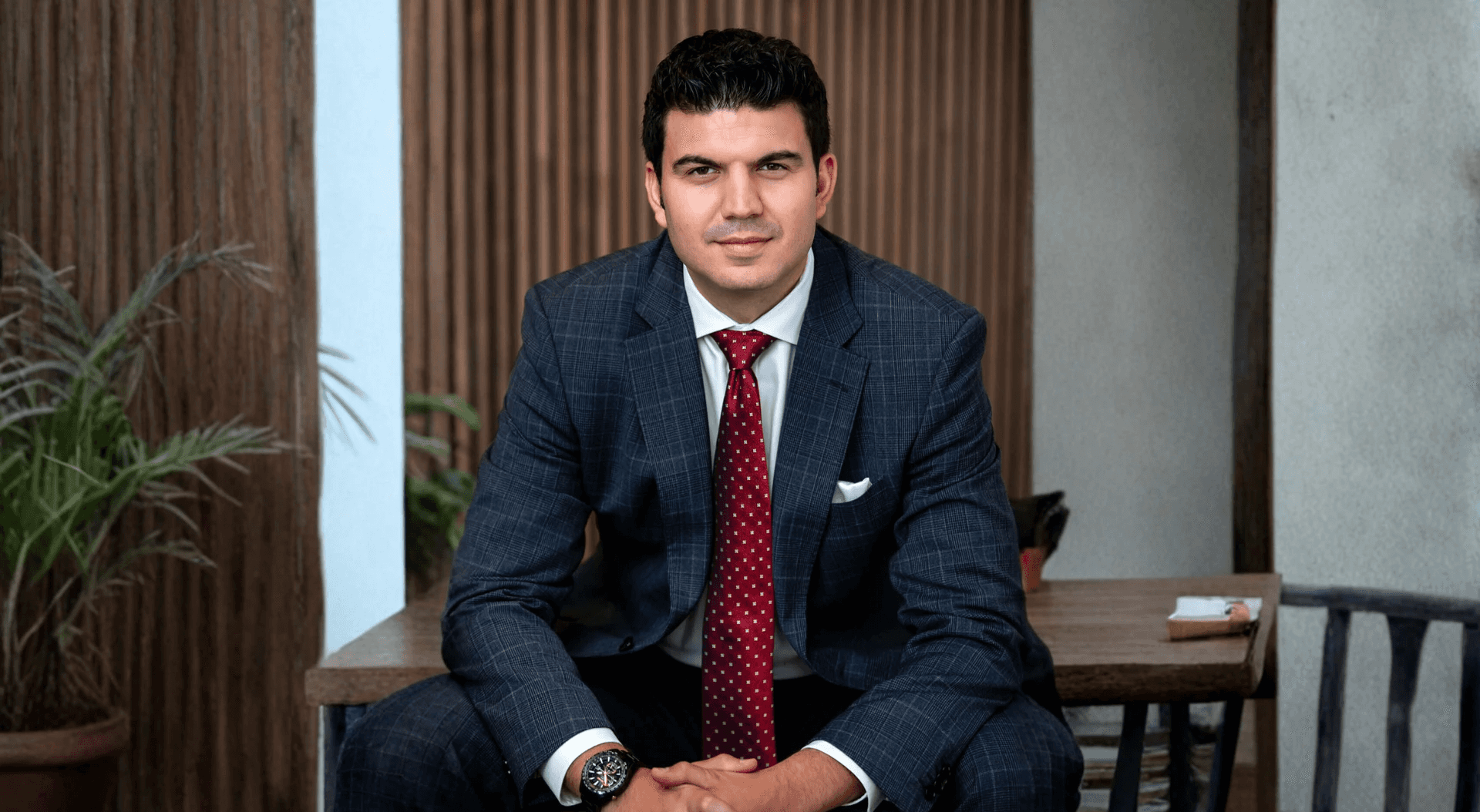

When Dorukhan Korkut Oguz received word that his doctoral program would no longer authorize Curricular Practical Training, he faced a decision that would have sent most international professionals packing. His H-1B lottery application had failed. His employer in Boston suggested he relocate to Canada. And here he was, an immigration attorney who suddenly needed to solve his own immigration crisis.
"I wasn't selected under H-1B. Lottery didn't work for us," Oguz recalls of that pivotal moment in 2021. "And okay, I wasn't selected under H-1B, no CPT. I don't have any work authorization. What am I going to do in the US?"
What he did was take a calculated risk that some other attorneys before him had attempted and failed: apply for an E-2 investor visa. The visa category, available to nationals of treaty countries including Turkey, requires either investing in your own business or purchasing a significant stake in an existing one. For Oguz, who had spent years building expertise in corporate law before being "kind of forced" into immigration practice at his Boston firm, the path forward became clear.
He would start his own law firm.
Dorukhan Korkut Oguz: From Corporate Law in Turkey to Immigration Practice in America
Oguz's journey to American immigration law took a circuitous route. He arrived in the United States in 2016 to pursue his master's degree at UC Berkeley, carrying credentials as a corporate attorney from Turkey with a specialization in mergers and acquisitions. Immigration law was not even on his radar.
After completing his master's degree at UC Berkeley, he became a research scholar at Berkeley and eventually enrolled in a JSD doctoral program at Golden Gate University. In 2020, during the depths of the COVID pandemic, he passed the California bar and landed a position at a prestigious Boston law firm.
The firm had hired him for his corporate background, but the work that awaited him was different. Immigration cases needed handling, and Oguz found himself learning a new practice area from the ground up. It was his first confrontation with the field that would eventually define his career.
When his visa situation collapsed barely a year into that role, the transition from employee to entrepreneur happened fast. The E-2 visa came through, and with it, the legal requirement to operate as an investor in his own enterprise. Oguz Law was born not from a carefully plotted business plan, but from immigration necessity.
Oguz Law's Growth Strategy: Technology, Systems, and Authentic Sales
Nearly five years later, that necessity has transformed into one of the immigration industry's notable success stories. The firm has grown to approximately 105 employees, handles between 110 and 120 new cases monthly, and has expanded beyond immigration into corporate law and personal injury. At its peak before recent market shifts, the firm employed 130 people.
What separated Oguz Law from competitors was not just legal acumen, but an early and aggressive embrace of technology. The firm currently operates on more than 44 different software platforms, including several AI-powered legal tools.
"Every law firm uses software now. Everyone has a case management system," Oguz acknowledges. "But I don't think every law firm has a really good intake system, HR system, sales system. Even though people hire people to take those calls, they don't build the pipeline."
That pipeline thinking reflects Oguz's corporate background. Where traditional immigration attorneys might view their practice through a purely legal lens, Oguz approached firm-building with the mindset of a business operator. He personally answered every phone call in those early days, responded instantly to texts and emails, and methodically documented the processes that worked.
His sales philosophy was equally unconventional for the legal profession. Drawing on his experience advising M&A clients in Turkey, he prioritized transparency over persuasion.
"I was always realistic about the outcomes. I wasn’t upselling or downselling. I just explained what the situation was and how it applied to each person,” he says. “That honesty created real authenticity. I was genuine, and people trusted me because what I said was true."
The approach worked. For the first two years, the firm did no marketing whatsoever, growing entirely through referrals.
How Oguz Law Builds Systems That Scale
The transition from solo practitioner to firm leader required Oguz to confront a fundamental truth about professional services: excellence does not automatically transfer from one person to the next.
"Even if you do something exceptionally well, there’s no guarantee the next person will deliver the same level of quality,” he says. “That’s why you need systems. You need a pipeline."
That insight drove an obsessive documentation culture. Every process, every step, every workflow was recorded and standardized. New team members learned not just what to do, but exactly how to do it in the manner that had proven successful.
The staffing model evolved organically. Initial hires were unpaid interns who, as the business grew, became paid interns, then part-time employees, then full-time team members. This gradual progression allowed Oguz to identify which individuals possessed the qualities he valued most: genuine commitment and willingness to contribute ideas.
"None of this was built by me alone,” Oguz says. “The ideas consistently came from my team. They identified what wasn’t working and pushed for better tools and systems, like switching software or creating real-time client notifications. My role was listening and executing, not pretending I had all the answers."
The firm also made an early decision to hire overseas talent, a choice that Oguz describes as one of their biggest competitive advantages over other immigration practices.
Dorukhan Korkut Oguz on AI and the Future of Immigration Law
We asked Oguz where the industry is heading, and his answer comes without hesitation: automation is not just coming, it is already here.
"I think the best law firm in five years is gonna be the automated law firm that has good marketing, good sales, and good supervising attorneys," he predicts.
His firm is already operating on this thesis. Beyond ChatGPT, they employ multiple legal AI tools for research purposes. The technology's impact on transactional work, particularly talent-based visa categories like O-1s, EB-1As, EB-2 NIWs, has been significant.
The implications for the profession are stark. Prices will come down because labor costs are already decreasing. Firms will need fewer paralegals and fewer attorneys. The role that remains essential is supervision: attorneys who can review AI-generated packages and ensure quality before submission.
"We're at the beginning of this process," Oguz says. "When it’s fully optimized, we’ll upload the client documents and the software will generate the full package in minutes. A process that used to take a month will take five to ten minutes. Our role will be limited to review and final adjustments."
Rather than consolidating, he expects most immigration firms will respond by cutting payroll and investing in marketing while maintaining their independent practices. The community and reputation that firms build over years cannot easily be acquired, making wholesale industry consolidation unlikely.
Policy Perspectives: What Oguz Would Change About Immigration Law
When pressed to identify a single policy change he would advocate for, Oguz points to the proposed $100,000 salary threshold for H-1B visas. The rule, he argues, would devastate the small and medium-sized businesses that form the backbone of his client base.
"This would directly affect us, including my own law firm, because we work primarily with startups and small to medium-sized companies,” he says. He draws a pointed analogy to describe his view of current enforcement approaches.
"When there is a beehive near your home, the rational solution is to bring in professionals to remove it carefully. What we are seeing instead is the equivalent of bombing the entire tree. That kind of response is not an appropriate solution to the problem."
As an alternative framework, he suggests the United States consider a points-based system similar to Canada's, evaluating candidates on education, language ability, and other credentials. The approach would introduce merit-based criteria while potentially reducing the randomness of the current lottery system.
Looking Ahead: Oguz Law's Vision for Continued Growth
Despite uncertainty in the current immigration environment, Oguz Law continues to expand its capabilities. The firm now handles corporate law alongside immigration, positioning itself as one of the rare practices that can serve immigrant founders from company incorporation through exit while simultaneously managing their visa needs. That dual expertise led to a silver sponsorship at TechCrunch's conference and CES 2026, where the firm connected directly with the startup community it serves.
Personal injury has also become a growth area, now representing a meaningful portion of the practice.
For 2026, the priorities are clear: increase marketing, strengthen the sales team, and continue automating wherever technology permits. The firm has already cut payroll in response to market conditions and is now focused on driving new case volume rather than further reducing costs.
"My idea is to automate everything," Oguz says, describing his vision for the firm's future. "In five years, it may just be me recording videos and people reaching out. AI will handle the initial conversations, assess eligibility, and route cases for review. A supervising attorney will then retain the client after an initial evaluation, all within a single integrated platform."
It is a vision that might seem audacious from someone who stumbled into immigration law by accident. But for an attorney who built a 100-person firm because he had no other way to stay in the country, betting on transformation feels natural.
The E-2 visa that once seemed like a desperate gamble has become the foundation of something much larger. And for Dorukhan Korkut Oguz, the journey from corporate lawyer in Turkey to tech-forward immigration entrepreneur in America is just getting started.
Dorukhan Korkut Oguz is the founder of Oguz Law, an immigration and corporate law firm based in Walnut Creek, California. The firm serves startups, small and medium businesses, and individual clients across immigration, corporate, and personal injury matters.







Bob Webber
SEP 16, 2025
Charles Kuck
SEP 15, 2025

Christa Byker
SEP 11, 2025