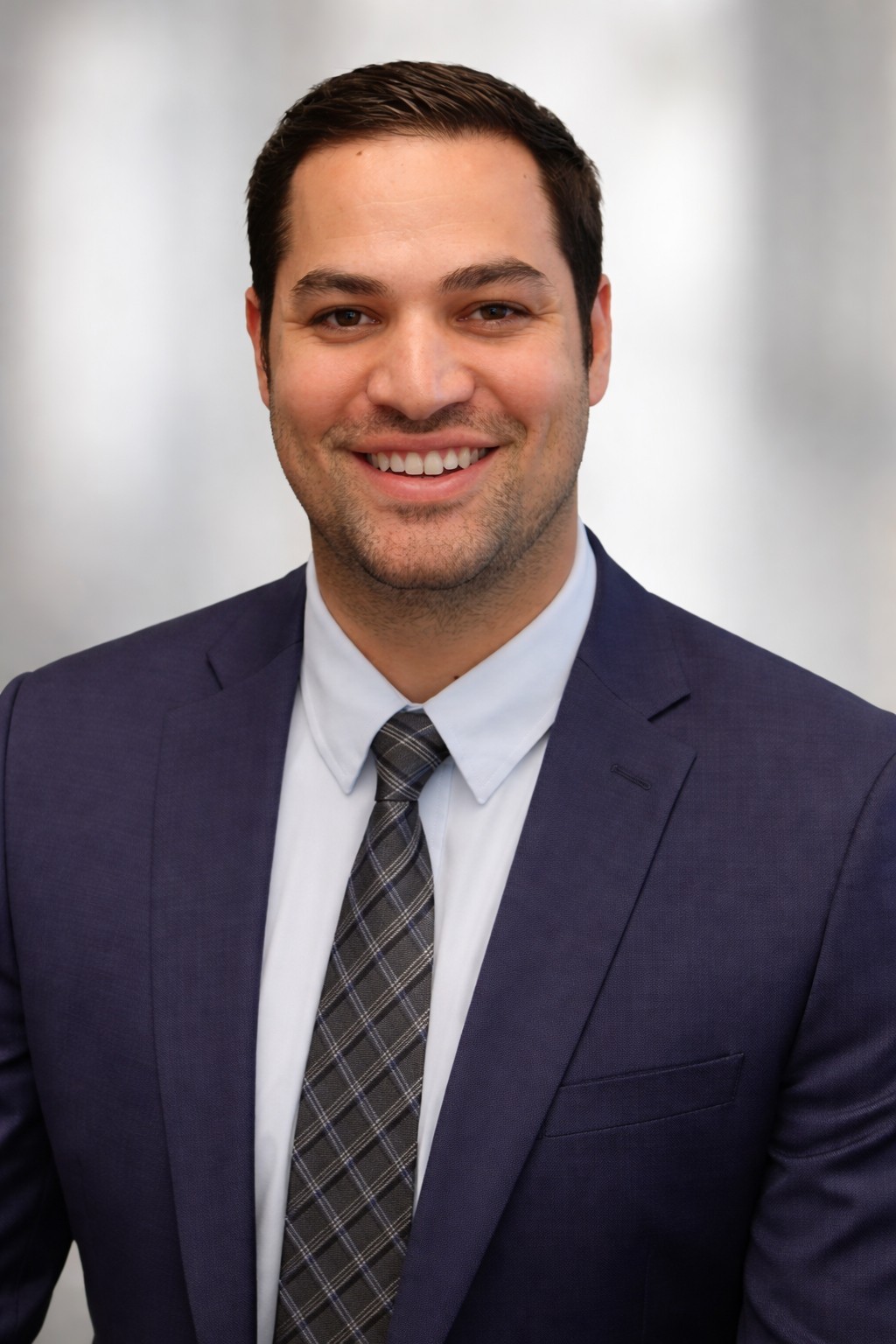

Leon Wildes had no idea who was sitting across from him.
It was the early 1970s, and he had just met a young British couple in New York seeking immigration help. That evening, the attorney went home and mentioned the meeting to his wife. "Who are those heavy hitters you met with today?" she asked. Leon paused. "Oh, I think it was Jack Lemmon and Yoko Moto."
The couple was, of course, John Lennon and Yoko Ono. And that case of mistaken identity would launch one of the most consequential immigration battles in American history.
"My grandfather was a scholar by all accounts," says Josh Wildes, Leon's grandson and now an attorney at Wildes & Weinberg, the firm his grandfather founded in 1960. "He was a Beethoven and Mozart lover. There was no social media. If he was reading the newspaper, he was reading news, not anything about entertainment."
It was precisely this quality, Josh believes, that made the relationship work. "I think that's what John and Yoko really loved about him. He was genuine. He was fighting the case for a couple to be able to stay and remain in the United States, regardless of who they are. People always say you never knew if my grandfather was talking to somebody's housekeeper or to John Lennon. He treated everybody the same."
The John Lennon Case: How a Musician's Fight Changed Immigration Law Forever
The stakes in the Lennon case were far higher than a celebrity visa dispute. The voting age had just been lowered from 21 to 18, and President Nixon feared that millions of young voters would follow whatever John Lennon said about the Vietnam War. The solution? Initiate deportation proceedings based on a previous drug conviction Lennon had in the United Kingdom.
What followed was a years-long legal battle that Leon Wildes would ultimately win, not just for his famous client, but for countless immigrants who came after.
"It was very much a David versus Goliath story," Josh explains. "A story of a scholar and a dreamer. Two totally opposite people. Meanwhile, John's phones were tapped, the FBI was following him. The INS, which is now DHS, was trying to figure out ways to kick him out of the country."
The case produced something that would reshape immigration law for decades: prosecutorial discretion. During the Lennon proceedings, Leon Wildes discovered and successfully argued for this doctrine, which allows immigration authorities to exercise judgment in individual cases rather than applying the law mechanically.
"A little unknown fact that people are overlooking is that DACA, which President Obama used to give these Dreamers status in the United States, was based on prosecutorial discretion, which my grandfather discovered during the Lennon case," Josh says. "So it's really the Lennon doctrine that has led to this whole DACA program being created."
The case also helped establish the extraordinary ability visa category. The same legal framework that allowed one of the most famous musicians in the world to remain in New York now helps artists, scientists, athletes, and entrepreneurs demonstrate their exceptional contributions to American society.
Wildes & Weinberg: A Family Built on Immigration Law
The Wildes family story reads like something out of a novel. Leon Wildes built a storied practice and taught business immigration at Cardozo Law School. His son, Michael Wildes, who is now the firm’s Managing Partner, met his future wife in that very classroom. Michael eventually took over teaching the course himself. Years later, Josh and his sister sat in those same seats as students.
"It really is a family affair," Josh says with a laugh. "My sister kind of went off the deep end. She's doing trust and estates, you know, the outcast of the family."
There's now a room at Cardozo Law School dedicated to both Josh's grandparents, along with a scholarship for students in need of financial assistance. Leon passed away in 2024, but his influence continues to shape the field.
The firm's client roster reflects six decades of representing immigrants at every level. They've helped celebrities like Pelé, chef Jean-Georges Vongerichten, and supermodel Gisele Bündchen. They've represented First Lady Melania Trump and soccer star Karim Benzema. But Josh is quick to point out that fame has never been the measure of who they serve.
"Anybody with an accent is a good lead for us," he says. "We help everybody and anybody from people who are in poverty up to the likes of John Lennon and the biggest celebrities in the world."
Josh Wildes: Carving His Own Path in a Legendary Firm
Joining a firm with such history could be intimidating. Josh doesn't shy away from that reality.
"I always tell people I don't have big shoes to fill. I've got a big mountain to climb," he admits. "My grandfather started this tremendous legacy that my father has really carried the torch with. And here I am, third generation, trying to carve out my niche."
His approach? Return to the fundamentals that made the firm successful in the first place.
"I'm finding that the best way to do that is just to be genuine and to care. We're in the business to help people. And showing that and doing that is just a very lucky task that we're able to complete."
Josh has also brought the firm into new practice areas that reflect his own generation. Wildes & Weinberg now represents content creators, influencers, and esports athletes in the video game industry, categories that simply didn't exist when his grandfather started practicing.
"These are things that I grew up on," Josh explains. "Finding ways to bridge my passion in those areas with actual immigration law is something that I'm really focused on."
The Evolution of Immigration Practice: From Dusty Books to Artificial Intelligence
The tools of the trade have transformed dramatically across three generations. Leon Wildes practiced with bookshelves full of legal volumes, dusty case reporters requiring hours of manual research. Josh operates in a world of instant digital access and emerging AI capabilities.
"The landscape has changed tremendously," Josh observes. "Where my grandfather was practicing with books and needed to do case research by dusting off old books and reading through them, now we're using technology like Westlaw or legal libraries or AI to an extent to help us with our research."
But Josh is thoughtful about what technology can and cannot replace. "There's a misconception in general in terms of AI and lawyers. Some people are afraid that AI might take over the jobs. But the future of immigration law is not AI versus lawyers. It's going to be AI with a lawyer guiding it responsibly."
The challenge, he notes, is that immigration law changes faster than almost any other legal field, making it difficult for AI systems to keep pace.
"The law changes. But immigration law changes every day," Josh says. "The difficulty is the law changing so much, particularly under the current administration, and AI trying to keep up with that. Which is why I don't think it's one or the other, but it's how you use it to your benefit."
What Immigration Law Needs: A Third-Generation Perspective
Ask Josh what he would change about immigration law, and the answers come quickly. These aren't abstract policy positions but frustrations born from daily practice.
First: the green card backlog. "Businesses are getting hurt by this," he says bluntly. "People are waiting many years in line for their green card to become available. Everybody should be able to file for their green cards immediately. To wait and make people leave the country to wait for their green cards abroad and then come in, it's so silly. It hurts businesses. It's archaic. It's old. It's bureaucratic."
Second: the treatment of international students. "We bring people from all over the world on F1 visas. We train them, we teach them everything, and then if they don't win the H-1B lottery, they have to go home. Now we've shot ourselves in the foot because we're competing against the talent that we trained. There's no reason we shouldn't create a clear path for these individuals to stay."
Third: foreign student-athletes and NIL (Name, Image, and Likeness) rights. Josh wrote a paper on this issue during law school, back when it was merely hypothetical. Now that American student-athletes can profit from their NIL, foreign students on F-1 visas are excluded.
"You could have five people on a court. Four of them are American, one of them is a foreign national. Those four people are making a ridiculous amount of money on their name, image, and likeness. But the foreign nationals are not allowed because of archaic and old rules."
His broader frustration is with a system frozen in time. "Immigration laws haven't been changed in almost over 30 years now really. The last time was in the 90s. AI didn't exist then. The internet barely existed then. We've got to keep up with the times."
Advice for Immigration Clients: Patience, Honesty, and Partnership
After years of guiding clients through the immigration process, Josh has distilled his guidance to two essential principles.
"Number one is be patient," he says. People want things done yesterday. But in the immigration world, our quote-unquote adversary is the United States government. And the United States government can notoriously move slow. Don't always believe what you see online or on Reddit or when your neighbor told you this, or your neighbor's dog had a green card that was approved. Just be patient. We're here for you.
The second principle cuts to the core of the attorney-client relationship: radical honesty.
"You really got to work with us. We charge project-based fees, not hourly, because we want to encourage our clients to call us. We need all the information that we can extract from them. Now is your chance to stretch your ego. Tell us what happened in your life, tell us what's going on, tell us about your relationships. We really got to get our clients to open up with us from the beginning."
The Legacy Continues
There's a guitar in the background of Josh's office, a symbol of another connection to the firm's most famous case. He taught himself to play as a teenager, finding his father's old acoustic in the attic. Now he plays for his own children.
The parallels to his career path aren't lost on him. "If my dad was sweeping floors, it's because his dad was sweeping floors, and I would have done the same thing. It just happens to be that they became immigration attorneys."
From a case of mistaken identity in the 1970s to shaping the legal framework that would eventually create DACA, from representing a Beatle to helping today's esports athletes and content creators, Wildes & Weinberg has spent six decades at the intersection of immigration law and cultural change.
And Josh Wildes, third generation, is still climbing that mountain.
This article is part of LegalBridge Magazine, a series highlighting leaders in immigration law and global mobility.




Bob Webber
SEP 16, 2025
Charles Kuck
SEP 15, 2025

Christa Byker
SEP 11, 2025