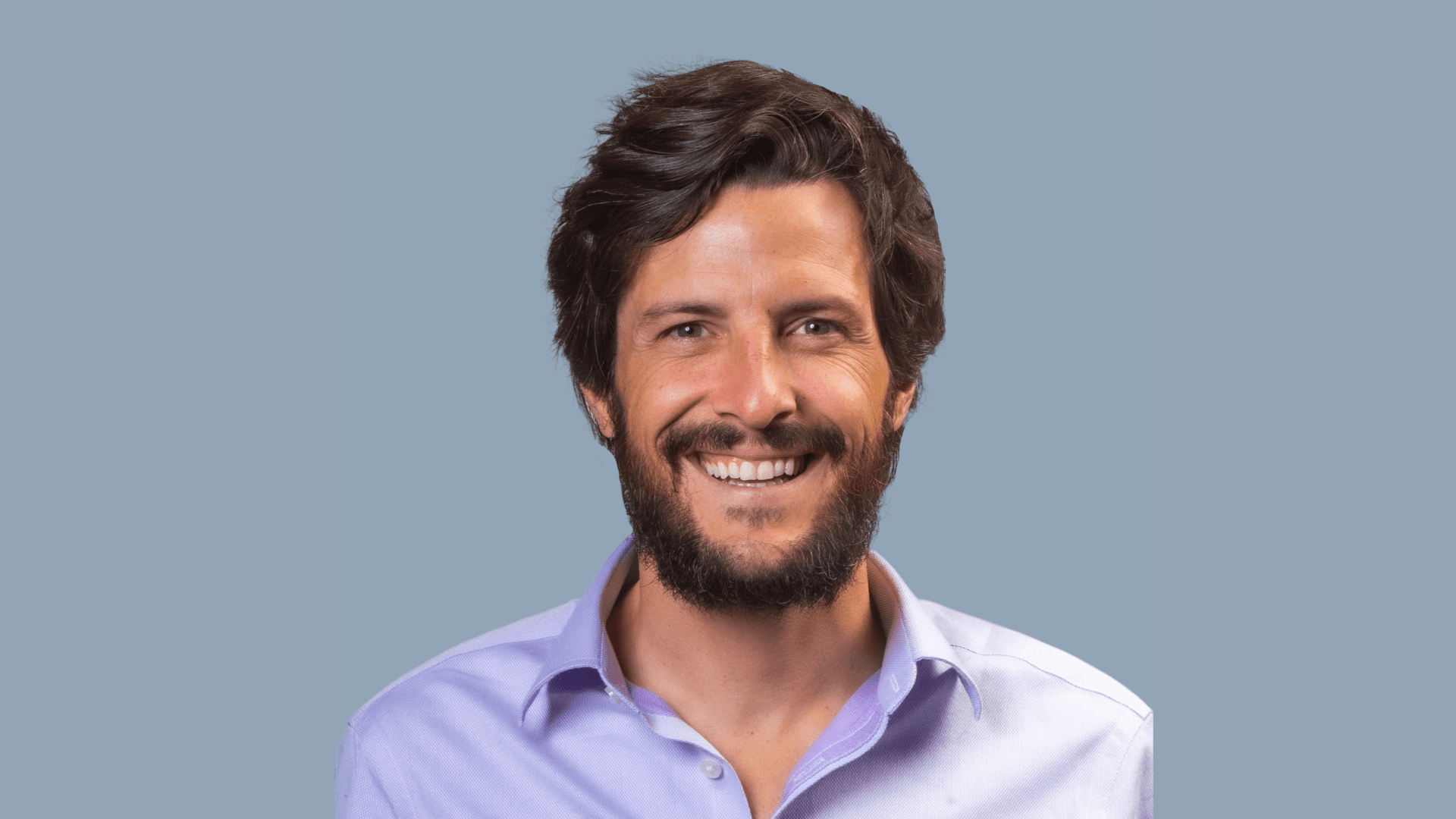

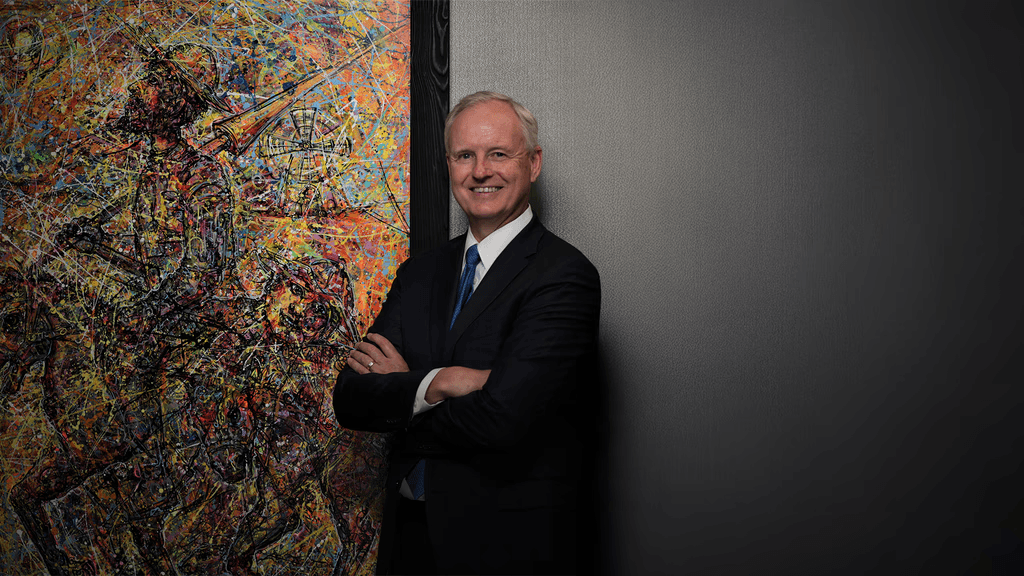
Patrick co-founded Visa Franchise with his brother Jack in Miami nearly a decade ago to help global entrepreneurs find their footing in the United States.
The story of how a former JP Morgan finance professional ended up building one of the leading E2 investor visa consultancies in the country begins much earlier, in a surprisingly diverse corner of Washington, D.C.
Patrick of Visa Franchise: A Cross-Cultural Childhood in Washington D.C.
Growing up just across the Potomac River in Virginia, Patrick was surrounded by a level of international diversity that shaped his worldview. His middle school and high school were populated with children of diplomats, World Bank employees, and families from Eastern Europe, Russia, and beyond.
"I was blessed as a child, growing up in Washington D.C., very international," Patrick recalls. "It was like 50% white, 15% latino, 15% asian and 10% black but even the white people were from all sorts of origins” Eastern Europe, Russia, you name it. Because the World Bank, all these international organizations. So I was blessed to grow up in a really diverse environment which picked my interest in different cultures."
His father, a lawyer who represented farmers and Indian tribes, demonstrated firsthand what it meant to navigate complex bureaucratic systems on behalf of clients. Patrick watched his dad help people achieve positive results by understanding how Washington worked, even if he himself had little interest in politics.
"I saw my dad help his clients navigate the bureaucracy in Washington D.C. to provide positive results," Patrick says. "So something I grew up around."
From Finance to Franchising: Patrick's Path to the E2 Visa
After graduating, Patrick took a traditional route into finance at JP Morgan. But the sprawling corporate environment never quite fit. He discovered Miami while working in New York and found a city that checked all the right boxes for someone who spoke Portuguese and Spanish from time spent in Brazil and Argentina.
By 2012, Patrick had relocated to Miami. Two years later, while working at a smaller firm in the EB-5 investor visa space, he stumbled upon the E2 investor visa, a category that would become the foundation of his entrepreneurial future.
The EB-5 program required a minimum investment of $500,000 (now $800,000 in targeted employment areas) to obtain a green card. But the E2 visa offered something different: a faster, more accessible pathway for entrepreneurs willing to invest in a U.S. business, often starting at around $100,000.
Around the same time, Patrick's younger brother Jack was working at Restaurant Brands International, the parent company of Burger King, Tim Hortons, Popeyes, and Firehouse Subs. The brothers had a realization: franchising could be the perfect fit for E2 visa applicants.
"We thought that franchising was a good fit for the E2 Investor Visa," Patrick explains. "As these immigrants, oftentimes it was their first business and support, or if it wasn't their first business, it was their first time doing business in a new country."
Building Visa Franchise: Patrick and Jack Create an A-to-Z Solution
What started as an idea became Visa Franchise, a company designed to help international entrepreneurs find, analyze, and invest in franchises that qualify for E2 visas. Over the past decade, the company has amassed an impressive database: 30,000 franchise disclosure documents from 3,600 brands, narrowed down to approximately 450 suitable options, with about 70 on a vetted list that includes commercial referral arrangements.
But the business has evolved far beyond franchise matching. Today, Visa Franchise offers what Patrick describes as an "A to Z solution" for global entrepreneurs.
"We can help them from A to Z," he says. "Opening up the company, getting the tax ID business, bank account, sourcing the business opportunity, vetting it, connecting them with tax counsel, the immigration attorney that does the filing."
The vision, Patrick explains, is to be "the soft landing, the on ramp for global entrepreneurs" entering the United States, whether they want to start an independent business, bring their existing company from abroad, or invest in a franchise.
Patrick on E2 Visa Trends: A Growing Category with Inconsistent Processing
After a decade in the space, Patrick has witnessed significant shifts in how E2 visas are processed and adjudicated across different U.S. consulates worldwide. The category itself is booming. Patrick expects more than 60,000 E2 visas to be issued in 2025, up from approximately 55,000 in 2024.
But the growth comes with challenges. Processing times and requirements vary dramatically depending on where applicants apply.
"There are some, like, kind of stable consulates that have largely been the same since we entered the space 10 years ago," Patrick notes. "Mexico, Canada, we kind of know what we're going to get."
Other locations have become far more difficult. London, for example, has seen processing times extend from one month to six months, with adjudicators requesting documentation well beyond standard E2 requirements.
"That's turning off foreign investment to the U.S.," Patrick warns. He estimates that the UK alone saw a drop of 350 E2 visa issuances over a 12-month period compared to the prior year, representing roughly $35 million in lost investment if each visa represents $100,000.
One of Patrick's goals is to advocate for greater consistency across consular posts, potentially through a coalition or lobbying group.
Patrick's Advice for E2 Visa Applicants: Prepare for the First 18 Months
For entrepreneurs considering the E2 pathway, Patrick offers candid advice rooted in years of watching clients succeed and struggle.
"Generally you're going to take a step back to take a step forward," he explains. "For the first 18 to 24 months will be difficult. It's a new market, you might be in a new industry, your family's getting adjusted."
His recommendations for prospective E2 applicants include ensuring complete alignment with a spouse or partner on values, expectations, and budget before making the move. The stress of relocation and starting a business in a new country can either bring families closer together or create serious strain.
Patrick also advises spending as much time as possible in the United States before committing to the move. "If you're going to move in two years, spend every vacation here, spend as much time as possible in market," he says.
Once on the ground, entrepreneurs should immediately begin building their financial profile by obtaining credit cards, establishing credit scores, and integrating their business into the U.S. financial system.
What E2 Investors Should Avoid: Patrick's Cautionary Tales
Patrick has seen many entrepreneurs undermine their own success by cutting corners, particularly when it comes to marketing.
"The U.S. is very competitive and you got to spend money on marketing," he warns. "We've seen in the past, even with the franchisor say, hey, spend 15k on grand opening, Google Ads, marketing and hiring the sign person. And they don't do that and they spend 3k and it takes an extra 2, 3 months to break even."
His advice is straightforward: if you have signed on with a franchisor, follow their guidance. They have developed their systems for a reason. For those starting independent businesses, connecting with industry peers and leveraging available resources becomes even more critical.
A Success Story: From Canada to Managing 1,000 Properties in Los Angeles
Among the many clients Visa Franchise has helped over the years, one story stands out. In 2016 or 2017, a Canadian investor came to Visa Franchise looking for the right opportunity. The company matched him with a property management franchise, and today he manages over 1,000 properties in Los Angeles County.
"He's probably making, I don't know, 1.5 mil of revenue and taking home 300k, maybe 400k," Patrick estimates. "And he was already successful. And we just provided the model to continue his success."
The case exemplifies what Visa Franchise aims to deliver: a seamless pathway for talented entrepreneurs to extend their success into the American market.
Building a Values-Driven Global Team
With team members spread across Colombia, Argentina, Turkey, and Brazil, Patrick has learned important lessons about hiring and managing a globally dispersed workforce.
"A big thing is understanding the different cultures," he explains. Cultural background and economic circumstances can significantly impact whether employees are genuinely aligned with a company's mission or simply focused on collecting a paycheck.
"The 20 person team that we have are really passionate about what we do and helping entrepreneurs and making the process seamless and getting those thank you notes and getting referrals from their friends," Patrick says. "So if someone's, even if they have a high aptitude, but they're not aligned and that doesn't get them excited, they want to be a good fit for our business."
Patrick favors starting new hires as consultants, allowing both parties to evaluate mutual fit before making full employment commitments. Two members of his current leadership team started by working just five hours a week before transitioning to full-time roles.
Looking Ahead: Visa Franchise's Continued Mission
As E2 visa demand continues to grow and the Trump administration pushes for increased foreign investment in the United States, Patrick sees significant opportunities ahead.
"You're going to see a lot more utilization of the E2 visa, I think, in the next three years," he predicts.
For Visa Franchise, the mission remains unchanged: serving as the on-ramp for global entrepreneurs, whether they are first-time business owners or seasoned executives looking to expand into the American market.
Patrick's own journey, from a diverse upbringing in the nation's capital to building a company that has helped hundreds of entrepreneurs achieve their American dream, reflects the very spirit of opportunity he helps clients pursue.
"If you're an immigrant, we're happy to help you, A to Z, to make this American dream a reality," he says.




Bob Webber
SEP 16, 2025
Charles Kuck
SEP 15, 2025

Christa Byker
SEP 11, 2025