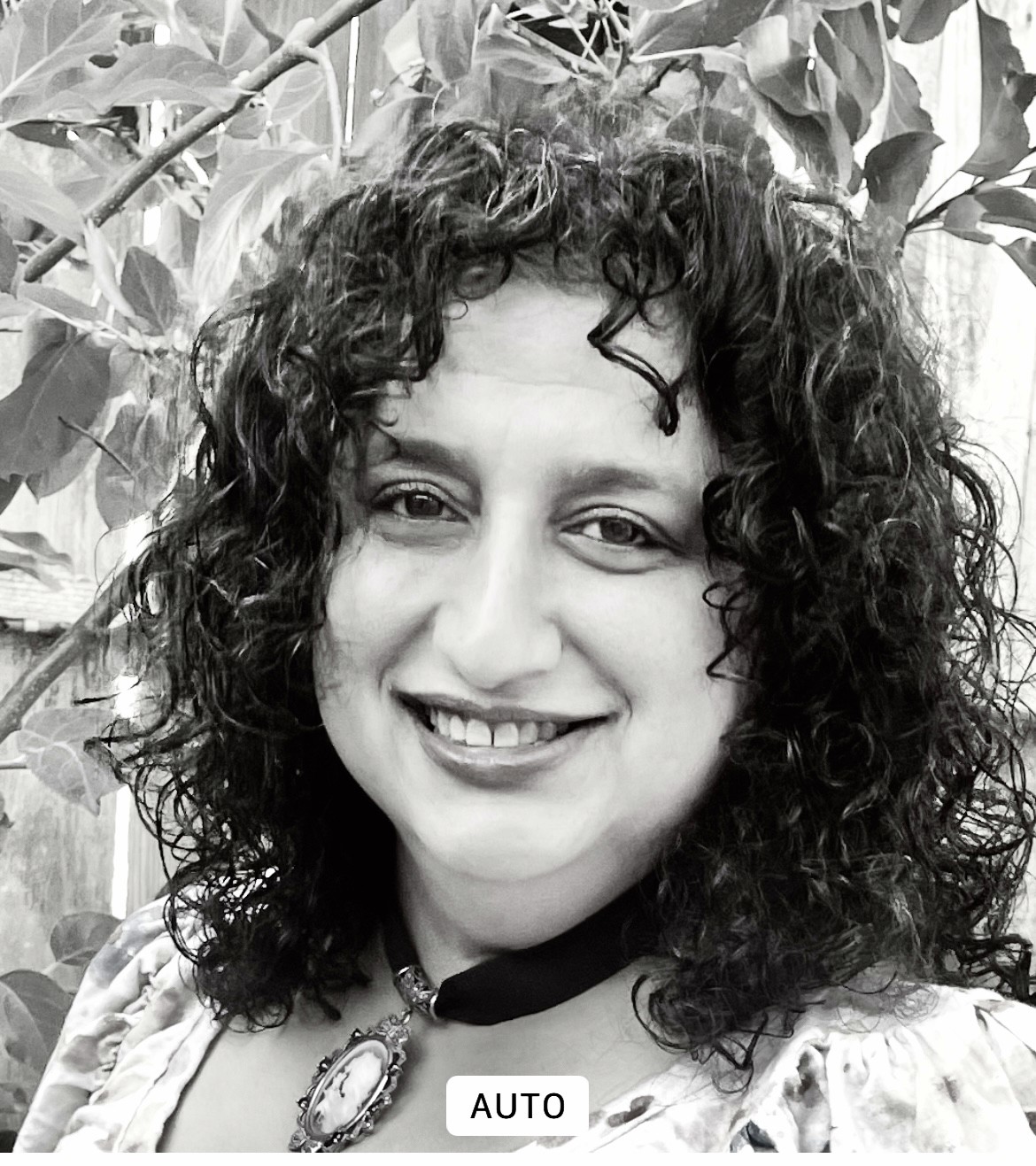

The Sunday Morning Phone Call That Changed Everything
It was 8:30 on a Sunday morning when the phone rang.
On the other end was a voice Ferzeen Chhapgar had spoken to just six months earlier -- when she had asked, with the enthusiasm of someone who had just discovered her life's work, how she could break into global mobility. The answer had been blunt: "Unless someone dies or retires, these roles are hard to come by."
And yet, that morning, everything shifted. That same person was calling to say she was retiring. Would Ferzeen be interested in the role?
"That's how I got into the world of global mobility," she says, still audibly thrilled by the memory. "And there has been no turning back."
For Ferzeen, a People and Global Mobility leader based in San Francisco who has built frameworks supporting more than 70,000 employees across global delivery centers, that call felt like more than luck. It was a confirmation of something she had already sensed -- because long before the title formally existed in her career, she was already doing the work.
Across consulting firms like BearingPoint, PwC, and EY, she found herself guiding newly arrived colleagues through the realities of relocation -- apartment searches, Social Security processes, cultural adjustment. Even the small things. Like the fact that in the United States, speed limits really do mean speed limits, concept of personal space, different communication styles etc.
"I did a lot of hand holding," she recalls. "And then I started realizing that those folks on my team were significantly happier than in other areas." She had been practicing global mobility all along -- before she knew the profession had a name.
Why Global Mobility is Not Just About Moving People
Ask Ferzeen what global mobility actually means, and she will not give you a textbook answer about relocation packages and visa categories. She will tell you about plants.
"I often think of global mobility like introducing a new plant into an ecosystem," she says. "Sometimes you plant it, and it thrives -- the culture around it adapts, grows, and even becomes stronger. And sometimes, if it's not thoughtfully integrated, it can slowly, almost invasively, erode the very structure or culture it was meant to belong in."
This is the quiet question that drives her work. Not: did the visa get approved? But: did this person take root? Her frame of reference stretches back centuries -- the Vikings, the Silk Road, Marco Polo, Columbus. Human movement, she argues, is not a modern HR invention. It is a biological drive as old as civilization itself. "Human evolution makes us move. Global mobility is just an added tool that helps tame some of those complexities down."
The complexities, it turns out, are considerable!
The Cost of Moving Fast and Thinking Last
For much of its institutional history, global mobility has been the function someone calls at the last minute when a leader decides they want a key employee in a different country by next month. The assignment gets approved, logistics are rushed, and the task is considered complete the moment the employee lands. For Ferzeen, that is just the beginning -- and in the case of short-term assignments, repatriation is still treated as an afterthought when it should carry the same weight as the assignment itself.
"We are not just managing people's moves," she says. "We are reshaping people, reshaping cultures, how organizations evolve and transform and why this move is required."
Her guidance to leaders is deceptively simple: think three, six, even eight months in advance. In the current geopolitical and visa processing environment, a rushed assignment is almost always a failed one. "We're not just staffing somebody for the sake of staffing. There is interest and there is consistent growth that's going to be for both the companies and the employee."
When Saying No is the Most Strategic Thing You Can Do
Pressed on the biggest mistakes she sees companies make, Ferzeen does not hesitate. It comes down to two things: the rush -- and the reluctance to hear the word no.
"Sometimes the global mobility person is not the business or the leadership's favorite," she says, with a knowing laugh. "Because they tell them what they cannot do."
What appears to be flexibility, an employee working from another country for a few months is often a complex web of risks sitting just beneath the surface. Tax compliance, visa violations, payroll restrictions, benefits and equity implications and work authorization gaps. "There is a very fine line and print that actually came to life during COVID that was always there. E.g." A Canadian national in the UAE who decides to move to France, for instance, hits a wall immediately if their company has no legal entity there. The move looks simple. It is not.
Even when business or leadership pushes for it, sometimes you simply have to say no. "There is no give in that. And protecting the organization with integrity becomes imperative."
The stakes sharpened again on September 19, 2025, when the 100K rule reshaped the H-1B landscape overnight. Companies scrambled. Employees were recalled. Ferzeen's team responded methodically, assessing who was impacted, exploring legitimate ways to manage the new fee burden, how the change of status would be impacted but also thinking several steps ahead to the next filing cycle . "If the government is going to be using AI to review documents, how do we make sure our petitions clear that AI segment?" Then, she also flagged a quieter risk that fewer leaders were discussing: simply paying H-1B employees more to clear wage thresholds creates uncomfortable pay gaps with local talent doing identical work. "We don't want only one group of people to make all this money. That friction has a long-term impact."
This, she says, is where experience teaches what textbooks cannot. "Even if a leader pushes for it, sometimes you just have to push back. There is just no give in that." The science of compliance, at its most demanding, looks exactly like this: holding the complexity without letting any of it fall on the employee.
AI as Sous Chef: The Human Element That Cannot Be Automated
When the conversation turns to artificial intelligence, Ferzeen offers what may be the most memorable metaphor of the interview. Managing all of this - compliance, strategy, human experience, geopolitics, timing, demands better tools. Artificial intelligence, Ferzeen argues, changes what is possible, but not what is essential.
"I like to think about AI as my sous chef," she says. "I am the master chef. I'm planning what the recipe looks like, I'm planning what the end product should look like. I'm bringing the creativity, the strategy, the vision. And the sous chef is helping me organize those thoughts and present them in a better way." The gains are real. Cost estimates that once took tax teams weeks now arrive instantly. Pain points surface automatically. ROI analysis runs at speed. Constraint mapping that once required three calls and different spreadsheets is now a prompt.
"The train has left the station. How we all land and how we shape our careers greatly depends on AI at this point in time."
But then she pauses. And the tone changes. "When the war broke out a few weeks ago in the Middle-East, the AI could predict and probably alert you -- hey, there is a war situation happening, look at your people. But it does take a human to actually pick up the phone and say: are you okay? Are you and your family safe, is relocation as option at this time? How can we support you?" That, she says, is the line. AI can prep and present. It cannot care. "That human element, the master chef, is always going to be the human person in there."
What Separates a Strong Global Mobility Leader from the Rest
For anyone considering a career in global mobility, Ferzeen offers advice that carries the weight of two decades of experience: listen.
What she describes is less a function and more a constant orchestration across moving parts. It is a particular kind of coherence -- the ability to hold complexity together without losing the person at the center of it. "Global mobility is a team sport. In many companies they assign it like an individual contributor role and then they just expect magic to happen. It is not like that."
Tax, HR, payroll, legal, business leaders, external counsel, data management, benefits & equity, risk -- all of it sits within the same equation, simultaneously. “A good mobility expert manages not just the program or the process. They manage the experience end to end." Her personal moral compass is equally clear. When dealing with governmental nuances that can put a company in the headlines overnight, integrity is not a soft value. It is the job. "Every decision, because it deals with such governmental nuances, policies that can very quickly put you in the headlines, having that integrity as your moral compass is very important." It is what safeguards employees. It strengthens visa outcomes because employees fully understand their petitions and can confidently “walk the talk” in interviews. And it reduces friction at the border when questioned by authorities, because employees can clearly and credibly articulate their role, without ambiguity or hesitation supported by the right documentation and a well-prepared case.
And if she could change one thing about the system tomorrow? Not a sweeping reform. Something more targeted.
"The policies need to be more balanced. There are countries that say X number of local hires are needed for X number of immigrants we hire. We don't have that in the United States at all." She has watched people with PhDs spend two years on the job market while companies post roles primarily to satisfy immigration requirements. She would tighten those.
Balanced, not ideological. Precise, not political.
The Redefinition of a Successful Case
As the interview draws to a close, Ferzeen offers what amounts to a thesis statement for her entire career -- and a quiet redefinition of what success in this field actually means.
"Successful cases are not just the ones where the visa got approved and there were no issues. Success in mobility isn't defined by case approval alone. It's defined by the quality of the end-to-end experience -- whether employees have clarity at every step, whether business stakeholders are aligned through complexity, and ultimately whether the program meaningfully contributes to retention, progression, long-term organizational success, and individual growth."
Global mobility done well is not a transaction. It is a transformation. Of the person. Of the team. Of the organization. Sometimes, of the culture that receives them.
"We are the bridge between an employee's career ambition and an organization's strategic goals. Our job is not just to relocate -- it is to enrich, support, and empower."
"The art and science of global mobility," she says, almost to herself. "The art of designing seamless employee experiences. And the science of building compliant, scalable systems that enable global movement and long-term success."
For Ferzeen Chhapgar, that art has been the work of a lifetime, and from the sound of it, she is nowhere near finished.



Bob Webber
SEP 16, 2025
Charles Kuck
SEP 15, 2025
Christa Byker
SEP 11, 2025