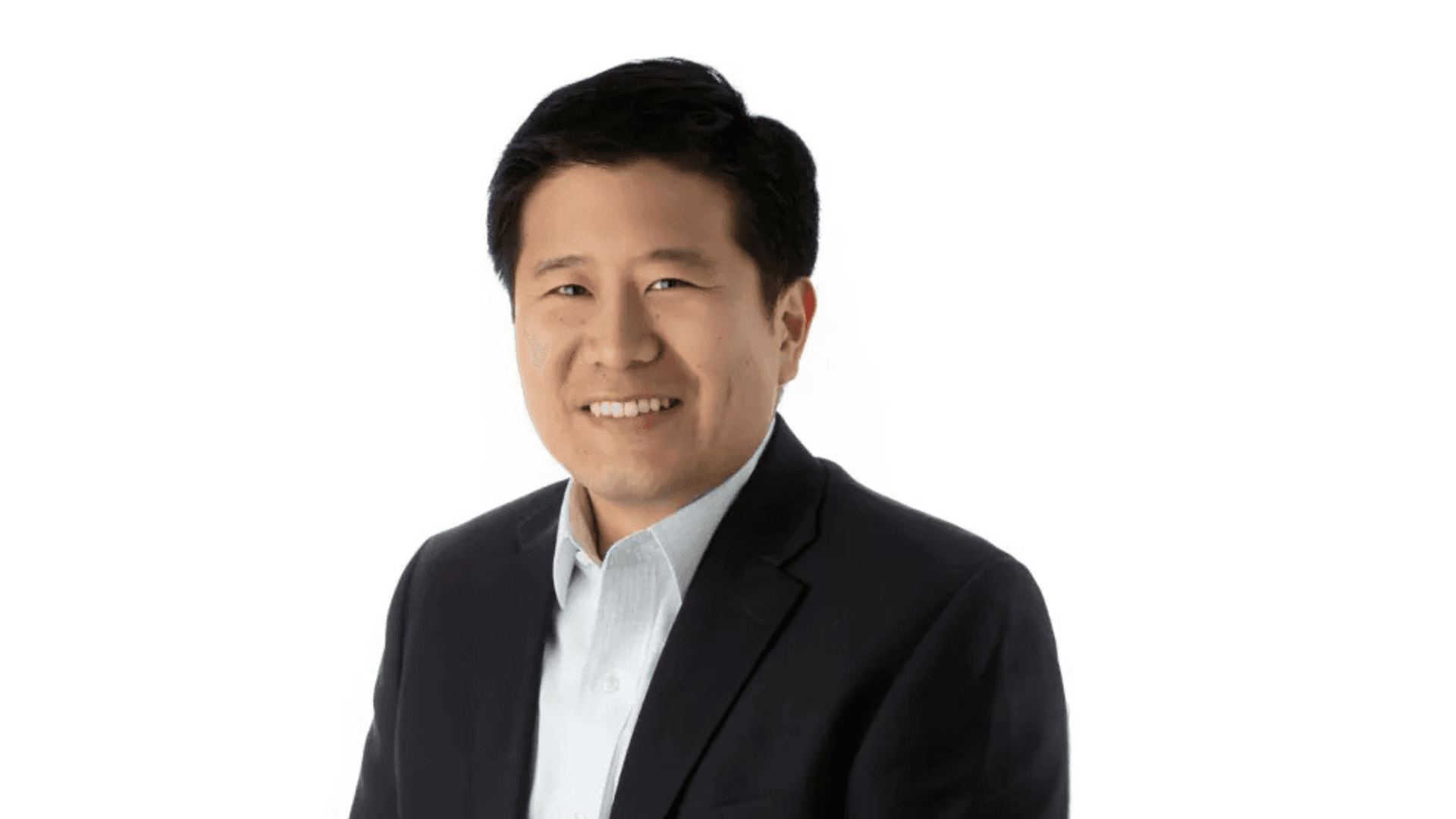

Christian's Story: An Immigration Attorney's Perspective on Uncertain Times
The call came two months into the job. Christian's boss, an elderly gentleman running a struggling immigration firm, delivered the news with practiced directness: the economy was tanking, and Christian should start looking for work elsewhere. For a newly married law school graduate still doing document review contracts to pay the bills, it was a gut punch.
But fate, as it turned out, had other plans.
The Reluctant Beginning
Christian never planned to become an immigration attorney. Graduating from law school in 2010, right as the financial crisis devastated the legal job market, he was simply trying to survive. After months of contract work and rejected applications, he found himself interviewing at a small employment-based immigration firm, pitching a single angle: he had been an F1 student himself.
"I said, okay, well, you can start Monday," Christian recalls his future employer saying. Just like that, he was in.
The early days were bleak. Christian spent his time drafting reference letters for EB1A, EB2 NIW, and EB1B cases, questioning whether his expensive legal education had led him to the right place. Then came that meeting about layoffs, followed by an unexpected reprieve when more experienced attorneys left the firm. Suddenly, Christian's supervisor had no choice but to give him substantial work.
What happened next would define his career. Rather than wait for training that never came, Christian took matters into his own hands. Night after night, he brought home volumes from the firm's library, devouring articles from AILA conferences, teaching himself the intricacies of immigration law one case at a time.
"No one told me to do it, but I just went to the firm's library," he explains. "I started with articles that related to the work that I did and then just kind of expanded."
Building Expertise Through Adversity
The hard work paid off. A senior managing attorney noticed Christian's dedication and began expanding his portfolio to include J1 waivers, giving him exposure to the complex two-year home residency requirement that affects many international medical graduates. The more he learned, the more he realized he enjoyed the work.
But Christian recognized a limitation. After nearly three years, his practice remained narrowly focused on healthcare professionals. If he wanted to call himself a true immigration attorney, he needed broader experience.
That realization led him to large corporate immigration firms, where he learned from market leaders in the space. Christian soaked the energy, growing and learning each day.
Witnessing Immigration's Evolution
Christian's career has spanned numerous presidential administrations, each bringing dramatic shifts in immigration policy. During Trump 1.0, he watched as sub-regulatory practices changed overnight and USCIS reinterpreted prior guidance. The Biden administration brought improved approval rates but maintained labor market protections that surprised some observers.
Now, in Trump 2.0, Christian sees something more complex and troubling: policy initiatives that sometimes conflict with each other. On the one hand, there are daily deportation quotas and aggressive enforcement. On the other, there's a desperate need for foreign investment and skilled workers to address America's growing economic challenges.
The recent ICE raid at the Hyundai & LG Energy Solutions plant in Georgia exemplifies this tension. Korean workers were apprehended while trying to install specialized equipment for an electric vehicle battery manufacturing plant, equipment that would eventually create jobs for American workers. The incident revealed the administration's struggle to balance the need to appease its voter base, protecting the U.S. labor market, and business interests seeking to expand business opportunities in the United States.
"Some people might see this as an immigration issue, which is true, but I see it as a money issue," Christian observes, noting that the federal deficit has reached 37 trillion dollars and continues growing at an alarming rate.
The Larger Economic Picture
Christian's reading of Ray Dalio's "When Countries Go Broke" has given him a broader perspective on current events. He sees immigration policy as just one piece of a larger puzzle involving federal debt, economic transformation, and social change. When democracy struggles to meet the needs of its population, he notes, people often turn to authoritarian figures for leadership.
"We're just kind of going through one of those seismic changes," he explains. "We happen to see that play out in immigration. I think we might also happen to see that play out in international relationships with other countries as well."
The arbitrage that has historically drawn immigrants to America still exists for many people. Even so, the current administration's policies shake the foundations of democratic institutions that underlie the economic prosperity that has attracted foreign talent.
The AI Revolution and Immigration's Future
Looking ahead, Christian sees artificial intelligence transforming both his profession and the broader immigration landscape. Immigration attorneys are already using AI for drafting petitions and preparing summaries, while the government is deploying similar technology to better enforce immigration laws through tools like Palantir.
But the bigger disruption may come from AI's impact on the job market itself. Christian has been listening to podcasts discussing universal basic income, a concept he once dismissed but now considers a possibility as AI threatens to eliminate traditional white-collar jobs across sectors.
"Once AI takes over, there's not going to be enough work, but the productivity is going to be even higher," he predicts. "There's not going to be jobs and occupations 40 hours a week for all the people."
This creates a paradox for immigration policy. Businesses continue demanding H1B workers beyond the current quota of 85,000 annually, arguing the American workforce lacks sufficient trained workers in mathematics and science. Yet a large segment of the population already lacks access to high-paying jobs, and the skills gap cannot be bridged with short-term training programs.
Advice for Navigating Uncertainty
For immigration attorneys weathering these turbulent times, Christian's advice is straightforward: do your best to serve your clients, ensure compliance with rapidly changing regulations, and hang in there. Each day brings new challenges and new information.
For immigrants themselves, his counsel is equally clear: retain an attorney, and not just any attorney. Find someone who specializes in your specific type of case and ask pointed questions about their experience.
"Just because someone has a driver's license doesn't mean that they know how to drive well," Christian points out. "Just because someone's a licensed attorney doesn't mean that they know immigration law."
He emphasizes that immigration law is highly nuanced. Change the fact pattern even slightly, and the answer and strategy might be completely different. In an era of constant regulatory flux and sub-regulatory guidance changes, having knowledgeable counsel is more critical than ever.
For corporate clients, Christian stresses the importance of program management and compliance, issues that will only become more prominent during the remaining years of the current administration.
Finding Meaning in Chaos
Christian's journey from desperate job seeker to experienced immigration attorney illustrates how purpose can emerge from necessity. What began as a last resort became a calling, shaped by hard work, fortunate timing, and exceptional mentors who saw his potential.
Today, as he watches immigration policy swing between competing priorities and contemplates an AI-transformed future, Christian remains both excited and apprehensive. He's looking forward to technological advances that will enable new types of market intelligence and push the boundaries of business immigration practice.
But he's also aware of the human cost of the current moment. Korean workers traumatized by raids may need to return to America anyway because jobs are disappearing in their home country due to manufacturing shifts. Indian nationals on H1B visas who have waited 15 or 20 years for green cards face continued uncertainty. Tourism numbers are declining as America's image abroad shifts.
"Tomorrow is a new day," Christian says, summarizing his philosophy for navigating these challenges. "Do your best, do your best to service your clients and do your best to make sure that the clients are complying with law."
It's the same approach that got him through that first job out of law school, through late nights studying immigration law on his own, through long hours learning corporate immigration practice. In uncertain times, dedication and continuous learning remain the most reliable tools available.
The arbitrage that draws immigrants to America may be shifting, but as long as it exists, people will seek opportunity across borders. And as long as they do, they'll need attorneys like Christian who understand both the legal complexities and the human stories behind every petition, every application, every hope for a better life.






Bob Webber
SEP 16, 2025
Charles Kuck
SEP 15, 2025

Christa Byker
SEP 11, 2025