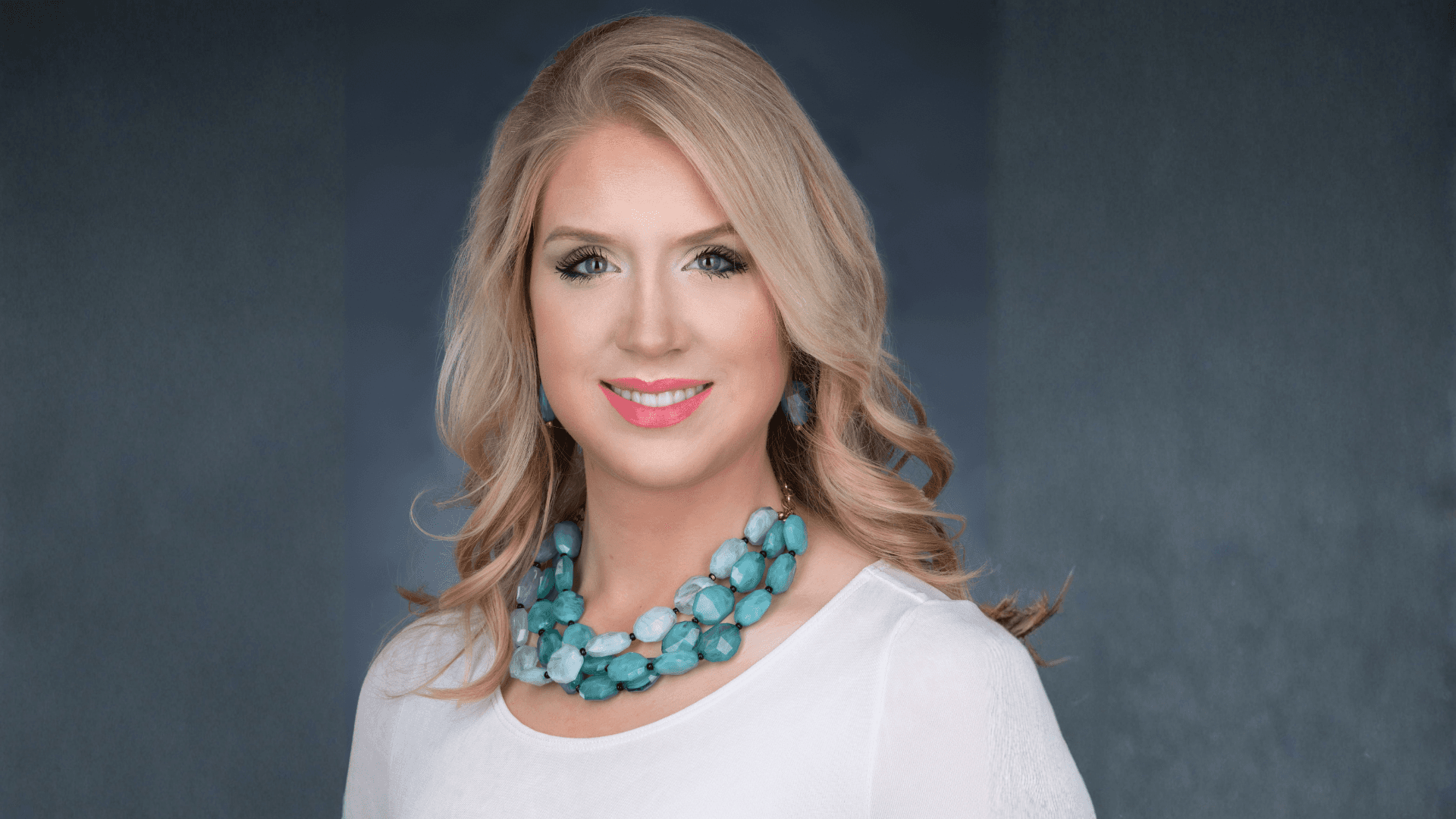

A single mistranslated surname can derail an entire immigration case. Deborah Lüdi Reidy has seen it happen. She recalls cases where AI-generated translations rendered professional accomplishments incomprehensible, turning "Oliveira" into "olive tree" on official documents, or mangling career histories so badly that visa applications were denied on the spot.
"The case was denied because of a bad translation," she explains, her voice carrying the weight of those lost opportunities. "Language errors can have horrible repercussions."
This isn't an abstract concern for Deborah. As the founder of SmartChoice Translations, she has built her business on a deeply personal understanding of what's at stake when documents cross linguistic and legal borders. Her company serves as a critical bridge for immigration attorneys navigating the complex terrain of certified translations, where precision isn't just professional courtesy but the difference between approval and rejection.
Deborah Lüdi Reidy: A Founder Shaped by Her Own Immigration Story
Deborah's path to founding SmartChoice Translations began long before she opened her doors to clients. Born in Switzerland, she immigrated to Brazil as a teenager when family business brought her family across continents. It was during her own immigration process that she first encountered sworn translators and the meticulous world of certified document translation.
"That's actually what sparked my interest in the area," she recalls. "I always loved languages. I was a grammar nerd in school and I just always liked that side of things."
By the time she arrived in Brazil, Deborah already spoke English and German, and Swiss German. She quickly added Portuguese.
But what truly set her apart wasn't just linguistic fluency. It was her entrepreneurial drive. In a career path that defies conventional wisdom, Deborah has never been employed by anyone else.
"I started straight out of high school, went into university and started serving my own clients from the get go," she says. "I just always had this entrepreneurial drive in me. I just always liked the idea of working for myself, having control over my time."
Building SmartChoice Translations: From Solo Translator to Boutique Agency
Her first major project came during her first year of university when she was hired to translate documents for a high-profile corruption case in Brazil involving Petrobras, the state-run oil company. The experience proved formative, throwing her into the deep end of legal translation at the highest stakes.
From there, Deborah followed a common industry path, initially working as a subcontractor for translation agencies. But she noticed a gap in the market. Immigration attorneys kept approaching her with documents in languages she didn't speak, asking if she could help.
"I started to have lots of connections in the industry, including fellow translators," she explains. "So I started to try to offer a simpler solution for these attorneys so they didn't have to chase down all these translators."
SmartChoice Translations was born from that insight. Today, the company operates as a boutique agency with a network of translators covering virtually any language combination an immigration case might require.
"Honestly any language that's needed," she says with quiet confidence. "I have so many connections that anything that comes up that might not be on my team, I have the connections to provide that to clients."
SmartChoice Translations Navigates the AI Translation Revolution
The rise of artificial intelligence has sent shockwaves through the translation industry, and Deborah has watched colleagues resist the change with increasing alarm. But her approach diverges sharply from the resistance movement.
"If you want to stay stuck in the past and rebel against it, there's no point in that because it's here to stay," she argues. "I'm a huge advocate for using it as a tool because it can speed up your work."
Her nuanced perspective comes from understanding both the promise and peril of machine translation. Google Translate and similar tools have been disrupting the industry longer than ChatGPT, she notes, but the technology still falls short in critical ways.
"AI or machine translation cannot understand the intrinsic nuance of comparative law," she explains. "A legal concept in this language might not, and most of the time there is not, an equivalent in the other language because that language is embedded into that legal culture."
The solution, in her view, isn't to reject AI but to harness it responsibly. She recommends that attorneys who want to use AI for cost savings should always have a human translator review the output. Better still, hire a professional service that understands the stakes.
"It will speak highly of your professionalism if you present a document with a certificate of accuracy," she points out. "Presentation matters for sure."
She's also noticed an unexpected benefit of AI's proliferation. By automating what untrained individuals used to attempt, artificial intelligence has actually helped legitimate professionals stand out more clearly.
"There's a lot of bad apples in the industry that proclaim to be translators just because they know a different language," she observes. "Those actually take away from the professionals who have put years and years into studying and perfecting their craft. I feel like what those used to do, AI is doing, and the real professionals are shining more, standing out more."
How Motherhood Transformed SmartChoice Translations' Mission
Six months before this conversation, Deborah welcomed her daughter into the world. The experience has fundamentally reshaped her approach to business in ways she never anticipated.
"I never imagined it to be that much," she admits. "Everybody wants to succeed. Everybody wants to grow and build, and used to it was for the sake of it. I've always loved business, but now she's definitely my why. It's a whole new drive."
The practical challenges are real. She has less uninterrupted time at the computer. But the constraints have forced greater efficiency and sharper focus.
"It makes you use your time so much more wisely and the drive is just 10x," she explains. "When you have a strong why, nothing can stop you."
Her ability to run SmartChoice Translations from anywhere has proven essential. The flexibility of her business model, built on a network of subcontractors rather than fixed employees, allows her to be present for her daughter while continuing to serve clients across time zones.
"It's nice to be able to run a business from anywhere where I'm at," she says. "That way I can be with my daughter and still run the business."
Deborah Reidy's Advice: Mindset Matters Most for Entrepreneurs
After nearly a decade in business, Deborah has developed strong convictions about what separates successful entrepreneurs from those who struggle. Her answer might surprise attorneys focused on strategy and tactics.
"Mindset to me has been literally the number one thing," she insists. "If your mind is blocking you, you don't have clarity, you won't be able to have the vision for your own business where you want to go."
Entrepreneurship, she's learned, is inherently lonely and overwhelming. The constant problem-solving, the multiple hats, the uncharted territory can paralyze decision-making if you let your mind run unchecked.
Her strategy involves recognizing the patterns of self-doubt and imposter syndrome as they emerge, then actively countering them.
"The first step for me is to identify what's happening. Because if you don't identify, you can't tackle it," she explains. "When those thoughts start coming, I just kind of shut it down and say, no, this is not a big deal. It is not hard. I can do this. It's gonna be easy."
The mental discipline pays immediate dividends. Tasks that seemed insurmountable suddenly become manageable when she refuses to let overwhelm dictate her reality.
"I've seen that the moment I kind of switch over, all of a sudden the thing is done," she marvels. "I was like, what? This was no big deal. This was so simple."
Her advice to other entrepreneurs emphasizes community and continuous learning. She recommends surrounding yourself with like-minded people who have an abundance mindset, hiring a coach or mentor as soon as possible, and reading extensively about mindset and business strategy.
"It's a lonely journey," she acknowledges. "Try to surround yourself with people who have an abundance mindset, who are forward looking, positive."
Why Language Expertise Creates Deeper Empathy in Immigration Work
Deborah's multilingual background has given her more than professional competency. Living immersed in three different countries and cultures has fundamentally shaped her worldview and her approach to client service.
"It has made me a very open-minded person to different cultures," she reflects. "I can appreciate different cultures. I appreciate every people's traditions. You just learn how to appreciate and you learn how to be very open-minded."
The insight goes deeper than cultural sensitivity training ever could. Through years of living as an immigrant herself, she's internalized a truth that informs every interaction with SmartChoice Translations clients.
"You realize that no matter what language you speak, no matter where you're from, we're all the same. We're all human beings," she says. "Empathy and humanity is what drives business. People want to do business with people."
In immigration law, where lives and futures hang in the balance, this empathy becomes especially crucial.
"People's lives, their futures at stake," she notes. "If you're able to be a professional that's also empathetic, that also connects with people on a human level and sees where they're at, that makes a huge difference."
She would want to work with someone who understands the immigrant experience, she says. Her own journey gives her that understanding in ways that pure technical expertise never could.
SmartChoice Translations Looks Toward Expansion and Partnership
Today, SmartChoice Translations works regularly with several immigration law firms, providing consistent monthly service. Deborah’s focus for the coming year centers on expanding that client base while maintaining the boutique quality that distinguishes her service.
What immigration attorneys consistently seek from SmartChoice Translations, she's learned, comes down to three core needs: reliability in meeting tight filing deadlines, professional presentation with proper certificates of accuracy, and responsive communication for quotes and new requests.
"Time is of essence. Filing deadlines are obviously extremely important," she explains. "They're usually looking for reliability number one."
The precision required goes beyond simple language conversion. Immigration documents must navigate different legal systems and terminologies, requiring translators who understand comparative law principles and can make informed decisions about how to handle concepts that don't have direct equivalents across languages.
"Every area of expertise has different challenges," Deborah notes. "In the legal area, depending on the document and the use of the document, you have to consider legal systems involved."
As she builds SmartChoice Translations' future, Deborah remains grounded in the personal experience that started it all: her own navigation of immigration bureaucracy as a teenager, dependent on the skill of sworn translators to accurately represent her family's documentation.
That small but essential role in someone's immigration journey continues to drive her work. She may describe certified translation as "one little cog in the wheel" of the larger immigration process, but she understands its critical importance. A single mistranslation can unravel months of preparation. A professionally executed translation becomes the foundation on which cases are built.
"To be able to be a part of other people's immigration journey," she says, reflecting on what motivates her after nearly a decade in business. "Something that I have lived and am passionate about myself."






Bob Webber
SEP 16, 2025
Charles Kuck
SEP 15, 2025
Christa Byker
SEP 11, 2025