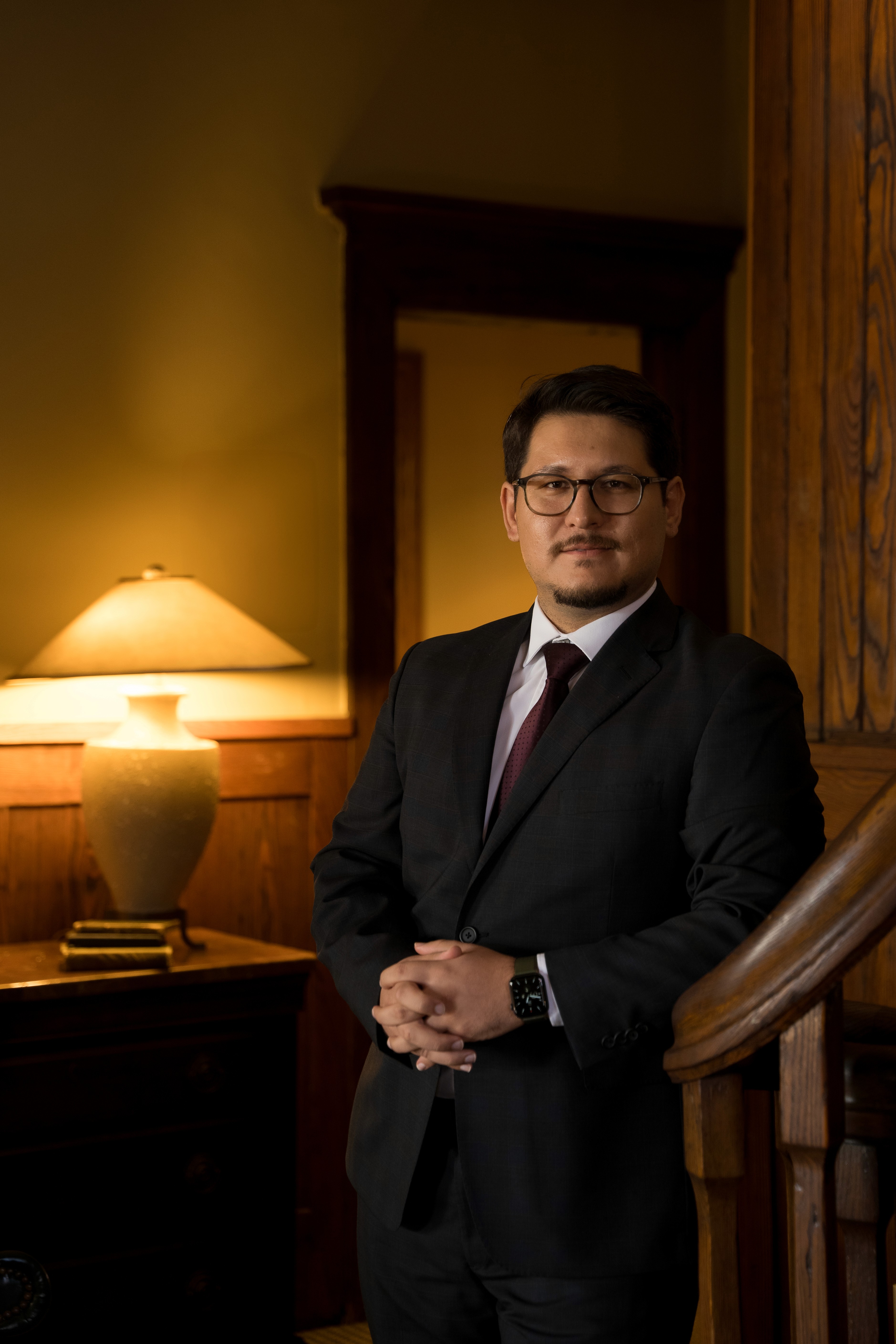

A young game developer walks into Abdullah Tunc's office. He's built a successful company in his home country, created something from nothing, and earned recognition in his industry. But when he sits down across from the immigration attorney, he asks about applying for a student visa.
"He doesn't know his value," Tunc says, describing clients like this one. "He came in thinking a student visa was his only path. We helped him see that, based on what he had already built, he might have stronger options worth evaluating."
This moment captures something essential about Tunc's approach to immigration law. Where other attorneys might simply process the paperwork a client requests, he sees his role differently: helping immigrants recognize what they've already achieved and charting a path that matches their true potential.
From Istanbul to Chicago: Abdullah Tunc's Personal Immigration Story
Tunc understands the immigrant experience from the inside. After spending 25 years in Turkey, he made the difficult decision to rebuild his life in a new country. That transition shaped everything that followed.
"It is definitely difficult to settle in another country," he says. "I have noticed the challenges."
Those challenges drew him to immigration law. He saw something at the intersection of law, business, identity, and human struggle that resonated deeply. "Many of my clients are not just looking for legal approval," he explains. "They are trying to create continuity and future. That human dimension is what keeps me committed to this field."
Today, Tunc operates out of Chicago with additional offices in New York and Orlando, leading a growing multi-office practice handling a substantial monthly caseload across business visas, humanitarian cases, and family-based petitions. But the firm's scale matters less to him than its mission.
Why Abdullah Tunc Started His Own Immigration Law Firm
Before launching his own practice, Tunc worked at an established immigration law firm where he developed his skills under experienced mentors. Working primarily with Turkish clients, he began receiving feedback that his analysis and approach were making a real difference. That positive response planted a seed.
But something else was happening too. He was noticing a pattern in the complaints clients brought to him.
"When I was working in the firm, I noticed that many clients were complaining about the communication," he recalls. "So I have focused on the communication part. I told myself at the beginning that my vision will be to be reachable, to be accessible."
This wasn't just a marketing angle. It became the foundation of how he built his firm. "When I grew my law firm, I also hired employees, paralegals or other attorneys based on that vision. Communication is definitely... it's not a cliche, it's a key."
Finding a Niche in Extraordinary Ability Visas: O-1 and EB-1 Immigration Cases
The other pillar of Tunc's practice emerged from a simple observation: too many immigrants were limiting themselves to paths that required employer sponsorship, unaware that alternatives existed.
"I have noticed that the sponsorship process through an employer is definitely hard," he says. "And people are looking for different paths which do not require employer sponsorship."
Some categories, including O-1 and EB-1A, can offer alternatives to the traditional employer-sponsored path. But many potential candidates dismiss themselves before they even explore the option.
"The individuals were telling me that, I mean, it is... I don't think I fit that criteria," Tunc says. "But I understood the category well enough to see possibilities they were overlooking."
This expertise became his niche, and it's where he sees some of his most meaningful wins. Clients come from technology, arts, sports, and entrepreneurship. Some are young athletes who've achieved significant success but assume you need to be an Olympian to qualify for a green card without a sponsor. Tunc shows them otherwise.
"Even young founders without traditional academic credentials can build impressive records. That's usually our success stories." He adds that “our role is not to inflate potential, but to identify whether a person’s record can be documented under the legal standard.”
Abdullah Tunc's Advice for Immigrant Entrepreneurs in America
For aspiring immigrants, Tunc offers perspective shaped by both his personal experience and his professional observations.
First, he acknowledges the reality. "It is right now challenging in the United States. I know that there's a lack of motivation to stay in the United States right now because of the hardship that immigrants have."
His advice? "Do not let headlines alone dictate your decisions. Get informed through qualified advice and a long-term strategy."
This isn't naivety. It's strategic optimism rooted in what he sees every day. "The United States still offers an unusually strong environment for entrepreneurship, especially in technology and innovation. Especially... The technology is at a different level right now, especially with AI. I know that there are many experts resembling this current situation to the dot com or Internet phase."
For those considering the leap: "Do not let fear stop you from exploring your options. With the right strategy and facts, many entrepreneurs have stronger options than they first assume."
The Future of Immigration Law: How AI Will Change Attorney Roles
Tunc isn't blind to the forces reshaping his profession. He's watching closely as artificial intelligence transforms legal work.
"It's already changing the legal profession in profound ways," he says. "It definitely helps with efficiency, organization, drafting support, case management. If used correctly, it can free lawyers from repetitive tasks and allow us to focus more on analysis and strategy."
But he draws a clear line. "Technology should support judgment, not replace it."
His reasoning reveals a deep understanding of what immigration cases actually require: "In immigration practice, the issues are often nuance, credibility, factual interpretation, and risk assessment. These are not purely mechanical tasks."
The way Tunc sees it, the lawyers who thrive will be those who can do what AI cannot. "The future belongs to lawyers who can think clearly, design strategy and communicate trust... Our role will increasingly be to connect law, evidence, timing, business judgment, and narrative into just one coherent case."
Why Common Immigration Mistakes Happen: Trusting Non-Experts Over Attorneys
When asked about the most common mistakes immigrants make, Tunc's answer is immediate.
"Many clients come in after receiving conflicting information from informal sources, which can make decision-making harder."
The result? Fear-driven decisions that don't serve their interests. "They have fears, they have... I know that it's challenging right now, but because of those emotions, they couldn't make a better decision. With proper guidance, they can often make clearer and more strategic decisions."
This isn't self-interest talking. It's practical wisdom from someone who has watched clients talk themselves out of better options because of information gathered from forums, social media, or well-meaning friends who don't understand the nuances of immigration law.
Advice for Starting Your Own Immigration Law Firm
For attorneys considering launching their own practice, Tunc offers encouragement drawn from his own leap.
"Don't be afraid to do things yourself. I notice that people are afraid of establishing their own law firm. You need both legal skill and entrepreneurial courage but try to be more courageous and establish your firm. Try to reach out to other people and it will grow."
Beyond courage, he emphasizes expertise. "Find your niche. So for me, it was an extraordinary ability visa." Having deep knowledge in a specific area allowed him to provide guidance that more generalist attorneys might hesitate to offer.
The Human Side of Immigration: Abdullah Tunc on Dignity and Understanding
Toward the end of our conversation, Tunc paused to share something that clearly mattered to him.
"I would want people to understand that immigrants are not abstractions. They're builders, workers, parents, students, founders, artists, and they're professionals."
He continued: "There's an enormous pressure on them and they are often rebuilding a life while adopting a new language, new system and new society. You hear my accent. Even myself."
But there's something that sets immigrants apart, in his experience. "The good thing about immigrants, when they come here, they see the US as an opportunity and they give their full hundred percent."
His closing thought carries the weight of someone who has lived both sides of the immigration journey.
"Immigration law should always remember that behind every petition is a human being trying to move forward with dignity. That perspective matters both legally and morally."
About Abdullah Tunc
Abdullah Tunc is an immigration attorney with offices in Chicago, New York, and Orlando. His practice specializes in extraordinary ability visas (O-1, EB-1), business immigration, and humanitarian cases. As an immigrant himself, he brings firsthand understanding to the challenges his clients face.
This interview was conducted by LegalBridge Magazine as part of our series featuring leaders in immigration law and global mobility.





Bob Webber
SEP 16, 2025
Charles Kuck
SEP 15, 2025

Christa Byker
SEP 11, 2025