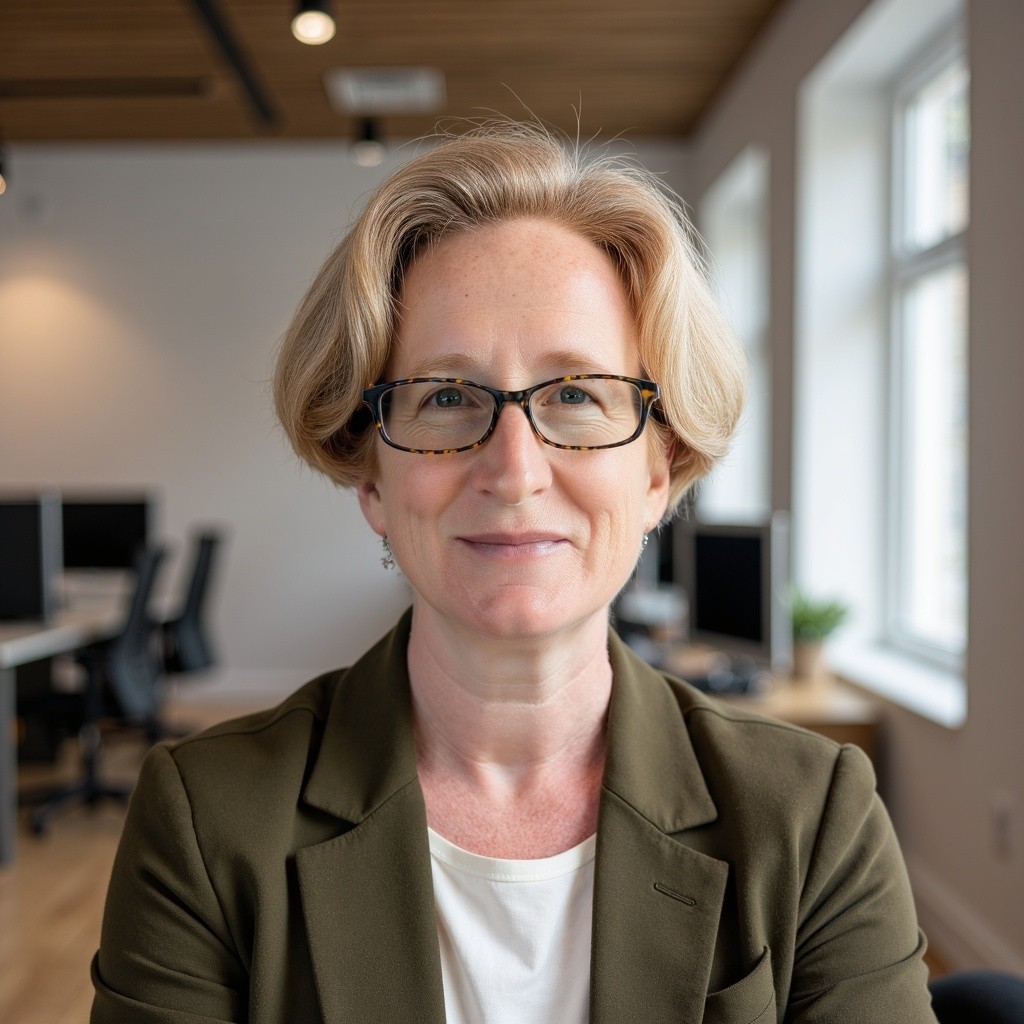

When Alison Foley-Rothrock's client finally held her green card in her hands, she did something she had been waiting thirty years to do. She booked a flight home to see her mother, now in her eighties.
For three decades, this woman had lived in the shadows of the United States. She had raised adult US citizen children. She had not collected so much as a driving violation. She had arrived in the early 1990s on a family petition that fell apart and never found another pathway out of legal limbo. Until Alison found one.
"She had lived 30 years just living in the shadows and trying to not get in trouble," Alison recalls. "The joy and relief on her face when we finally got that green card was awesome."
Moments like this are why Alison has spent more than twenty years building her career around immigration law. They are also why, after early detours through nonprofit work and a small private firm, she eventually built a practice of her own. Today Foley Immigration Law serves families, survivors, and small business owners from her main office in Florida and her home in Maine.
How 9/11 Shaped Alison's Path Into Immigration Law
Alison entered law school with what she calls the "social justice warrior" bug. She had even applied to an international human rights program, drawn to the idea of being "on the side of the underdog and taking on the big fights."
Then came the fall of her second year, and with it, September 11, 2001.
"Very quickly we saw the backlash against immigrant communities in the form of these very vicious attacks against immigrant communities that clearly had nothing at all to do with the 9/11 attacks," she recalls. "And yet it became this huge leveraging point in politics. The fear mongering and the attacks against immigrant communities."
In that moment, her compass found its north. If the frontline of civil rights in America was shifting toward immigrant communities, that was where she needed to be. She started volunteering with a national nonprofit, working with survivors of abuse and exploitation, including victims of domestic violence and sexual assault. She fell in love with the work, and with the people.
More than anything, she saw the truth behind the political rhetoric. "More than being the enemy, by far, they were the victims of a really messed up system. Those were the people I wanted to help."
Why Alison Foley-Rothrock Left the Nonprofit World and Built Foley Immigration Law
The pivot from nonprofit to private practice was not the product of some grand career strategy. It was the product of single motherhood.
"I had two very small children. Two boys under two. And I could not survive on a nonprofit salary."
She tried a small private firm next. But a rigid 9 to 5 schedule collided with the unpredictable reality of raising two young boys on her own. Sick days. Closed daycares. School breaks. Something had to give.
So Alison built a solution that gave her flexibility, autonomy, and the ability to make her own ethical calls about which cases to accept. "The only way to get those things to balance out, to be able to follow what I was passionate about, have time for my children and my family and also make enough money, there was no other answer. It was to work for myself."
She has been running her own practice for most of her career since.
Inside Foley Immigration Law's Practice: Family Reunification, VAWA, and U Visas
Today, her practice is rooted in family. Most of her clients are Spanish speaking (her email address begins with abogada, the Spanish word for female attorney), and a growing share speak Haitian Creole, French, or Tagalog.
A significant portion of her caseload involves family-based petitions, where US citizens or green card holders bring spouses, fiancés, stepchildren, or parents to live with them. She handles naturalization cases for immigrants who have worked their way through the green card process and are ready to become citizens. She works with small family businesses from abroad opening US branches.
But she has held onto something from her nonprofit days.
"Humanitarian petitions for victims, the same sort of work that I started out doing in nonprofit organizations. I continue to do a good amount of that, probably more than your average private practitioner does."
Within that humanitarian work, she handles a significant volume of cases under the Violence Against Women Act, which allows immigrant survivors of abuse to escape reliance on their abusive spouses for legal status. She takes on U visas for victims of other serious crimes. And she makes a point of educating the people most likely to encounter these survivors first.
"I've made it a point to go out and do community education work, especially with providers of first responder services, shelters, domestic violence programs, therapists, social workers and nurses and hospitals," she says. "It's a drop in the bucket compared to what's needed. But it's kind of the least that I can do, to pay it forward."
Why VAWA Cases Are Alison Foley-Rothrock's Favorite Work
Ask Alison which cases she loves most, and her answer comes instantly. VAWA cases.
"To be able to have somebody come and start out just so incredibly dejected because they feel that their relationship has failed and they don't know what they're going to do about their immigration status. In a lot of these cases, they're being threatened that they're going to get deported or that their spouse is going to take away the kids. And to be able to give them that initial hope..."
The transformation is what stays with her. Clients who first appear in her office terrified and convinced that everything is lost often return months and years later as entirely different people.
"To see these people who I first encounter as just terrified out of their minds and feeling like everything is lost, go from that to just taking back their own power and going on to go to college and earn a degree or become a career person, raise their kids. It's awesome."
Yet very few of the people who could benefit from VAWA know it exists when they first walk through her door. "Very few know that's out there," Alison says. That gap between need and awareness is part of what drives her community education work.
For clients whose abuser is a US citizen, she explains, the VAWA process today takes two to three years, though it has historically been as fast as six months. Clients are entitled to work authorization during the wait, a small but meaningful layer of protection. For spouses of lawful permanent residents, the process is significantly longer due to visa number caps. It is the kind of nuance that does not fit into a news headline but that shapes the next three years of a survivor's life.
Alison Foley-Rothrock on the Biggest Mistakes Immigrants Make
After more than twenty years of representing immigrants, Alison has a short list of warnings she offers anyone navigating the system.
The first is a dangerous misconception. Many immigrants believe that leaving the United States voluntarily will earn them goodwill with immigration authorities. It usually does the opposite.
"They think that if they leave, that's somehow going to give them bonus points with immigration for, quote unquote, doing it the right way. But often that adds a layer of complication because then these other penalties kick in for having been in the US without permission."
The second warning is about who you trust with your case. Notarios and unlicensed paralegals operating outside the oversight of a real attorney are one of the biggest risks facing vulnerable immigrants. "People need to make sure and research who they're working with before taking any advice."
Her top tips for every client sound simple, but they can change the outcome of a life. Read everything before you sign it. Do not sign anything without talking to her first. And if an ICE officer or other law enforcement officer approaches you and starts asking questions, exercise your right to remain silent, ask for your attorney, and hand them her business card.
She has seen hundreds of cases go wrong because someone signed an application they did not understand, often because English was not their first language. "Once they put their signature on it, immigration treats it as though that's coming directly from their own mouth."
Alison Foley-Rothrock on AI in Immigration Law: Promise and Peril
When the conversation turns to artificial intelligence, Alison is clear eyed. AI is neither savior nor villain in her view. It is a tool, and its value depends entirely on who is holding it.
On the government side, she is watching a troubling pattern unfold. "It looks like our petitions are being pre screened by AI on the immigration side. It looks like the government is using AI to read things that we submit, and it's making a lot of mistakes." She describes the output as "AI slop," requests for evidence that ask for materials already submitted or documents that are not pertinent to the case at all.
On the attorney side, she is seeing a different kind of failure. Lawyers under pressure to meet deadlines and respond to a surge of government requests are leaning on AI in place of their own judgment and expertise. Some have been reprimanded by bar associations. Some have been disbarred.
Still, she sees real promise. "We all also see the potential for AI to assist, to enhance our abilities to handle the caseload, to handle the research, to help draft things." In her view, the technology has great potential for both good and harm, and the difference lies entirely in how it is used.
"Like any tool, it's really about who's wielding it and how, what their intentions are."
What's Next for Alison Foley-Rothrock and Foley Immigration Law
Even after two decades of practice, Alison is not standing still. She is currently enrolled in an MBA program and developing a side project aimed at something the immigration bar badly needs: a training model where attorneys gather for case round style strategy sessions. It is the kind of peer learning environment that medicine has long treated as standard, but that solo immigration practitioners rarely have access to.
It is a fitting next chapter for someone whose career has always been about lifting others. First her clients. Now her fellow attorneys.
Asked what immigration really means to her, Alison offered an answer that could serve as the thesis of her life's work.
"It's the blending of cultures and people from all over the world. It should be, ideally, a give and take where immigrants come and contribute to communities and also those communities are able to receive and give to them. And in some cases, it's life saving."
Twenty years in, that is still the work.




Bob Webber
SEP 16, 2025
Charles Kuck
SEP 15, 2025
Christa Byker
SEP 11, 2025