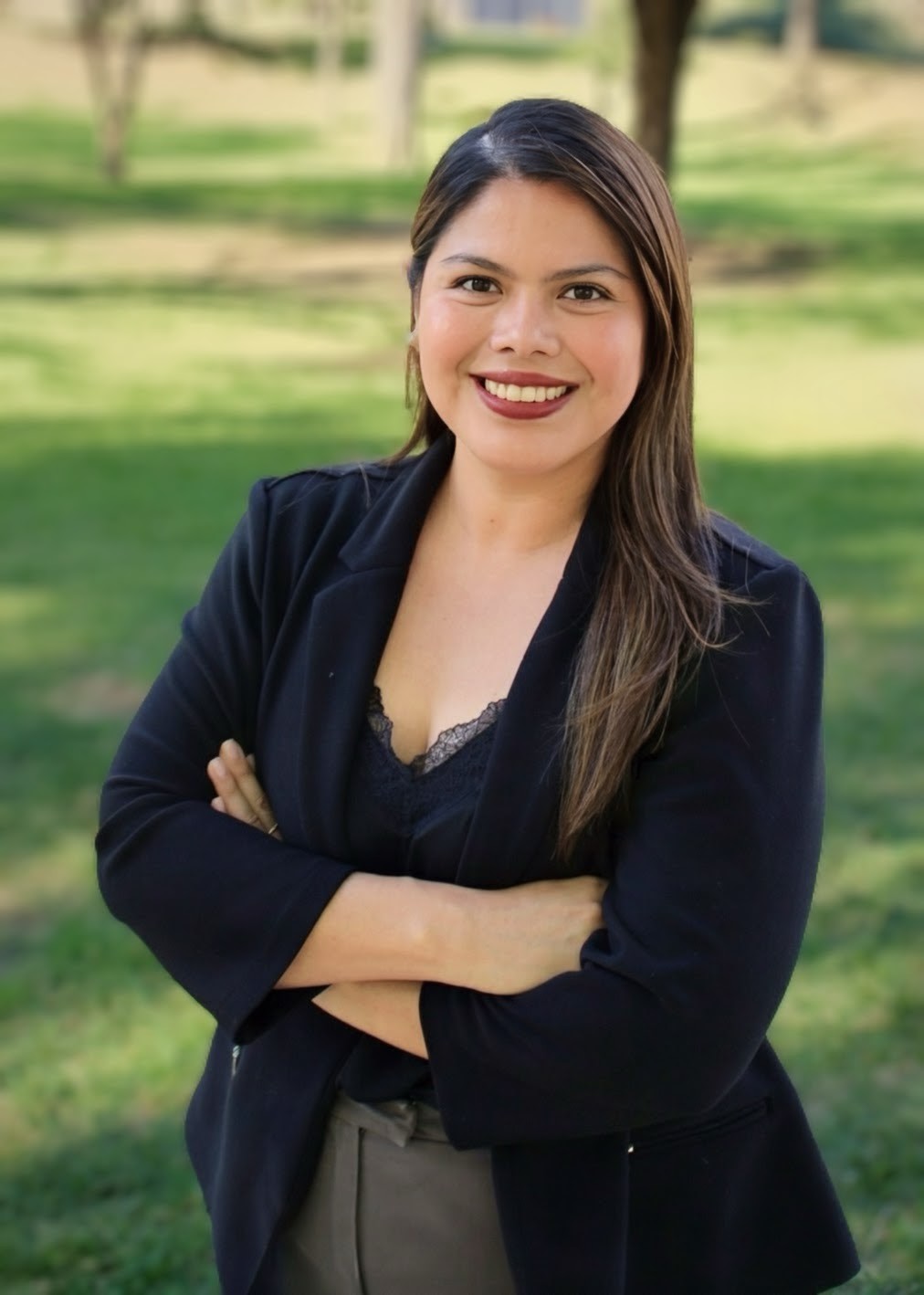

Judith Cruz Caballero began her interest in immigration law from a very young age. At the age of 10, she witnessed family members and friends struggle to find their voice in the judicial system, particularly when it came to translating documents or understanding the various procedures required in immigration law.
"I watched my family members and friends experience many difficulties understanding how to start an application or even where to send their applications,” Cruz Caballero recalls. "It was always very difficult for them when it came to being able to understand the process without an attorney. It just took them a lot longer. It took many mistakes, wasted money, and frustrations because applications weren't being filed correctly."
Those memories became the foundation for a mission. Today, Cruz Caballero works as an immigration attorney at Capital Area Private Defender Service (CAPDS) in Austin, Texas, specializing in Padilla advisal at the intersection of criminal and immigration law. But her journey to this point spans coast to coast, from a college paralegal position to the Harvard Immigration Clinic, and now to the precipice of her boldest move yet: opening her own law firm.
How Judith Cruz Caballero Found Her Calling in Immigration Law
The decision to pursue law wasn't abstract for Cruz Caballero. It was personal.
"Going through the immigration process, for a lot of people, can equate to a work permit. It can equate to stability when it comes to housing," she explains. "It goes much further than just having legal status in the United States. Having legal permanent status in the US opens a pathway for people to continue contributing positively to the development of the country overall."
Her first professional exposure to immigration law came during college, when she worked as a paralegal for attorney Renee Pobjecky, who has since become an immigration judge in Houston. That experience proved formative.
"She really set me up to understand what is required from an immigration lawyer, what skills are needed, how to interact with clients, how you can actually make an impact in cases," Cruz Caballero says. "That's where I kind of started to develop a lot of my professional side."
But Cruz Caballero quickly recognized that immigration cases don't exist in isolation. A client fighting for legal status might also be navigating housing instability, criminal matters, or educational barriers. So, when she entered law school, she deliberately expanded her focus.
"I made it a point to make sure that I was not only focusing on studying immigration, but I was studying these other areas like criminal law, property law," she says. "I even did internships in these various areas to ensure that I was understanding and learning how I could also help clients connect to resources, beyond the practice of immigration."
From Harvard Immigration Clinic to Criminal Immigration Law in Texas
Cruz Caballero's time at the Harvard Immigration Clinic brought her face-to-face with some of the most vulnerable populations in the system: unaccompanied minors from Guatemala seeking asylum.
"In summary, I was working alongside other attorneys helping children from Guatemala understand their immigration process, such as asylum. I conducted extensive research and translations during my time at the clinic. Additionally, I also had the opportunity to connect them to other resources that maybe they wouldn't know about within the community," she recalls.
That work instilled in her a deep understanding of the human stakes involved in every case. A successful application isn't just paperwork; it's a young person's chance at safety and stability.
Now, at CAPDS, she operates in a different but equally critical space: Padilla work, where criminal defense intersects with immigration consequences. Her role involves advising criminal defense attorneys and their clients on how criminal charges and convictions may affect an individual's immigration status.
How Immigration Attorneys Are Navigating the Current Policy Climate
Cruz Caballero doesn't shy away from addressing the challenges facing immigration practitioners today. The current environment, she says, has fundamentally changed how attorneys can do their jobs.
"One of the biggest things that I'm noticing with criminal immigration law is basically that a lot of people are facing mandatory detention," she observes. "In the past, an immigration bond was a way to help your clients continue their immigration process outside of detention; however, now that has completely changed."
The contrast with her previous work is stark. When handling Special Immigrant Juvenile cases for unaccompanied minors, Cruz Caballero could engage in productive dialogue with DHS attorneys, presenting evidence and reaching a mutual understanding.
"I would be able to have mutual conversations and understanding from the opposing counsel, and we would always be able to come to an agreement," she recalls. "The communication was always very clear. And there was humanity preserved within those conversations."
Today, that dynamic has shifted.
"I can make arguments on behalf of clients to lift an ICE hold; however, too often we don’t receive a response from DHS on our requests."
The breakdown in communication doesn't just frustrate attorneys. It delays resolution for clients whose lives hang in the balance.
"When you don't have the opposing party contributing to that communication, it just kind of leaves you in this position of like, okay, how do I move forward? What are my next steps?"
What has helped her navigate the shift in communication is ensuring that the clients are aware of the situation and understand their rights as they move forward in their immigration process.
A Success Story: When Padilla Advocacy Changes Lives
Despite the challenges, moments of impact keep Cruz Caballero motivated. She shares how her current cases crystallized why her work matters.
Many noncitizen clients don't understand the additional consequences of a criminal arrest or conviction. “Having access to an immigration attorney when a noncitizen's criminal case is pending can be crucial.”
There have been many situations in which a client may have an ICE hold and some legal status in the US. “If it were not for Padilla attorneys advising and intervening at crucial points in a client’s case, many noncitizens could end up in detention or with convictions that could lead to losing their legal status.”
“I have worked with individuals who have legal status in the US and have an ICE hold. A Padilla attorney's advice can be fruitful in some cases to allow individuals to continue their immigration process outside of a detention center.”
Judith Cruz Caballero's Advice for Immigrants Navigating the System[TK1]
Having seen the system from multiple angles, Cruz Caballero offers three pieces of guidance for immigrants navigating the process:
First, do your research. One of the biggest misconceptions she encounters is the assumption that anyone offering immigration help is a licensed attorney.
"Too often do I see clients come and tell me, ' Hey, I filed my application, and I have an approved application. And I'm like, okay, great, fantastic. “Who’s your attorney?" she says. "Turns out it's not a real attorney. It's someone else. It's a notario. And now this client just paid them a lot of money for an application that might be faulty, or worse, the client did not actually receive the expected relief."
She urges immigrants to verify that their representative appears on the state bar website before handing over money or documents.
Second, invest in qualified legal help. “In the current climate, having a good immigration attorney on your side is so crucial. Many legal aid programs can help clients and provide guidance, so it's not just private attorneys.”
Over time, I've had the opportunity to work alongside nonprofit attorneys who are passionate about their work and have positively impacted clients. So, don't just ensure your attorney is an actual attorney; also, research legal aid services in your area so that you can get qualified legal help.
Third, be honest with your attorney. Caballero has seen cases derailed by late disclosures.
"Clients won't want to say things or will wait until the very last minute to tell you that maybe they have another wife in their home country," she says. "And now it just changes the whole legal strategy and outcome of their case.”
Full transparency from the start allows attorneys to provide accurate guidance and avoid damaging surprises down the road.
Why Judith Cruz Caballero wishes to pursue Launching Her Own Immigration Law Firm
If one statistic encapsulates Cruz Caballero's next chapter, it's this: Latina women make up only 2% of the legal profession.
"For me, being able to have a law firm is mostly focused on continuing to make a difference in the immigration field, but also to hopefully inspire women to follow their dreams and passions.”
After completing a public interest law fellowship that required four years of nonprofit work following graduation, Cruz Caballero will be free to open her own practice after May 2026, for which she’s preparing.
Her time at organizations of different scales, from the large nonprofit like RAICES and smaller ones like the Austin Tenants Council, has given her perspective on what works and what doesn't.
"I've kind of had both environments, and I've seen what works and what doesn't," she says. "I think now that I have that experience, I feel more confident to be able to go forward and just start working on opening my own firm in the future."
One priority stands out: making technology accessible to clients. She's observed that many immigrants, particularly outside business immigration contexts, lack the technical skills to navigate client portals and digital systems.
"Being able to kind of bridge the gap between the technology we use in the office and client access would be the most beneficial. We use all this technology in legal businesses. How can we make it appropriate and accessible for the clients?" she says. "I think that's one of my biggest priorities when it comes to opening my law firm."
The Policy Change Judith Cruz Caballero Would Make
Asked what single policy change she would implement if given the power, Cruz Caballero points to the visa bulletin, specifically the family preference categories.
"Especially when it comes to the category of family members, like siblings petitioning for siblings, the wait time for that visa bulletin is so long," she says. "Waiting for a visa to be available, depending on the category, can take up to 15 years."
She would update those categories and guidelines to allow more people to immigrate through legal channels in a reasonable timeframe.
Balancing AI and the Human Element in Immigration Law
As artificial intelligence makes inroads into legal practice, Cruz Caballero holds a nuanced view. She sees the potential for AI to handle tedious tasks, freeing attorneys to focus on strategy and client relationships. But she worries about losing something essential.
"I love the simplicity and how certain things, certain tasks can be handled by AI that maybe would be tedious for an attorney," she says. "But I would rather have it be more like a partnership with what attorneys are doing with their clients, rather than it be like, okay, let's just leave everything for AI to take over."
The human connection, she believes, is irreplaceable.
"I think there is a benefit with attorneys being able to continue the work that they're doing and using AI as support rather than being an overhaul of the legal field."
Looking Ahead: Judith Cruz Caballero's Vision for Immigration Law
For Cruz Caballero, immigration law has never been just a career. It's the fulfillment of a promise made to herself as a child, watching her family and friend’s struggle. It's the belief that everyone deserves representation that understands not just the law, but the circumstances surrounding it.
As she prepares to step into future firm ownership, she carries with her the lessons of her journey: the value of interdisciplinary knowledge, the importance of client-accessible technology, and the conviction that Latina women belong in leadership positions in law.
"I'm 100% going to do it," she says of her firm. "It's been a long time coming."
The Bolivian-American attorney is about to build something of her own.
This interview is part of LegalBridge Magazine, a series featuring conversations with leading immigration and global mobility professionals.






Bob Webber
SEP 16, 2025
Charles Kuck
SEP 15, 2025

Christa Byker
SEP 11, 2025